
Vanar Chain starts with a simple human truth that many builders forget. Most people are not chasing a blockchain. They are chasing a feeling. They want to feel safe when they try something new. They want to feel proud when they earn something in a game or a digital world. They want to feel certain that what they own today will still be theirs tomorrow. I’m saying this clearly because it explains why Vanar positions itself as a Layer 1 designed for real world adoption through gaming entertainment and brand experiences. They’re trying to meet people where life already feels meaningful and then make the technology fit the human. We’re seeing this direction described across Vanar’s own platform messaging and ecosystem materials.
The project story also includes a moment that signals expansion and responsibility. Vanar publicly described a 1 to 1 swap from TVK to VANRY and framed it as part of a broader shift in identity and scope. If It becomes easy to dismiss swaps as only marketing then you miss the deeper point. A swap can be a line in the sand that says the next chapter will be judged by infrastructure and delivery rather than by the past narrative. This 1 to 1 swap is also supported by exchange notices and market information sources that reference the rebrand and conversion ratio.
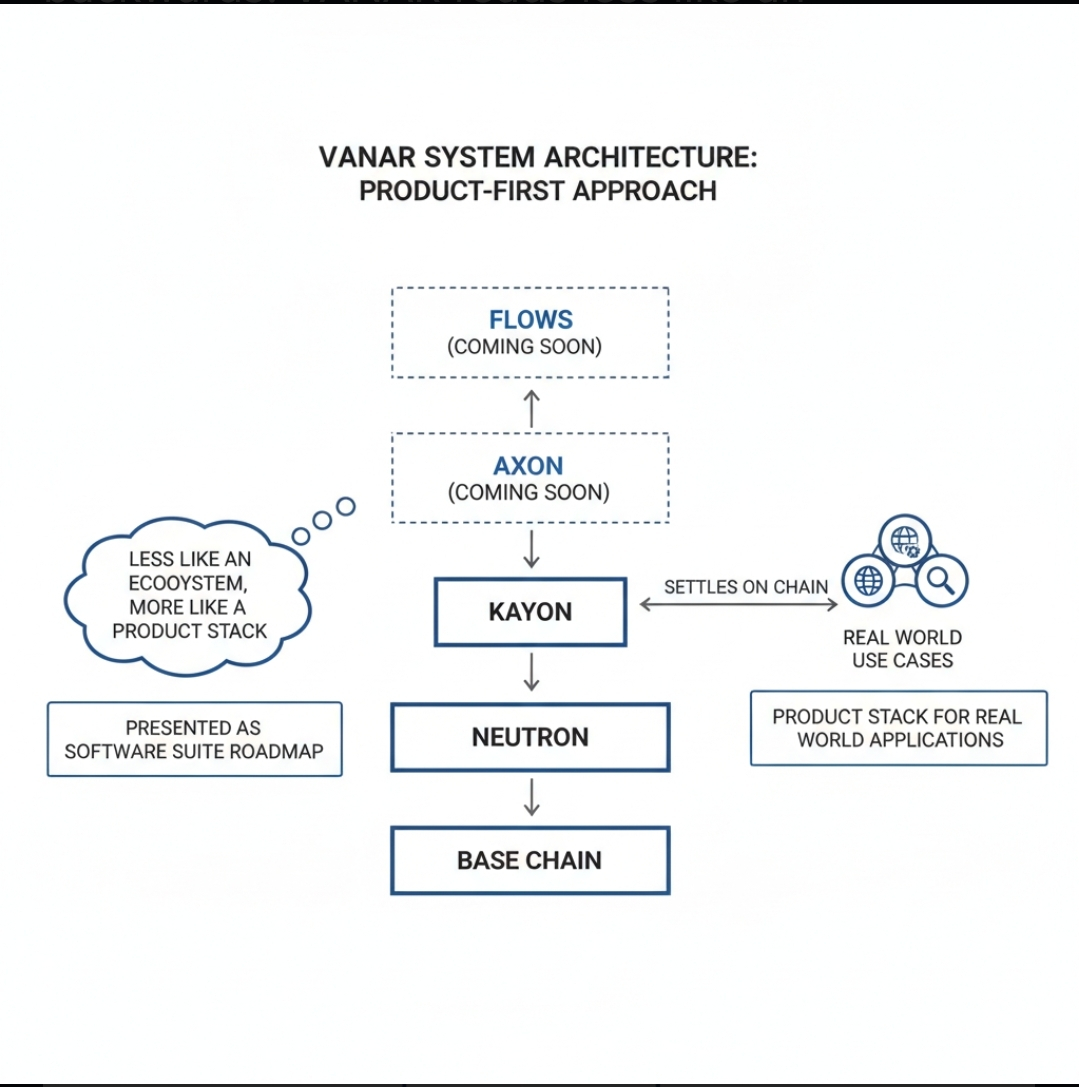
Now let’s walk through what Vanar says it is and why those design choices matter from the first idea all the way into the future roadmap. Vanar presents itself as an intelligent stack rather than a single chain. The base layer is the Vanar Chain itself which is described as a modular Layer 1 designed for fast low cost transactions and built for AI style workloads and semantic operations. That wording is important because it suggests the team believes the future of Web3 will demand more than token transfers. It will demand systems that can work with richer data and richer workflows without falling apart. We’re seeing Vanar describe native support concepts like vector style storage and similarity search along with data structures optimized for semantic operations.
Under that base layer there is a practical choice that helps adoption in the builder world. Vanar is presented as EVM compatible. In everyday terms that means developers can build with familiar Ethereum style tooling and patterns instead of learning an entirely new environment. I’m pointing this out because it is one of the simplest ways to reduce friction and speed up ecosystem growth. If It becomes easier for developers to ship quickly then users get better products sooner and the network gets tested by real usage rather than theory.
Vanar also frames its stack as multiple layers that each solve a different real world pain. One of the deepest pains in Web3 is that meaning often lives off chain while a chain stores only a tiny pointer. People think they own something but the story and the proof can still be fragile. Links can die. Files can disappear. Platforms can change. This is where Vanar introduces Neutron as a semantic compression and restructuring layer that creates programmable objects called Neutron Seeds. The Neutron page makes a direct claim about compressing 25MB into 50KB using semantic heuristic and algorithmic layers and it argues that the result is fully onchain and verifiable. Whether you treat the compression number as a bold ambition or a benchmark to be proven at scale the intent is emotionally clear. They’re trying to reduce the fear of losing meaning by making data lighter and easier to keep verifiable in the system itself. If It becomes normal for proof based data to live in a durable onchain form then users and businesses can breathe again because their history does not depend on a fragile outside link.
Here is how that can function in real experiences when you connect the pieces. In gaming and entertainment you do not just move coins. You move identity. You move achievements. You move items that carry pride and memory. Brands also care about proof and continuity because they need to show what happened and when and why. Neutron Seeds are described as programmable and verifiable which implies apps can store data in a structured way and later validate it and query it. If It becomes easier to validate what is true then disputes become simpler and trust becomes stronger. We’re seeing Vanar place Neutron directly inside its stack story as the layer designed for legal financial and proof based data.
Then comes Kayon which Vanar describes as a contextual AI reasoning layer for Web3 and enterprise backends with natural language queries and compliance automation themes. This layer matters because it addresses a different kind of fear. People do not only fear losing assets. They also fear confusion. They fear signing something they do not understand. They fear systems that feel like puzzles with hidden traps. If It becomes possible to ask questions in plain language and get answers that are grounded in verifiable data then a huge barrier falls. But the real requirement is honesty. A reasoning system must be accountable. Vanar frames Kayon around validation and compliance which signals the team is trying to avoid the trap of confident sounding outputs without proof. We’re seeing Kayon described as the enterprise reasoning layer in the official product page and placed as a key layer in the overall stack narrative.
Security and consensus are where dreams meet reality. Vanar documentation describes a hybrid consensus approach that primarily relies on Proof of Authority and is complemented by Proof of Reputation. The documentation also states that initially the Vanar Foundation runs all validator nodes and then onboards external validators through a Proof of Reputation mechanism. I’m going to say the tradeoff plainly. This can support stability early on because coordination is simpler and performance can be managed. At the same time it raises a decentralization question that the project must answer over time with visible measurable progress. If It becomes unclear who holds power and how that power expands then trust can weaken. If It becomes clear that the validator set widens under transparent rules and reputable participation then trust can deepen. We’re seeing these details spelled out directly in Vanar documentation pages.
Staking is another part of the security story and also part of the emotional story because it decides whether everyday users can participate. Vanar documentation describes Delegated Proof of Stake as the mechanism for community staking and it also notes that in Vanar’s approach the Foundation selects validators while the community stakes VANRY to support those nodes and earn rewards. This approach again shows the same pattern of tradeoff. They’re trying to balance trust and performance by focusing on reputable validators while still letting the community strengthen security and feel involved. If It becomes easy for normal users to support security without needing to run complex infrastructure then participation can grow beyond a small technical circle.
Now let’s talk about VANRY in a grounded way. The token matters because it is not just a market object. It is the fuel that users spend when they transact and the resource they stake when they support validators and the instrument used in governance narratives. Third party sources also describe VANRY as powering ecosystem usage including gaming and metaverse contexts and they tie it to platforms like Virtua. I’m including that because the strongest ecosystems are not built only on token mechanics. They are built on repeated real use where the token has a clear purpose inside experiences people actually enjoy. We’re seeing VANRY described as having multiple roles in an ecosystem context by market education sources and by the project itself through its stack and product pages.
Vanar connects its mission to consumer scale and it references mainstream verticals such as gaming metaverse AI eco and brand solutions in its broader positioning. That means progress must be measured in two worlds at the same time. On the infrastructure side the system must show stable block production predictable fees validator uptime and low incident rates. These are not glamorous metrics but they protect the user’s nervous system. If It becomes unreliable even once at a key moment then a new user may never return. On the adoption side the metrics must reflect human behavior. Onboarding completion matters because confusion kills curiosity. Repeat usage matters because it proves real value not just a first click. Transaction success during peak activity matters because consumer apps do not wait for quiet markets. Support tickets and user complaints matter because they reveal fear points. We’re seeing Vanar place emphasis on real world adoption and consumer facing verticals which makes these human metrics unavoidable.
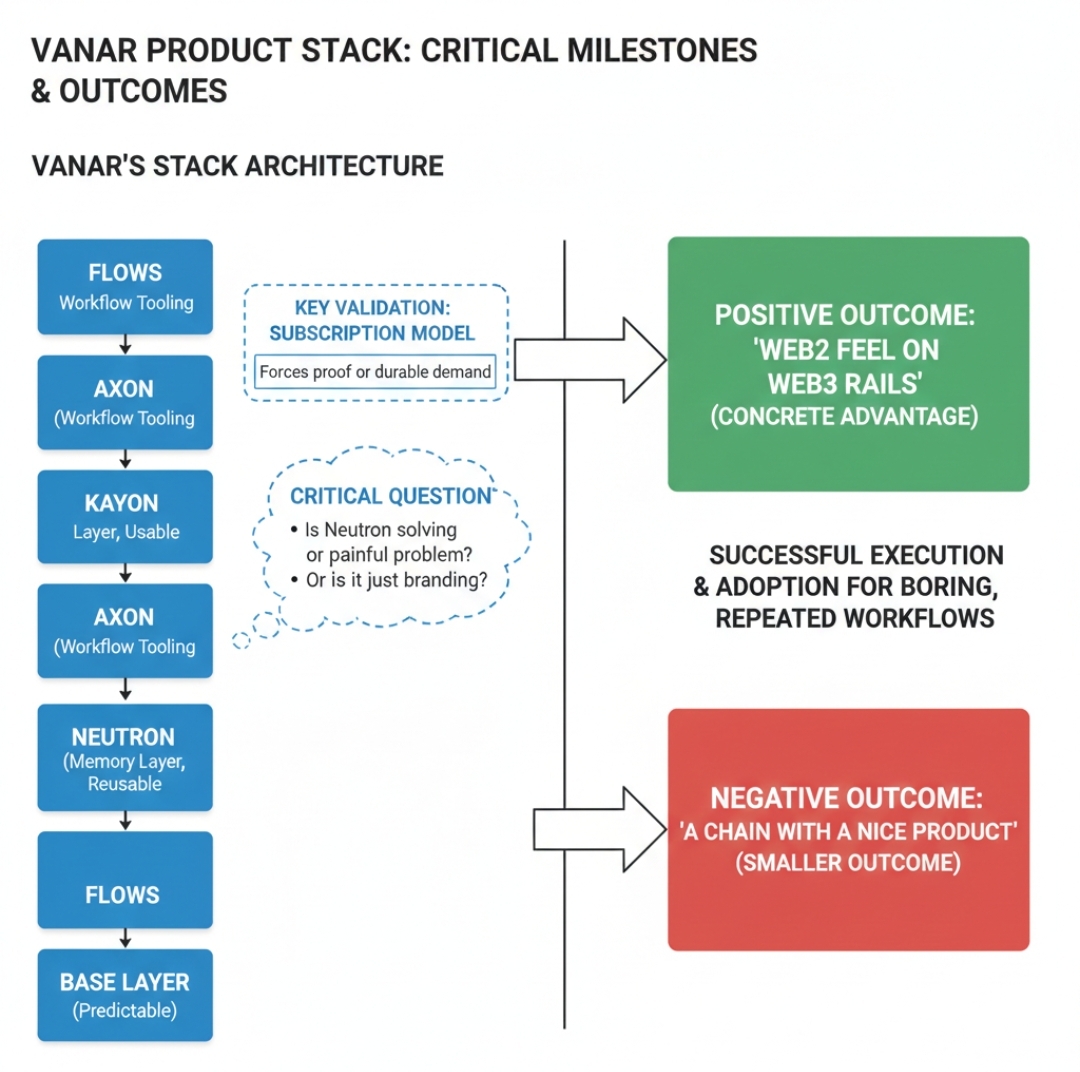
For Neutron the measurement challenge is even more specific. Compression must not destroy meaning. Retrieval must be accurate. Verification must remain consistent over time. Developers will care about whether the Seeds remain usable across software upgrades and whether integrity checks remain reliable. If It becomes easy to verify the same truth months later then the system earns long term trust. For Kayon the most important measurement is not how fluent it sounds. The most important measurement is traceability and audit success and error rates in compliance style workflows. If It becomes possible to reliably connect an output back to verifiable inputs then reasoning becomes a tool rather than a risk. We’re seeing Vanar present Neutron as verifiable onchain Seeds and Kayon as a reasoning layer tied to validation and compliance which naturally points to these kinds of metrics.
Every honest roadmap must name risks because risk is where trust is tested. The universal risks include smart contract vulnerabilities integration attack surfaces and the constant pressure that comes with being a public financial network. Vanar also faces design specific risks. One is the early validator centralization tradeoff which must be balanced by transparent expansion toward broader participation. Another is the risk of overpromising AI style capabilities without consistent verifiability. If It becomes hype without proof then disappointment spreads fast and it hurts real users first not traders. Another risk is competition because gaming and entertainment and real world asset narratives are crowded and adoption is not guaranteed. We’re seeing Vanar deliberately frame itself as different by leaning into an AI native stack approach and proof based data layers which increases both potential upside and scrutiny.
Now the future roadmap can be explained as a climb that starts with stability and ends with everyday flows. Vanar’s own site shows a five layer stack and it explicitly includes layers labeled as coming soon which signals the plan is not finished at the base chain and the data and reasoning layers. The direction suggests a move upward from the modular Layer 1 into Neutron memory and data compression into Kayon reasoning and then into future layers focused on automation and industry application flows. If It becomes successful this is how real adoption often looks. The hardest work happens behind the scenes and the user sees only a smooth experience. We’re seeing the coming soon labels for Axon and Flows in the official navigation and stack presentation which supports this roadmap shape.
When you connect all of this into one narrative you get a clear emotional arc. Vanar is not just trying to be fast. They’re trying to be calming. The calm comes from durable meaning through Neutron and understandable interaction through Kayon and a validator and staking model that aims to keep security stable while participation expands. I’m They’re If It becomes We’re seeing all belong here because adoption is not just logic. It is relationship. People adopt what makes them feel safe and respected. They stay where they feel seen and supported.
The conclusion is simple and it is meant to stay with you. Vanar Chain is trying to build a future where ownership feels real and where proof does not vanish and where asking questions does not feel risky and where the chain becomes invisible because the experience becomes natural. If It becomes true that a gamer can earn and keep value without fear and a brand can prove outcomes without doubt and a builder can ship without friction then the next wave of Web3 will not arrive like a loud shock. It will arrive like relief. We’re seeing Vanar aim for that kind of quiet win where the technology finally fits the human.