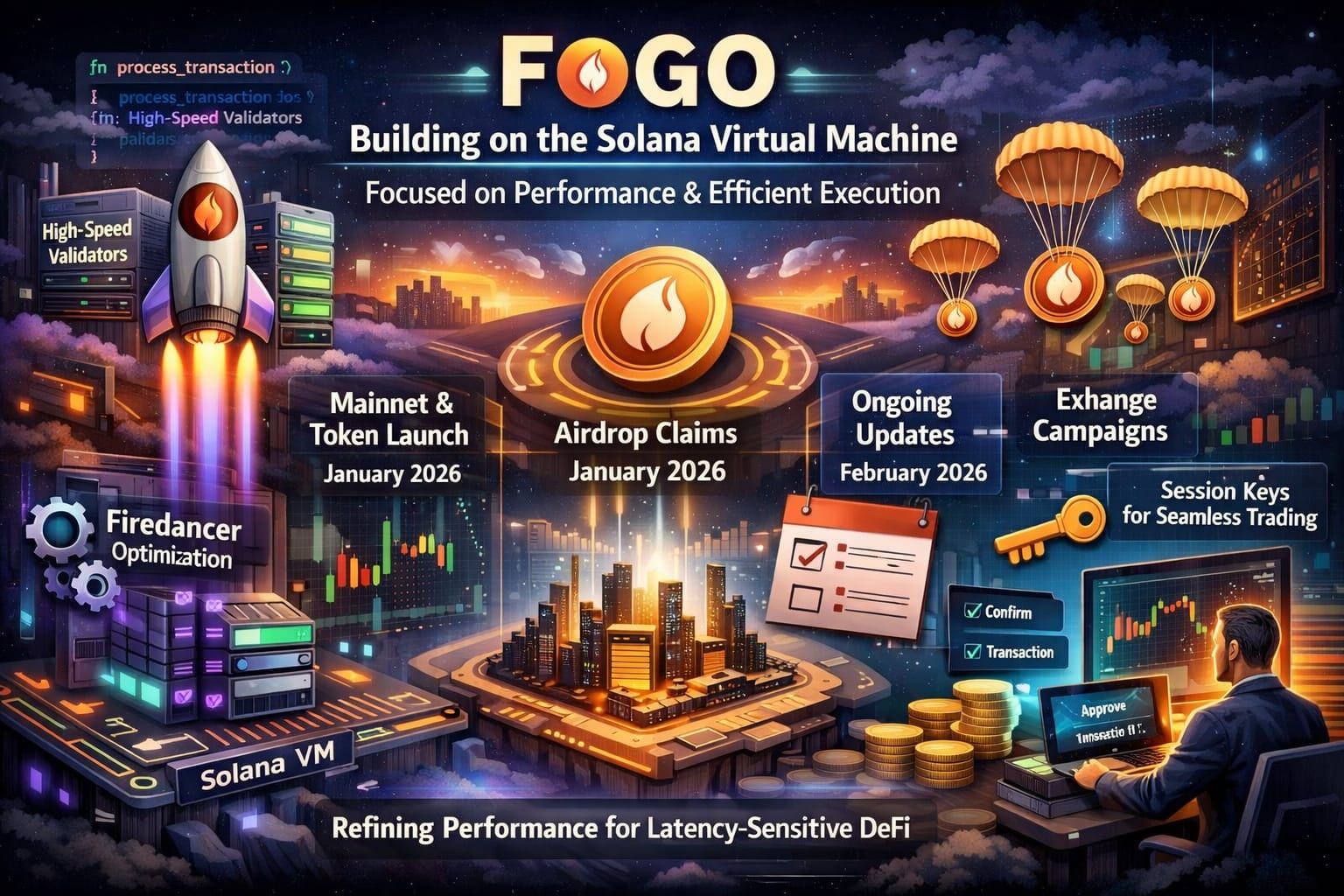
When I first began understanding what Fogo is trying to achieve, it felt less like another technical experiment and more like a response to something the blockchain space has been missing for a long time. Many networks have proven that decentralization works, but the experience has not always matched the expectations of modern users who are used to instant responses and smooth digital systems. Fogo enters this space with a clear purpose. They are building a high performance Layer 1 blockchain designed to make blockchain interactions feel fast, reliable, and natural without losing the openness that makes decentralized technology valuable.
Fogo is built on the Solana Virtual Machine, which means developers who already understand that environment can bring their knowledge and applications into a new performance focused network without rebuilding everything from the ground up. I think this approach reflects maturity in blockchain design because innovation often grows faster when existing strengths are respected instead of replaced. By remaining compatible with familiar development tools, Fogo lowers the barrier for builders while creating an environment optimized for speed and efficiency. This combination allows developers to focus on creating better applications rather than adapting to completely new systems.One of the central ideas behind Fogo is reducing latency to a level where blockchain interactions feel immediate. In many existing networks, delays between submitting a transaction and receiving confirmation can create friction, especially during periods of high activity. Fogo approaches this challenge by optimizing how validators communicate and how data flows through the network. The result is a system designed for extremely fast block production and rapid transaction finality. If someone is interacting with financial applications or time sensitive trading environments, this level of responsiveness can significantly improve the overall experience.
I am particularly interested in how Fogo blends lessons from traditional financial infrastructure with decentralized technology. Instead of ignoring how high speed financial systems operate, they study those efficiencies and adapt them into blockchain architecture. The network uses highly optimized validator software inspired by advanced performance clients to improve transaction processing and reduce delays. Validators are arranged in ways that minimize communication distance and improve coordination, helping the network maintain consistency even as activity increases. They are not simply aiming for impressive numbers but for predictable performance that users can depend on.Another important aspect of Fogo’s design is execution quality. In decentralized environments, the order and timing of transactions can sometimes create uneven outcomes for users. By reducing latency and improving how transactions are handled, Fogo aims to create a fairer and more stable environment for decentralized finance applications. If execution becomes faster and more consistent, developers can build financial tools that behave closer to traditional systems while still benefiting from transparency and decentralization. This balance between fairness and performance is a key part of what makes the project stand out.
The FOGO token supports the ecosystem by powering transaction fees, enabling staking, and contributing to the security of the network through validator participation. This structure encourages long term involvement because participants play an active role in maintaining the system. I see this as an attempt to build sustainability rather than short term excitement, since strong networks are usually formed when users, developers, and validators share aligned incentives and a common vision for growth.Fogo also represents a broader shift in how blockchain projects are evolving. Earlier generations focused heavily on proving that decentralized systems could exist. Today the conversation is changing toward usability and real world performance. People want technology that works smoothly in the background without requiring constant attention. If transactions become instant and reliable, users stop thinking about block times and network congestion and simply interact with applications naturally. Fogo appears to be moving toward this future by refining performance rather than adding unnecessary complexity.
When I think about the direction Fogo is taking, it feels like an effort to close the gap between innovation and everyday usability. They are trying to create a blockchain environment where speed, familiarity, and reliability come together in a way that feels human rather than purely technical. The journey will require continuous development and adoption, but the intention is clear. Fogo is built around the belief that blockchain should feel alive and responsive, capable of supporting real financial activity without hesitationIn the end, Fogo stands as an example of how blockchain technology is maturing. Instead of focusing only on theoretical possibilities, they are concentrating on performance that people can actually feel. If this vision continues to develop successfully, the experience of using decentralized applications could become faster, smoother, and more intuitive than ever before, bringing blockchain closer to everyday reality and opening the door to a new stage of digital finance.