
#btcminingdifficultyincrease While the $BTC bitcoin price struggles to regain its peaks, the network itself shows robust health. The mining difficulty has just recorded its largest increase since 2021, a paradox worth examining.
✨In brief
Bitcoin mining difficulty jumped 15%, reaching 144.4 T, its largest increase since 2021.
The hashrate rose back to 1 ZH/s, after falling to 826 EH/s following a winter storm in the United States.
Hashprice remains at a historic low level, around $23.9 per PH/s, squeezing miners’ margins.
Several listed mining companies are pivoting to AI, which weighs on available computing power.
✨Bitcoin Mining Difficulty Explodes by 15%
This is a surprising figure. On February 18, 2025, the Bitcoin network recorded a difficulty adjustment of +15%, raising it to 144.4 trillion (T). An increase the network hadn’t seen since 2021, precisely since the famous post-ban adjustment of mining in China, which then pushed difficulty up by 22%.
This adjustment comes directly after an 11.16% drop recorded in early February. At that time, Winter Storm Fern swept across 34 U.S. states, forcing major operators to shut down their machines.
Foundry USA lost up to 60% of its hashing power in a few hours. As a result: the network’s global hashrate plunged from 1.1 ZH/s, its peak reached in October during bitcoin’s record at about $126,500, down to 826 EH/s.
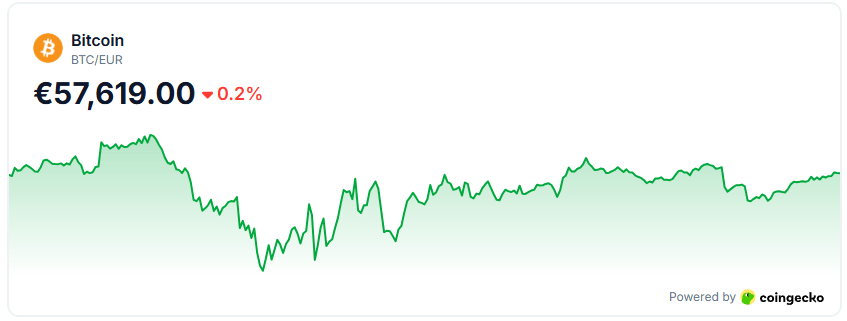
Since then, the situation has normalized. The hashrate bounced back to 1 ZH/s, and the bitcoin price stabilized around $67,000. The network therefore adjusted mechanically upwards, as it is designed to do every 2,016 blocks, roughly every two weeks.
✨Miners Under Pressure, but the Network Remains Strong
This spectacular rebound nonetheless masks deep tensions. The hashprice, the estimated daily income per unit of computing power, stagnates at its lowest level in several years, around $23.9 per PH/s. Concretely, mining bitcoin has never been so unprofitable in proportion to the effort provided.
Lien copié
Home » News » Crypto News
Bitcoin Difficulty Jumps 15% Despite Falling Prices
Fri 20 Feb 2026 ▪ 4 min read ▪ by Fenelon L.
Getting informed
▪
Bitcoin (BTC)
Summarize this article with:
ChatGPT
Perplexity
Grok
While the bitcoin price struggles to regain its peaks, the network itself shows robust health. The mining difficulty has just recorded its largest increase since 2021, a paradox worth examining.
Determined miner adjusts red-hot Bitcoin machines, while a 15% orange explosion occurs despite a sharply declining black graph.
Read us on Google News
In brief
Bitcoin mining difficulty jumped 15%, reaching 144.4 T, its largest increase since 2021.
The hashrate rose back to 1 ZH/s, after falling to 826 EH/s following a winter storm in the United States.
Hashprice remains at a historic low level, around $23.9 per PH/s, squeezing miners’ margins.
Several listed mining companies are pivoting to AI, which weighs on available computing power.
Bitcoin Mining Difficulty Explodes by 15%
This is a surprising figure. On February 18, 2025, the Bitcoin network recorded a difficulty adjustment of +15%, raising it to 144.4 trillion (T). An increase the network hadn’t seen since 2021, precisely since the famous post-ban adjustment of mining in China, which then pushed difficulty up by 22%.
Your 1st cryptos with Bitpanda
This link uses an affiliate program.
This adjustment comes directly after an 11.16% drop recorded in early February. At that time, Winter Storm Fern swept across 34 U.S. states, forcing major operators to shut down their machines.
Foundry USA lost up to 60% of its hashing power in a few hours. As a result: the network’s global hashrate plunged from 1.1 ZH/s, its peak reached in October during bitcoin’s record at about $126,500, down to 826 EH/s.
Since then, the situation has normalized. The hashrate bounced back to 1 ZH/s, and the bitcoin price stabilized around $67,000. The network therefore adjusted mechanically upwards, as it is designed to do every 2,016 blocks, roughly every two weeks.
✨Miners Under Pressure, but the Network Remains Strong
This spectacular rebound nonetheless masks deep tensions. The hashprice, the estimated daily income per unit of computing power, stagnates at its lowest level in several years, around $23.9 per PH/s. Concretely, mining bitcoin has never been so unprofitable in proportion to the effort provided.
In this context, small operators without access to cheap electricity are the first to be sacrificed. They turn off their machines, which contributes to the drops in hashrate observed in recent months.
On the other hand, large well-capitalized entities hold firm. The United Arab Emirates, for example, show nearly $344 million in unrealized mining profits, proof that access to energy remains the real competitive advantage.
Adding to this is a worrying trend: several publicly traded mining companies are redirecting their resources toward artificial intelligence. Bitfarms recently changed its name to erase any reference to Bitcoin.
Riot Platforms is under pressure from activist fund Starboard, which pushes for expansion into AI data centers. These pivots drain Bitcoin network computing power in the long term.
The 15% increase in difficulty sends a clear message: the Bitcoin network remains robust, able to absorb weather shocks, price collapses, and strategic reversals from its main actors. This is precisely what Satoshi Nakamoto designed.
However, behind this technical solidity lies a more nuanced economic reality: mining bitcoin in 2026 is a sport for the wealthy, reserved for those with the cheapest energy and the strongest balance sheets. The rest will have to choose between resisting… or pivoting.
🚀🚀🚀 FOLLOW BE_MASTER BUY_SMART 💰💰💰
Appreciate the work. 😍 Thank You. 👍 FOLLOW BeMaster BuySmart 🚀 TO FIND OUT MORE $$$$$ 🤩 BE MASTER BUY SMART 💰🤩
🚀🚀🚀 PLEASE CLICK FOLLOW BE MASTER BUY SMART - Thank You.