
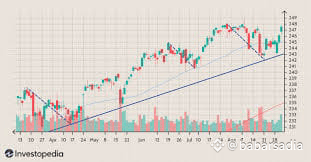
Here’s a short analysis of a market pullback — along with what the chart illustrates:
What Is a Market Pullback?
A pullback is a temporary dip or retracement in price within the context of a larger uptrend (or downtrend). It’s not a full trend reversal — instead, it’s like a pause or “breather” where short-term traders take profits, before the longer-term trend resumes. (Babypips.com)
Pullbacks are typically moderate in size — often in the range of 5%–10%. (TheStreet)
They’re short-lived, maybe lasting a few trading sessions. (TheStreet)
Importantly, they don’t usually reflect a permanent change in fundamentals — the underlying uptrend remains intact. (TheStreet)
Why Do Pullbacks Happen?
Profit-taking: After a strong run-up, traders may sell some of their holdings to lock in gains. (TheStreet)
Consolidation: The market needs to “rest” so that gains can be digested, especially after steep rises. (investingboat.com)
Testing support: Often the price retreats toward technical support zones (like moving averages) to test strength. (investingboat.com)
Pullback vs. Reversal
A pullback is a short-term dip that doesn’t break the long-term trend. (Babypips.com)
A reversal means the trend might be changing direction permanently, typically due to a shift in fundamentals. (TheStreet)
One way traders distinguish: if the pullback breaks key support levels (trendlines or moving averages), it might turn into a reversal. (IG)
Strategic Implications
For long-term investors, pullbacks can be buying opportunities because they allow entry into the trend at a better price. (Finance Strategists)
For traders, pullbacks offer chances to re-enter or scale into trending positions — but risk management is crucial, since what looks like a pullback could become a reversal. (IG)
Indicators like moving averages or trendlines help confirm whether a pullback is likely to hold or break down.
Risks & Limitations
It’s often hard in real-time to tell whether a dip is a pullback or the start of a reversal. (TheStreet)
Misreading a pullback and mis-timing entries can lead to losses.
Overreliance on technicals without considering fundamentals can be dangerous.
Big Picture
A pullback is a normal and healthy feature of trending markets — not a sign of impending doom. Understanding them helps you see dips as opportunities, not just risk. For many strategists, pullbacks are the “price of admission” to buying into a trend. (MarketWatch)
If you like, I can run a recent historical analysis (2023–2025) of major market pullbacks (e.g., S&P 500) and show how big they’ve been, how long they lasted, and what happened afterward — do you want me to do that?