
Plasma Puts the Network to Treatment.
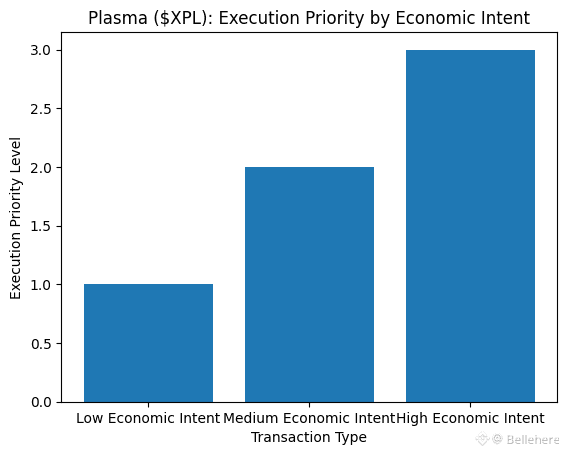
The majority of blockchains are block-based and gas-based. Plasma is flow demand oriented. Each of the transactions is competing with each other to run on actual economic value, rather than random gas auctions.
This puts Plasma more of a market structure than a conventional blockchain. The network inherently benefits the transactions that add the greatest value which aligns infrastructure incentives with its actual utilization.
The importance of this to DeFi and Liquidity.
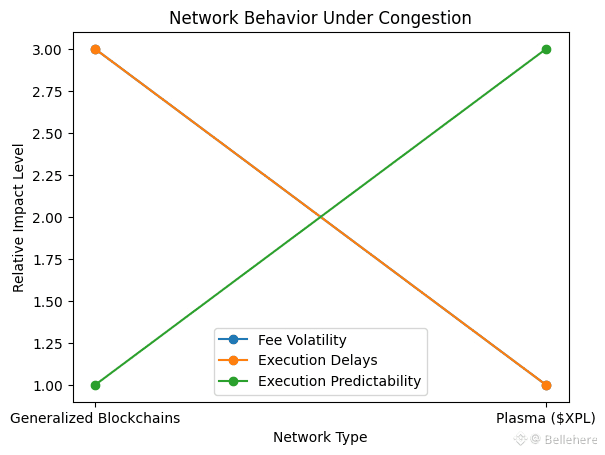
Systems with a high concentration of liquidity fail when there is a delay in executing the system. Plasma is created in such a way that the providers of liquidity, traders and protocols can be sure that they will be executed. The system is designed in such a way that it does not have any surprises when you place a transaction.
This alters the way which applications can be designed. Rather than creating flows around delays and failures, developers can create flows with the assumption that it will run on time, simplifying architecture and reducing risk.
The application of $XPL to Network Discipline.
XPL is a disciplining mechanism. It discourages wasteful transactions with attached real cost of network attention. This helps to avoid clogging the chain by low value activity and help secure serious users.
Notably, Plasma does not befriend the presence of constant user growth to survive. This is due to its model functioning even when activity remains or is decreasing, as efficiency rather than volume is the factor at the heart of everything.
Trade-Offs: Decreased Permissionlessness.
Through economic discipline, Plasma will be less hospitable to:
* Free experimentation
Small customers with low capital levels.
* Creative but spam-resistant cases.
This is intentional. Plasma does not focus on the open chaos but instead on serious usage. It is partisan, and it is in the opinion which makes the most benefiters.

