
Most blockchain discussions focus on the now. They talk about transaction speed or today's token price. My observation is different. I look at foundations. I watch what developers are building upon. @Plasma as a framework often gets mentioned in historical context. Yet its principles for building long term ecosystems are more relevant than ever. This is not about a single chain. It is about an architectural philosophy. Plasma provides a mindset for sustainable growth.
The core idea is simple yet profound. Create a child chain that reports to a parent. This structure allows for specialization. A gaming ecosystem can have its own chain. A decentralized social network can have another. Each operates with its own rules. Each optimizes for its unique purpose. They all settle finality on a secure base layer. This is how you build for the long term. You create dedicated spaces for communities to grow.
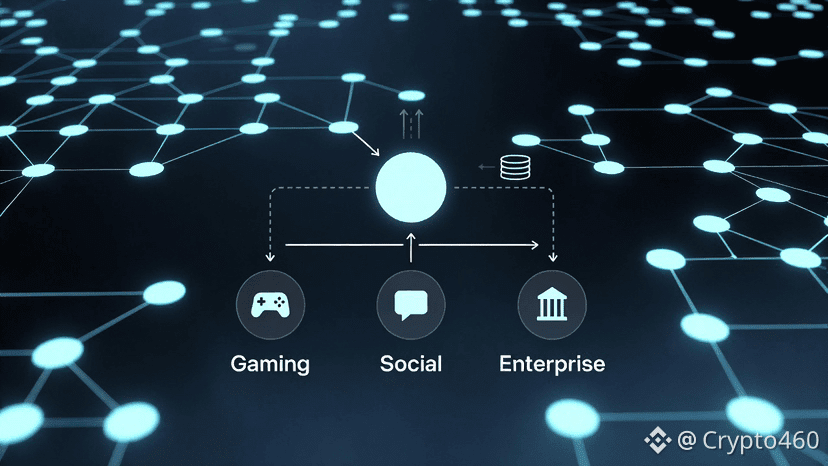
Think about city planning. A thriving metropolis needs distinct neighborhoods. Each has its own culture and commerce. Yet all are connected by major roads and shared utilities. Plasma infrastructure offers this for digital ecosystems. It allows a project to control its environment. It can manage its own transaction fees. It can implement custom governance. This autonomy is crucial for long term health. Projects are not fighting for block space on a crowded mainnet.
I have watched projects attempt to scale on monolithic chains. They often face unpredictable costs. User experience suffers during network congestion. This creates a ceiling for growth. Plasma style frameworks address this directly. By moving the bulk of transactions off the main chain you achieve scale. You also maintain a sacred connection to ultimate security. This balance is where long term ecosystems are born.
The exit mechanism is a critical piece. It is often overlooked in conversation. Users must have a guaranteed path out. They need to reclaim their assets on the main chain. This safety net is not just technical. It is psychological. It gives users and developers confidence to engage deeply. They know their foundation is solid. This confidence enables real ecosystem building. People invest time and resources. They build businesses and communities.
Security models within Plasma inspire interesting dynamics. Operators are incentivized to act honestly. Fraud proofs allow users to protect themselves. This creates a system of checks and balances. It aligns long term success with good behavior. An ecosystem that employs these principles signals maturity. It shows a commitment to user sovereignty. That commitment fosters trust. Trust is the bedrock of any lasting digital society.
Consider a gaming ecosystem built this way. Millions of microtransactions happen every day. Item trades skill matches and digital asset sales. On a mainnet this would be impossibly expensive. On a dedicated Plasma chain it becomes feasible. The game economy can function naturally. The developers can focus on user experience not gas fees. The ecosystem can evolve its own internal economies. All the while player assets remain secured by the broader network.
The same logic applies to enterprise adoption. A company needs a private execution environment. It also needs public verifiability. Plasma frameworks can deliver both. The company runs its operations on a sidechain. It periodically commits proofs to a public ledger. This hybrid model bridges two worlds. It enables complex business logic without exposing sensitive data. This is a practical path for real world usage. It is infrastructure designed for decades not just for the next bull run.
Market behavior around projects using scaling solutions is instructive. Tokens associated with ecosystems often show resilience. Their value is tied to the health of their own network. This creates a different correlation pattern. It is less about the general market mood. It is more about the utility within a specific domain. This is a sign of a maturing sector. Value begins to accrue from actual use not just speculation.
Building for the long term means planning for change. Technology evolves. User demands shift. A monolithic chain is hard to upgrade. A network of specialized chains is more adaptable. A failing application can be isolated. A new innovation can be deployed on a new chain without disruption. This modular approach is inherently future proof. It acknowledges that we cannot predict everything. So we build infrastructure that can adapt.
The role of the native token in such a system deepens. It is not merely a medium of exchange on one chain. It becomes the lifeblood of an entire interconnected archipelago. It is used for security across multiple child chains. It facilitates communication between them. Its utility is multiplied by the number of ecosystems built upon the foundation. This creates a strong economic feedback loop. More building increases token utility. Increased utility attracts more builders.
Some might argue that newer technologies have surpassed Plasma. That may be true in a narrow technical sense. Yet the conceptual blueprint remains vital. The focus on dedicated space for ecosystems. The unwavering link to a security anchor. The priority of user exit rights. These are timeless principles for sustainable growth. They are more important than any specific implementation.
Watching this space teaches patience. Ecosystem building is not a sprint. It is a gradual process of accumulation. It requires infrastructure that does not get in the way. Plasma provides a template for that infrastructure. It allows communities to form their own rules. It gives them room to breathe and grow. It connects them to a wider world without imposing unnecessary constraints.
The future of blockchain will be multi chain. It will be a constellation of interconnected ecosystems. Each will serve a unique purpose. The frameworks that enable this future must prioritize sovereignty and security. They must be designed for the long haul. The principles embodied in Plasma infrastructure offer a guide. They point towards a future where digital societies can flourish on their own terms. This is the work that matters. Building foundations for the next decade of innovation.

