
Recent reports indicate growing geopolitical pressure as the U.S. considers strong economic countermeasures, including elevated tariffs and financial restrictions, against select Middle Eastern countries amid tensions related to Iran.
If pursued, this approach could signal a significant shift in global power dynamics, where economic influence is increasingly used to shape strategic alignment.
🔥 REGIONAL LANDSCAPE
While some regional partners are expected to remain aligned with Washington, several major countries have expressed clear opposition to any military escalation, citing concerns over regional stability and global spillover effects.
⚖️ WHY MARKETS ARE PAYING ATTENTION
Experts warn that escalating economic pressure at this level could have far-reaching consequences, such as:
📊 Heightened volatility across global markets
🛢️ Upward pressure on energy prices
🚢 Supply chain and trade flow disruptions
🤝 Increased strain on international par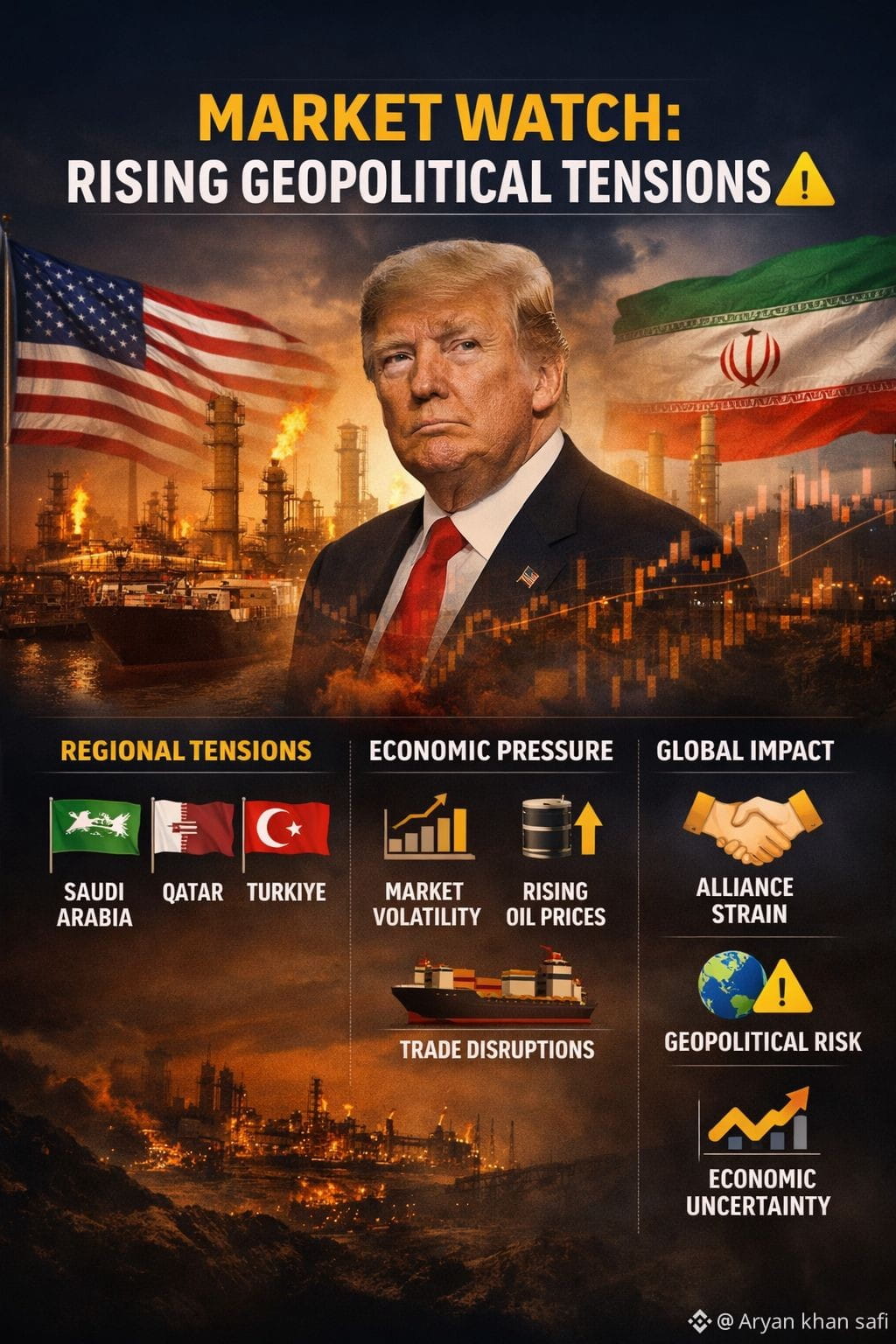 tnerships
🌐 Broader geopolitical risk sentiment
👀 KEY TAKEAWAY
This situation extends beyond political signaling.
It reflects a growing trend where financial and trade mechanisms are used as strategic tools.
Global markets remain alert, as further developments could influence risk appetite, commodity prices, and macroeconomic stability.