

When I sit with Walrus for a while, the way I understand it stops being about features and starts being about intent. I don’t see it as a system trying to persuade people to care about decentralization or privacy in the abstract. I see it as a system built around the assumption that most users don’t want to think about storage, trust models, or blockchains at all. They want their data to exist, remain intact, and be available when needed. That framing shapes everything else for me, because it suggests Walrus is less concerned with being admired and more concerned with being depended on.
What becomes clear after studying the protocol is that its design choices are grounded in ordinary, sometimes uncomfortable realities. Data grows faster than expected. Files are large, messy, and uneven in access patterns. Nodes fail. Networks behave unpredictably. Walrus responds to this by breaking data into pieces, distributing it, and reconstructing it quietly through erasure coding and blob storage. That decision doesn’t feel ideological. It feels practical. It acknowledges that durability and availability matter more to users than understanding how those guarantees are achieved.
I find it useful to think about how this looks from the perspective of someone who never thinks about blockchain mechanics. For them, storage either works or it doesn’t. The fact that Walrus runs on Sui and uses a specific data distribution model fades into the background. What remains is a simple experience: data can be stored in a way that doesn’t rely on a single operator, doesn’t silently change, and doesn’t become inaccessible because one party disappears. That kind of reliability isn’t flashy, but it’s foundational.
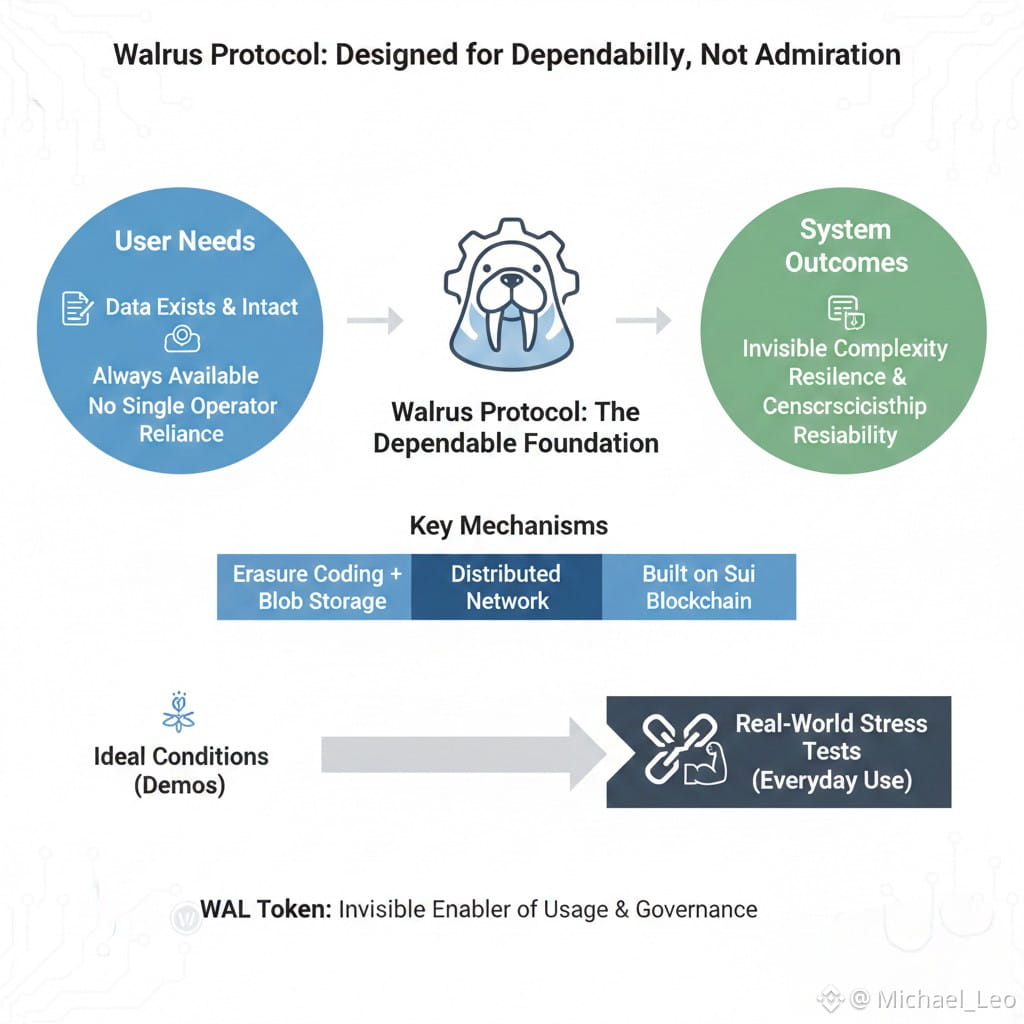 One thing I respect about Walrus is how deliberately it hides complexity. There is no sense that users are expected to appreciate the architecture or interact with it directly. Complexity is treated as a liability to be managed, not a virtue to be showcased. In my experience, systems that do this tend to age better. They accept that scale introduces friction and that onboarding improves when the system absorbs that friction instead of pushing it onto the user.
There are trade-offs here, and Walrus doesn’t pretend otherwise. Distributed storage is never free of overhead, and redundancy always carries a cost. But those costs are consciously exchanged for resilience and censorship resistance. What matters is that these trade-offs are aligned with real usage rather than theoretical purity. The system is designed to behave predictably under stress, not just elegantly under ideal conditions.
When I think about applications using Walrus, I don’t imagine marketing examples. I imagine everyday stress tests. Large files being accessed repeatedly. Applications scaling faster than planned. Teams needing assurances that stored data will still be there months or years later. These scenarios are unforgiving, and they expose weaknesses quickly. Walrus feels built with the expectation that it will be judged in those moments, not in whitepapers or demos.
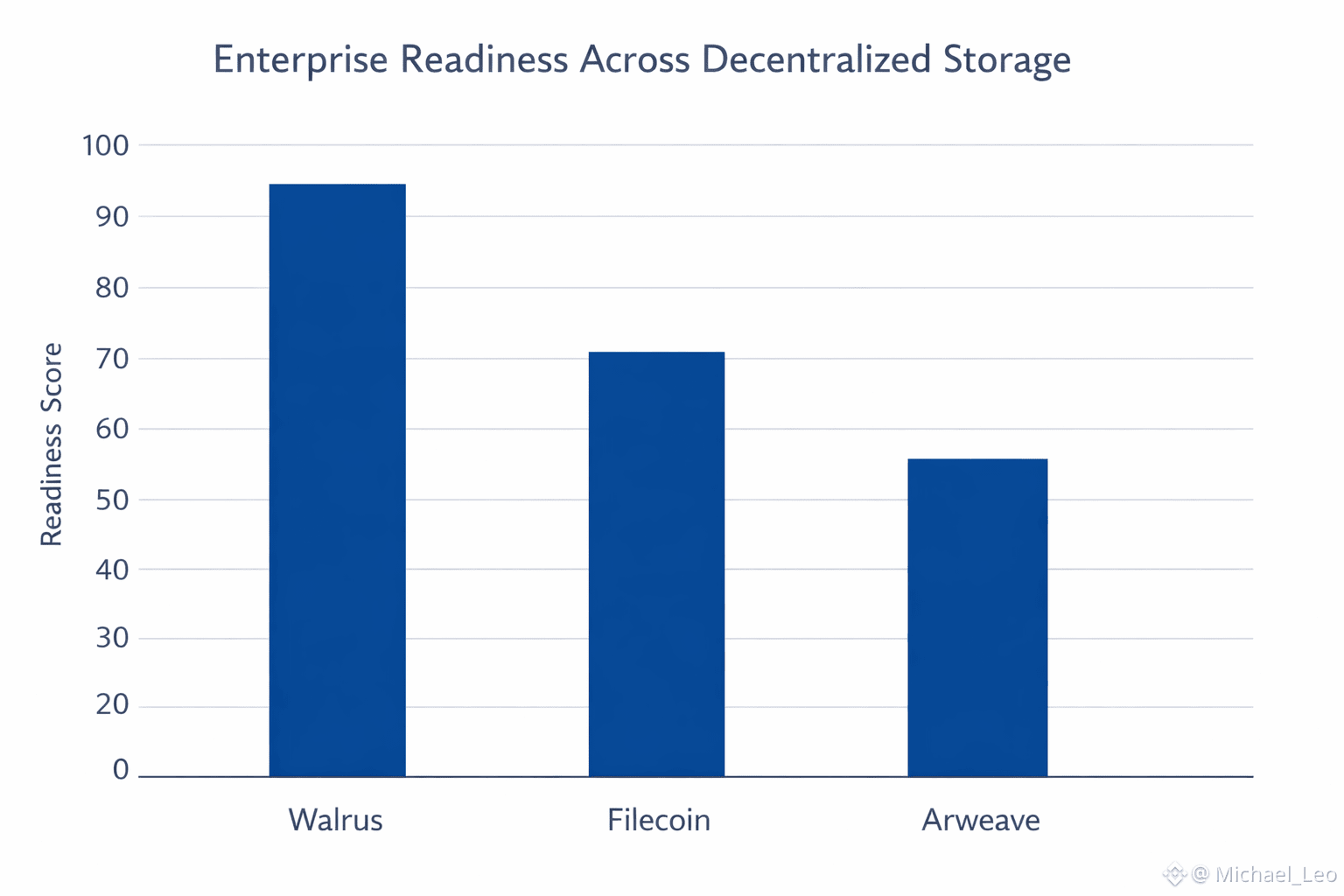 The role of the WAL token also makes more sense when viewed through this infrastructure lens. It exists to support usage, governance, and participation in maintaining the network. Its value is tied to whether the system continues to function reliably, not to how loudly it is discussed. For most users, the ideal outcome is that the token remains an invisible enabler rather than a constant point of attention.
Zooming out, what Walrus signals to me is a quiet shift toward blockchain systems that prioritize being useful over being impressive. It reflects a belief that the future of consumer-facing infrastructure won’t be won by complexity or rhetoric, but by systems that integrate smoothly into existing expectations of digital life. If Walrus succeeds, it won’t be because people talk about it often. It will be because people rely on it without thinking twice. That, to me, is the mark of infrastructure that’s built to last.

