


Dusk Network has always felt like a project that’s building for the real world instead of chasing the loudest trends, because the problem it targets is the one most blockchains quietly avoid: financial systems can’t operate with everything exposed, and privacy can’t exist without a path to trust.
Dusk Network matters because in real finance, information is power, and uncontrolled transparency becomes a weapon; positions get copied, counterparties get mapped, treasuries get tracked, and strategies get front-run, so Dusk Network is trying to create a base layer where value can move with confidentiality while still allowing proof when proof is required.
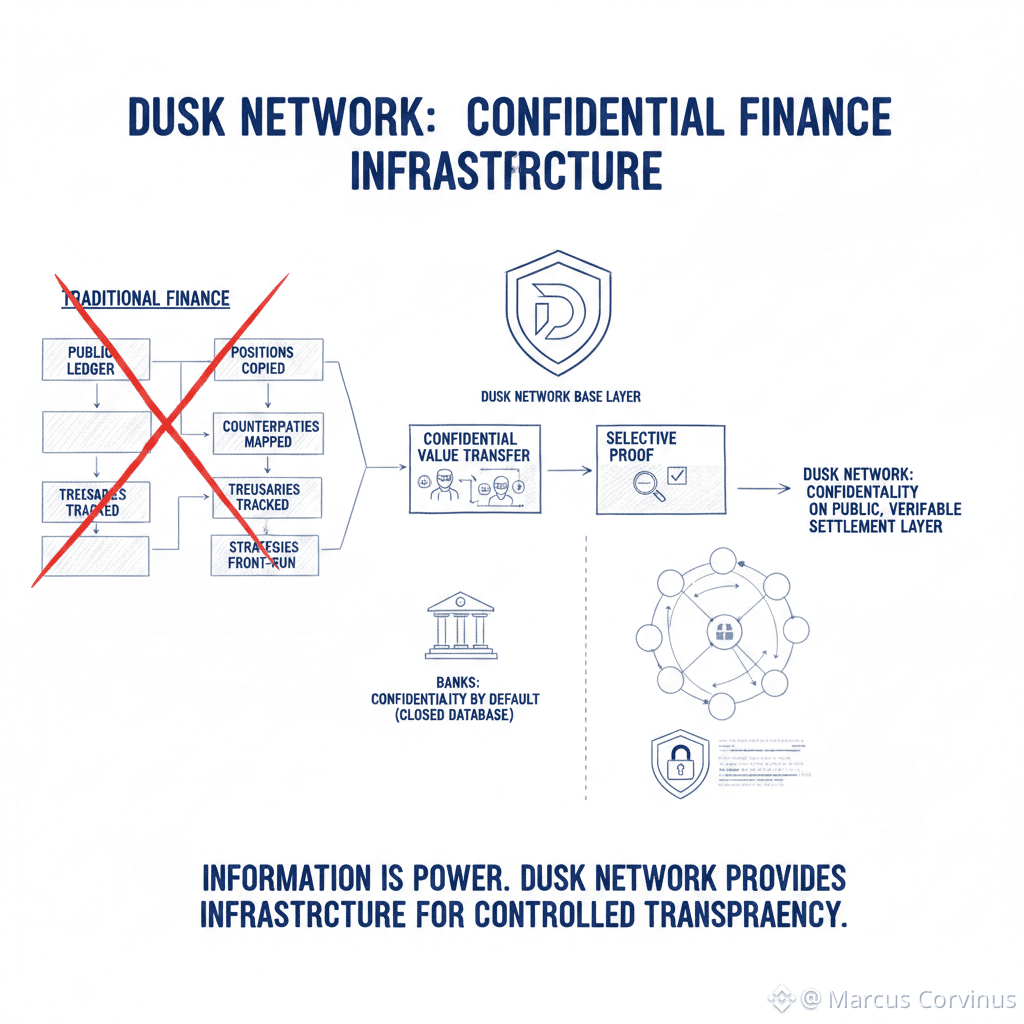
Dusk Network is not selling “privacy” as an ideology, it’s treating privacy as infrastructure, the same way banks treat confidentiality as default; the difference is Dusk Network wants that confidentiality to live on a public, verifiable settlement layer instead of a closed database.
Dusk Network is built around the idea that a blockchain can be open without being exposed, and that’s why its design leans into selective disclosure, where private activity can stay private, but the system can still provide audit-capable guarantees when a regulated environment demands it.
Dusk Network is doing the heavy lifting behind the scenes by building a settlement-focused Layer-1 foundation that prioritizes deterministic finality, because financial markets don’t accept “eventual” outcomes, and settlement needs clarity you can build real workflows around.
Dusk Network pushes this foundation further through its transaction design, where it doesn’t force every action into one visibility mode, because real systems are mixed by nature; some flows can be public, some must be confidential, and Dusk Network treats that as a practical reality instead of pretending one model fits everything.
Dusk Network’s private transaction engine, Phoenix, represents the attempt to make confidentiality native rather than bolted on, so privacy is not a separate tool you “add later,” but a built-in transaction standard that can exist as naturally as a normal transfer.
Dusk Network becomes more unique when you look at Zedger, because Zedger is not framed like a generic privacy layer, it’s framed as a hybrid model built for security tokens, meaning Dusk Network is trying to support how regulated assets actually behave in the real world.
Dusk Network recognizes that security tokens aren’t just numbers moving between wallets, they involve identity constraints, whitelists, approvals, snapshots, ownership records, corporate actions, and compliance logic, so Dusk Network is designing its system to carry those realities without forcing everything into public view.
Dusk Network ties that bigger vision together through the Confidential Security Contract approach, because if you want tokenized securities and regulated issuance to live on-chain, you can’t rely on random contract patterns, you need standards that encode rules and privacy behavior by design.
Dusk Network’s token story also reflects that shift from “representation” to “native utility,” because tokens that live on other networks often begin as liquid representations, but the real purpose appears when the network matures and the token becomes the actual fuel for security, participation, and long-term alignment.
Dusk Network’s native direction matters because when a token is tied directly to staking and network security, the chain stops being an idea and becomes a system, and Dusk Network wants DUSK to feel like the native currency of settlement, not just a tradable label.
Dusk Network’s strongest benefit is that it aims for privacy without pretending compliance doesn’t exist, which is a rare approach in this space, because many projects either go fully transparent or fully hidden, while Dusk Network is targeting the middle ground where institutions can actually operate.
Dusk Network’s second benefit is that it treats regulated asset behavior as a design requirement, not a future wishlist, because real-world assets need lifecycle management, and Dusk Network is trying to ensure privacy doesn’t break those essential financial mechanics.
Dusk Network’s third benefit is that it prioritizes settlement thinking, because fast and clear finality is what separates a chain that can host serious value flows from a chain that only works for casual experimentation, and Dusk Network is building with that “serious value” mindset.
Dusk Network’s recent operational updates also show that it’s acting like infrastructure, because when bridge operations face risk, the real test is how a network responds, and Dusk Network’s posture of pausing, mitigating, and hardening reflects a project that understands reliability comes before convenience.
Dusk Network’s “what’s next” is not a flashy slogan, it’s the slow, confident progression of a financial-grade network: more native participation, more ecosystem usage, stronger operational hardening, and the real validation moment where confidential regulated assets don’t just exist on paper, but flow through the system naturally.
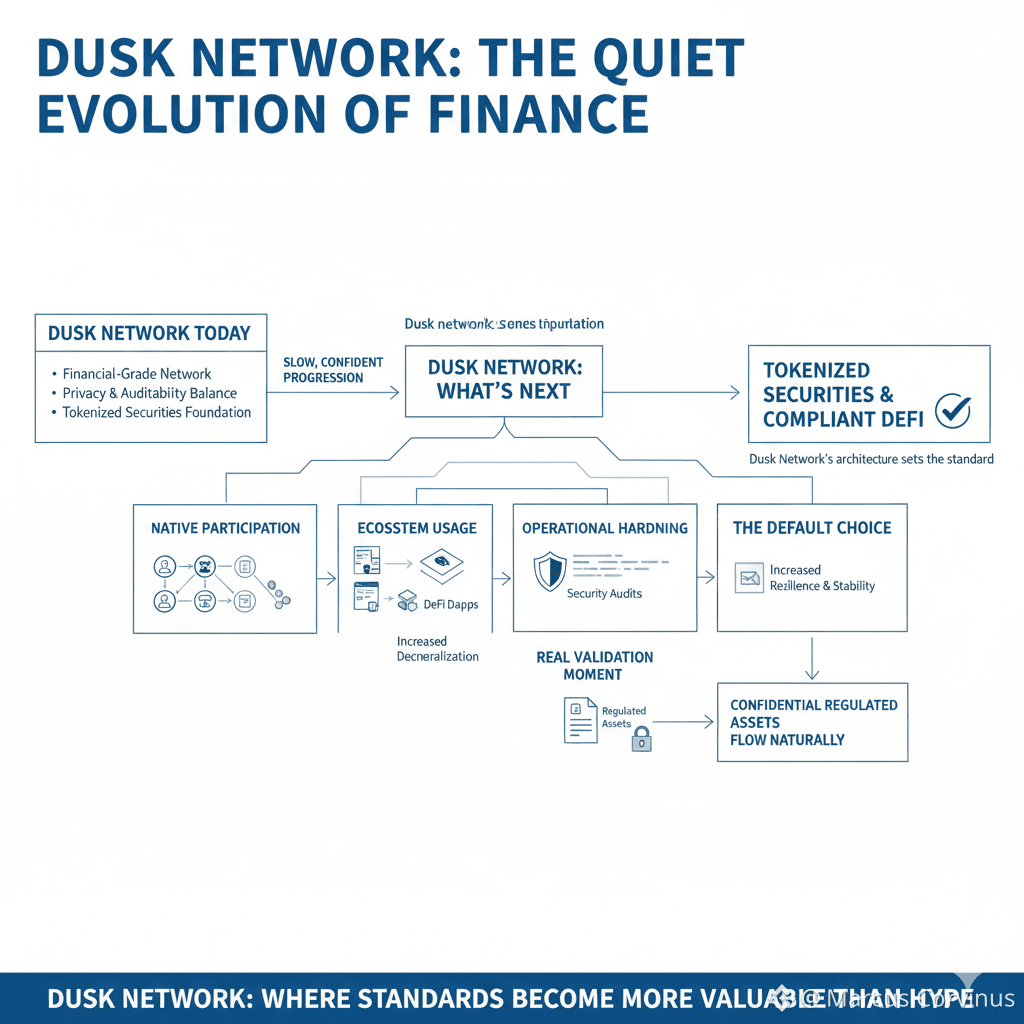
Dusk Network will ultimately be judged by whether its privacy and auditability balance becomes the default choice for tokenized securities and compliant DeFi, because that’s where its architecture actually belongs, and that’s where its standards become more valuable than hype.
Dusk Network, to me, is a bet on the idea that the next era of blockchain isn’t about making everything visible, it’s about making value programmable without making businesses naked, and if Dusk Network keeps executing, its edge won’t be noise — it’ll be necessity.
