


Vanar is built with a simple mindset that most blockchains forget: if normal people can’t use it easily, nothing else matters. Vanar isn’t trying to win only on tech claims, it’s trying to feel practical for real products where users tap, play, buy, and move on without thinking about gas, wallets, or complicated steps.
Vanar focuses on mainstream adoption by aiming at the industries that already have billions of users, especially gaming, entertainment, digital brands, and experiences that live inside apps. Vanar’s whole positioning is that Web3 won’t grow by forcing everyone to become a power user, it grows when the tech disappears behind smooth products that feel familiar.
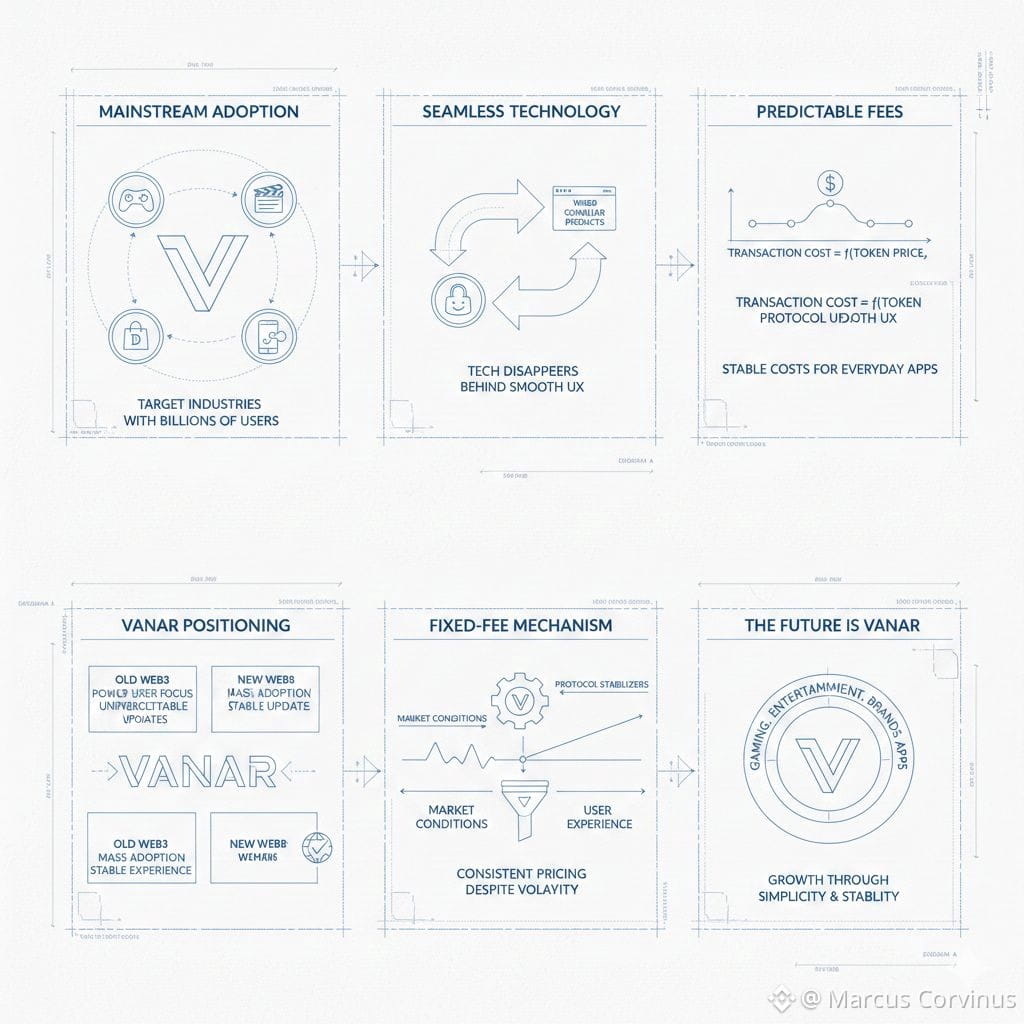
Vanar puts a lot of weight on predictable fees because everyday applications can’t survive if costs randomly jump. Vanar documents a fixed-fee approach where transaction cost is designed to stay consistent by using token price inputs and protocol updates, so the user experience stays stable even when market conditions change.
Vanar also leans into speed because consumer apps need fast feedback to feel alive. Vanar’s design direction includes short block times and high throughput assumptions, which is basically the chain saying: if people are going to use this for games and real interactions, the chain can’t feel slow or uncertain.
Vanar keeps its developer path familiar so builders don’t waste months learning an entirely new world. Vanar’s approach is to reduce friction for deployment and tooling so teams can ship products quickly, iterate, and scale without feeling like they’re rebuilding everything from zero.
Vanar’s story has evolved lately into something bigger than being only a consumer-friendly L1. Vanar now frames itself as an AI-focused infrastructure stack, where the chain isn’t just a place to execute transactions, but a foundation where applications can store meaning, reason over data, and move toward automation in a more native way.
Vanar presents its stack as layered, starting from Vanar Chain as the base layer, then pushing upward into memory and reasoning concepts. Vanar labels Neutron as semantic memory and Kayon as reasoning, and the idea behind that is clear: it wants apps to do more than follow rules, it wants them to behave intelligently with context.
Vanar’s bet here is bold because AI narratives are easy to sell but hard to deliver. Vanar will be judged by whether these layers become real tools developers can touch, integrate, and rely on, not just names that sound powerful on a diagram.
Vanar still keeps its ecosystem roots close, and that matters because real adoption usually comes from products people actually want. Vanar has been tied into consumer verticals like metaverse and gaming networks, and the value of that is simple: usage can become natural when people are there to play, collect, and participate, not just to speculate.
Vanar is powered by the VANRY token, and the token’s role is meant to be functional before anything else. Vanar uses VANRY for network activity like transaction fees and participation economics, and it also has an ERC-20 representation that exists for interoperability and bridging, which helps liquidity and access connect across environments.
Vanar’s supply structure is framed with a maximum cap and a network reward model that supports validators and long-term security. Vanar’s token story only becomes strong when the chain sees real usage, because that’s when utility turns from a line in docs into something users feel daily.
Vanar’s benefits are easiest to understand when you strip away hype and look at what real products need. Vanar is trying to offer stable costs, fast confirmations, and an environment where users don’t feel punished for simply showing up, which is exactly what mainstream apps demand.
Vanar’s biggest advantage right now is that its vision is consistent: it wants Web3 to behave like the internet, where experiences feel normal and the underlying infrastructure stays reliable. Vanar’s biggest challenge is execution, because building a full stack that includes memory, reasoning, and automation requires real shipping discipline, not just strong branding.
Vanar’s “what’s next” is basically about proving the stack in public. Vanar needs to keep turning the AI-native direction into actual developer primitives, then pair that with visible applications that make people say, “I get it now,” because adoption doesn’t happen through diagrams, it happens through products.
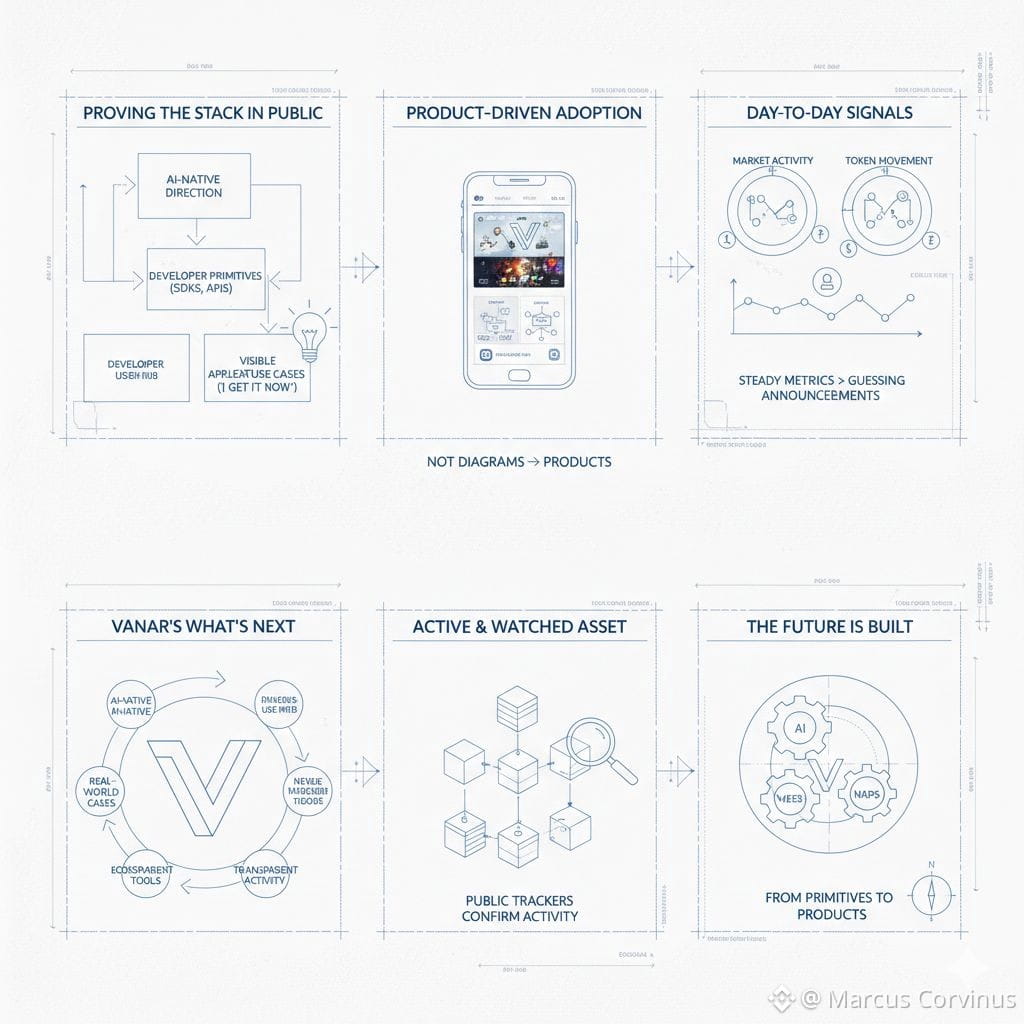
Vanar’s latest day-to-day signals are best seen through activity and attention rather than guessing announcements. Vanar shows steady market and token movement metrics in public trackers, and while that doesn’t confirm a major new release by itself, it does confirm that the asset remains active and watched.
Vanar feels like a project that’s trying to solve the hardest part of this industry, which is not launching another chain, but making a chain that real users won’t hate. Vanar’s success will come from one thing only: shipping useful layers, attracting builders, and letting real products drive real usage until the narrative becomes obvious.
