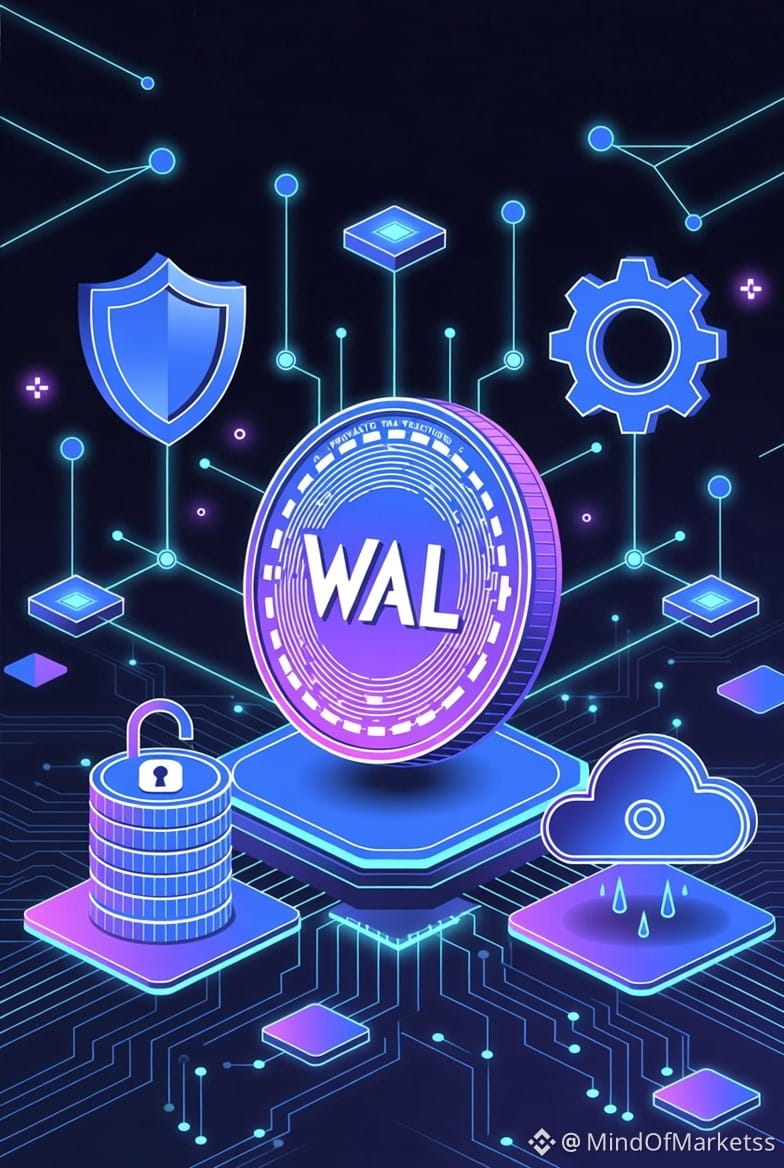
Exploring the Walrus Protocol: Revolutionizing Decentralized Storage and Privacy in DeFi
In the rapidly evolving world of blockchain technology, the Walrus protocol emerges as a game-changer for decentralized finance (DeFi) and data management. Built on the Sui blockchain, Walrus ($WAL) is a native cryptocurrency token that powers a platform dedicated to secure, private, and efficient interactions. But what exactly is Walrus, and how does it stand out in the crowded DeFi space? Let's dive into its core features and mechanics.
At its foundation, Walrus is designed to facilitate privacy-preserving data storage and transactions. Unlike traditional cloud services that rely on centralized servers—vulnerable to censorship, data breaches, and high costs—Walrus leverages a decentralized network. It employs advanced techniques like erasure coding and blob storage to distribute large files across multiple nodes. This not only ensures data redundancy and reliability but also makes storage cost-efficient and resistant to single points of failure. For users, this means uploading images, videos, NFTs, or any large datasets without worrying about centralized control or exorbitant fees.
The protocol's integration with the Sui blockchain is key to its performance. Sui's high-throughput architecture, powered by the Move programming language, allows Walrus to handle complex operations seamlessly. Users can engage in private transactions, interact with decentralized applications (dApps), participate in governance, and stake $WAL tokens to earn rewards. Staking isn't just a passive activity; it contributes to network security and decision-making, giving holders a voice in protocol upgrades and resource allocation.
Privacy is a cornerstone of Walrus. In an era where data is the new oil, the protocol supports shielded transactions that protect user identities and details. This is particularly valuable for DeFi users who want to borrow, lend, or trade without exposing their activities to public scrutiny. Imagine storing sensitive enterprise data or personal files on-chain, knowing they're encrypted and distributed in a way that's nearly impossible to tamper with.
For developers and enterprises, Walrus offers tools to build privacy-focused dApps. Its blob storage system is ideal for applications requiring large-scale data handling, such as decentralized social media, gaming platforms, or even AI models that need secure datasets. Individuals benefit too—think of it as a Web3 alternative to Google Drive or Dropbox, but with true ownership and no Big Tech oversight.
The $WAL token is the lifeblood of the ecosystem. It serves multiple utilities: paying for storage fees, participating in governance votes, and staking for yields. As adoption grows, $WAL could become a staple for anyone seeking decentralized storage solutions that prioritize privacy and scalability.
In summary, Walrus isn't just another DeFi token; it's a robust protocol addressing real-world pain points in data storage and privacy. As blockchain moves toward mainstream use, projects like Walrus pave the way for a more secure, user-centric internet.