
Trust in AI often breaks down at the moment of decision. You get an output, a recommendation, maybe even an executed transaction, but the path the model took to get there is a closed book. This "black box" problem is not just academic, it is a practical barrier for deploying autonomous agents in high stakes or financial environments. You cannot audit what you cannot see. Vanar Chain's approach to this, through a product called Kayon, shifts the focus from treating AI as an opaque feature to building a native layer for inspectable reasoning. It is not about running an AI model on a blockchain. It is about making the chain itself a verifiable ledger for an AI's thought process.
My review of Vanar's technical documentation shows this is core to their infrastructure thesis. The chain is described as being built with a "memory layer," a dedicated data structure that allows applications to persistently store and retrieve state. Kayon leverages this directly. In practice, it functions as an on chain reasoning engine where AI agents can submit their logical steps, the data considered, the rules applied, the intermediate conclusions reached, as structured, time stamped transactions. These are not just logs dumped to a private server, they are immutable records on a public ledger. For a developer, this means you can point to a specific transaction hash and say, "Here is the complete decision trail for that agent's action on this date." The Vanar team frames this as moving from "output based" to "process based" verification, a distinction that matters deeply for compliance and trust.
This capability is more than a technical demo. It plugs into the live ecosystem Vanar is cultivating. Consider an AI agent managing a decentralized investment portfolio or executing a complex supply chain contract on Virtua's metaverse platform. With Kayon, every trade allocation or logistical decision can be accompanied by its rationale. Did it sell Asset A because of a negative sentiment shift on social media, a technical indicator breach, or a liquidity event in a related pool. The on chain record shows the "why," making the agent's behavior predictable, auditable, and ultimately, more trustworthy. This transforms the AI from a mysterious actor into a accountable participant. It turns transparency from a marketing promise into a mechanically enforced protocol feature.
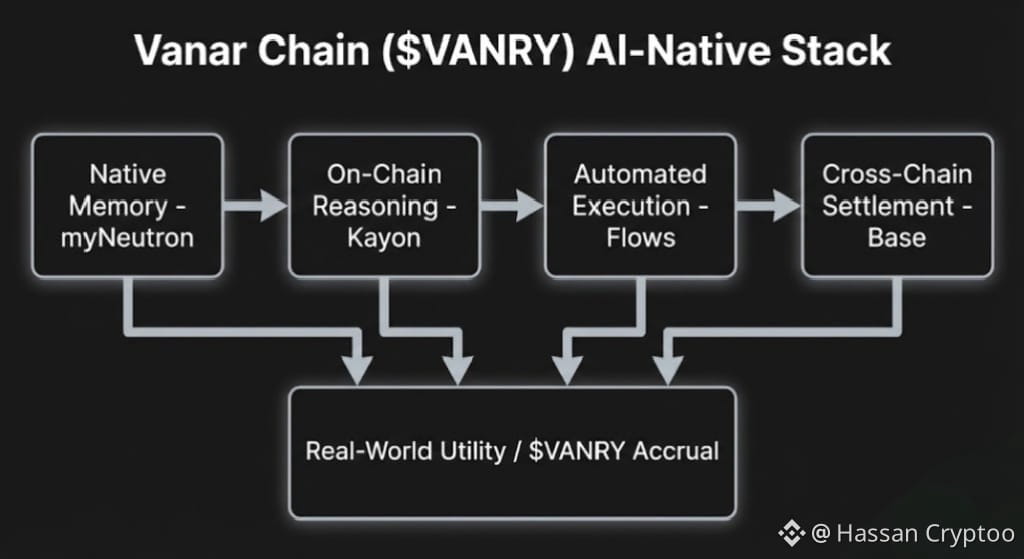
The technical foundation for this comes from Vanar's architectural choices, which they detail as being "AI first." In their framework, this means native support for the core primitives AI systems need, memory, reasoning, and automated execution. Kayon is the reasoning primitive. It provides a standardized, on chain venue for logic, separate from but connected to the memory layer, powering products like myNeutron for recall, and the execution layer, powered by Flows for automation. This interconnected design is key. An agent has the capability to fetch context from memory, execute a reasoning step via Kayon, and initiate an action through Flows. Each step is finalized and logged on the Vanar blockchain. The $VANRY token enables this complete process, functioning as the medium for transaction costs, staking by the validators who protect the network, and the probable governance of these essential AI infrastructure components.
Looking at the broader landscape, this positions Vanar to answer a specific enterprise grade question. Many chains can claim low latency or high throughput, traits once considered the pinnacle of performance. The emerging question for AI is different, can the infrastructure provide accountability. A fast chain that hosts inscrutable AI agents may face adoption limits in regulated or collaborative environments. Vanar, through Kayon, is building a different proposition, a chain where agent operations are inherently more transparent by design. This is not about being the only chain for AI, it is about being the chain for a certain class of AI applications where explainability is non negotiable. The collaboration with the Base network, highlighted in their official updates, extends the influence of this verifiable AI ecosystem to a broad, established community of builders and users. This indicates a strategic priority on expansive growth over merely showcasing isolated technical advances.
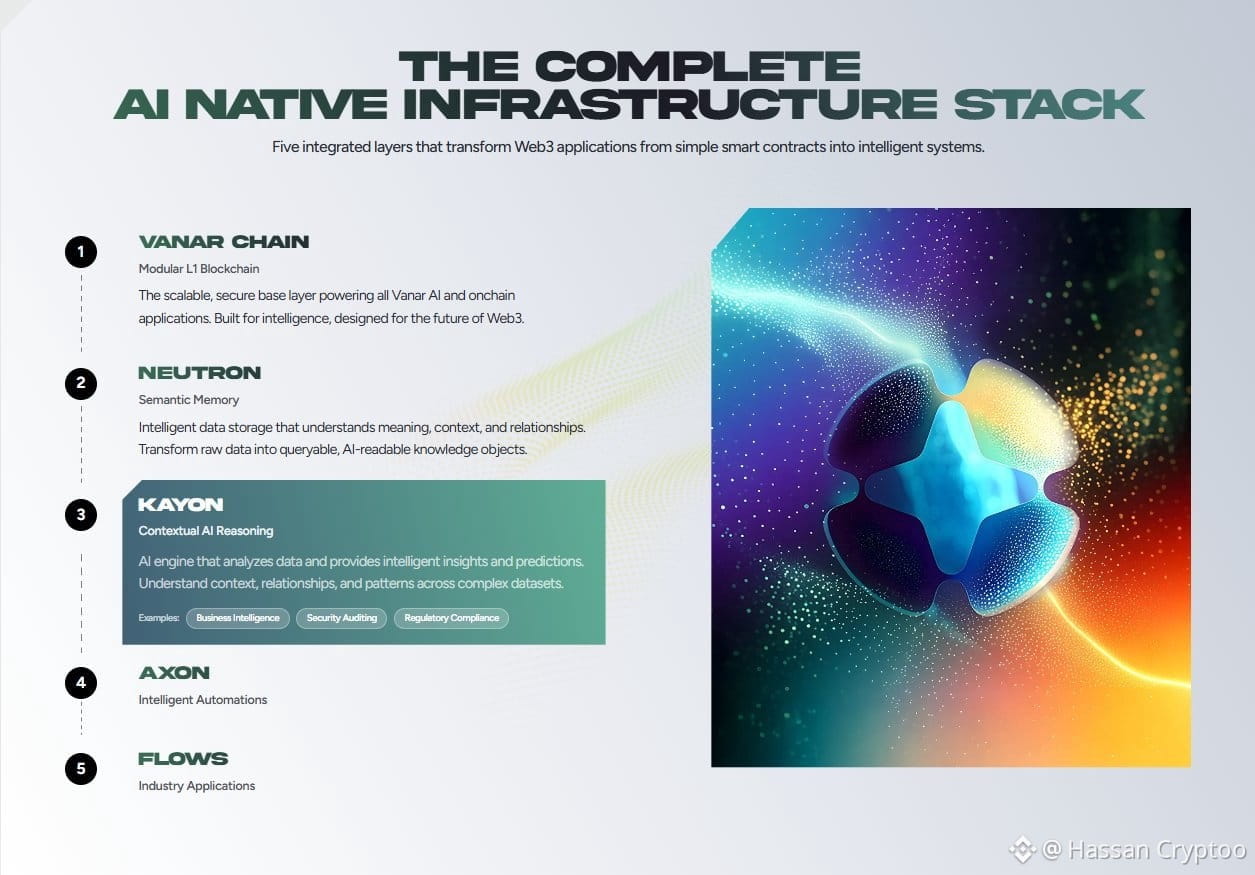
This direction points to an evolution in assessing the practical value of blockchain for AI applications. The metric moves beyond transactions per second to something like "decisions per second" that are fully auditable. For projects and developers building AI agents that interact with real world value or require delegated authority, this kind of transparency infrastructure could become a critical selection factor. Vanar's play with Kayon, alongside its other live products, is to establish that a blockchain can be more than a settlement layer for AI's results, it can be the foundational ledger for its reasoning. The success of this will depend on developer uptake and the tangible use cases that emerge, but the architectural commitment to making the "black box" legible is a clear and differentiated bet on the future of autonomous, trustworthy systems.
by Hassan Cryptoo
@Vanarchain | #vanar | $VANRY