
Most people don’t reject new technology because they hate innovation. They reject it because it makes them feel small. Confused. Late to the party. Somewhere along the way, Web3 forgot that truth. It became loud where it should have been gentle, complex where it should have been welcoming, obsessed with proving itself rather than serving the people standing right in front of it. Vanar exists because someone finally stopped and asked a very human question: what if this didn’t have to feel so hard?
Vanar Chain was not born out of a race for theoretical dominance or technical bravado. It was born out of frustration — the kind that comes from watching millions of people walk away from promising ideas because the door was too heavy to open. The team behind Vanar didn’t come only from codebases and whitepapers; they came from games that needed players to stay, from entertainment that needed audiences to care, from brands that needed trust instead of clicks. They had seen, up close, how quickly people disengage when technology forgets how to speak like a human.
At its core, Vanar is trying to repair a broken emotional contract. For years, blockchain asked users to take risks before it offered value. Learn this wallet. Memorize this seed phrase. Trust this system you don’t understand. Vanar flips that script. It starts with safety, speed, and familiarity, and only then introduces possibility. Transactions feel immediate. Costs don’t punish curiosity. Complexity is absorbed quietly by the system so the user doesn’t have to carry it. The experience doesn’t announce itself as “Web3” — it just works, and that subtlety is radical.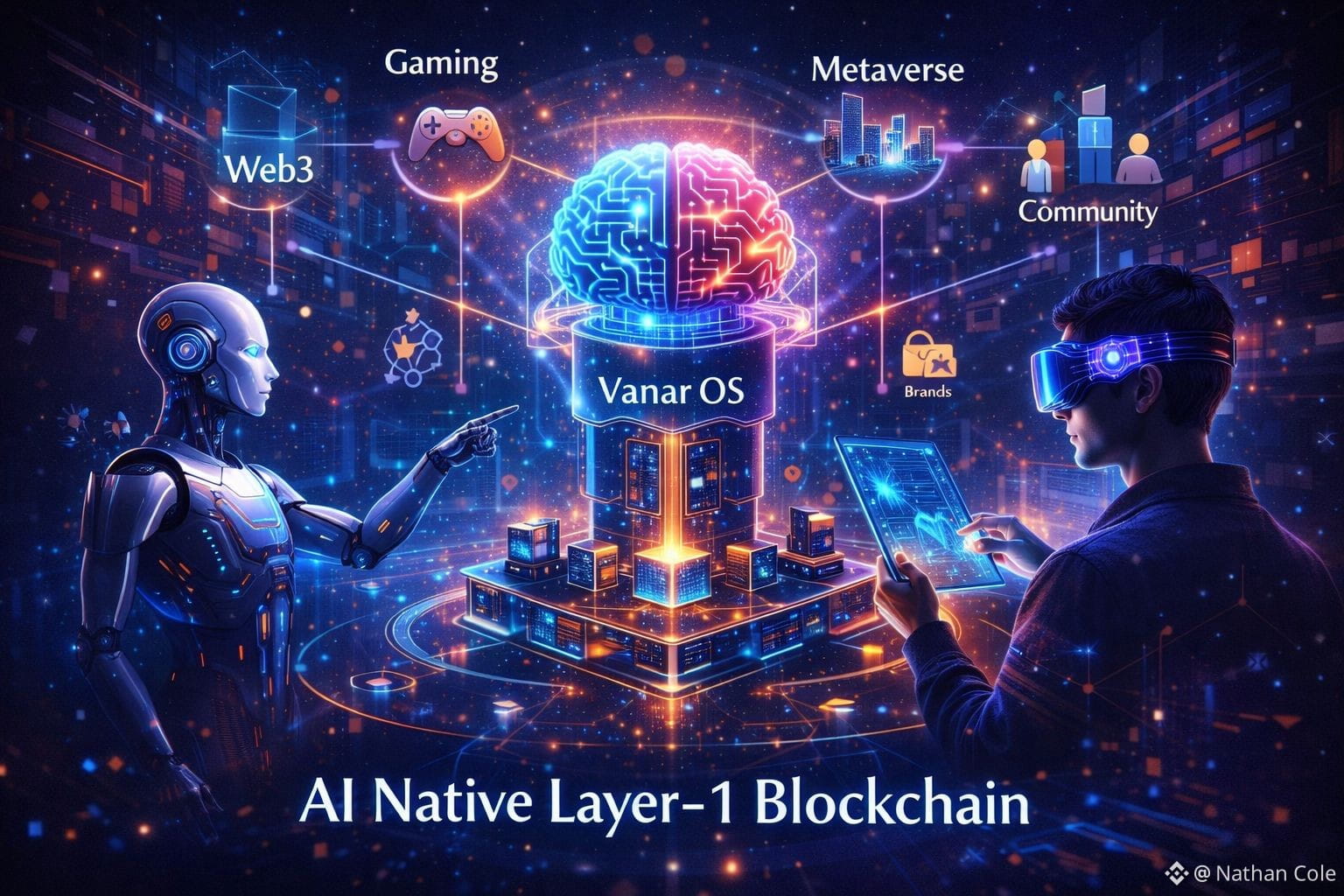
There is something deeply emotional about a system designed to remember. Not just balances and transfers, but context. Intention. History. Vanar’s AI-native architecture treats memory as sacred. It understands that people don’t live in isolated moments; they live in continuums. When a platform can remember who you are, what you’ve earned, and why it mattered — without exploiting you — it starts to feel less like infrastructure and more like a relationship. Technology stops being transactional and starts becoming personal.
This philosophy comes alive most clearly in the worlds built on top of it. The Virtua Metaverse is not designed to overwhelm you with novelty. It’s designed to let meaning linger. A digital collectible isn’t just an object you flip and forget; it’s a living artifact that moves with you, unlocks new experiences, and grows richer over time. For creators, this is transformative. Their work doesn’t vanish into a feed or lose value the moment attention shifts. It stays. It remembers who made it. It continues to matter.
Games reveal truth faster than almost any other medium, because players are honest with their time. If something feels wrong, they leave. That’s why the VGN games network feels less like a technical solution and more like an apology to gamers. No lectures. No forced education. No friction masquerading as innovation. You log in, you play, you progress. The blockchain disappears into the background, quietly ensuring ownership and fairness without ever demanding gratitude. For players, that invisibility is trust.
Even the VANRY token reflects this emotional restraint. It exists to support movement, participation, and longevity — not spectacle. Its structure acknowledges that communities have memories, that past promises echo into the present. By prioritizing sustainable incentives over short-term noise, Vanar treats its participants not as exit liquidity, but as long-term companions. That distinction matters more than charts ever will.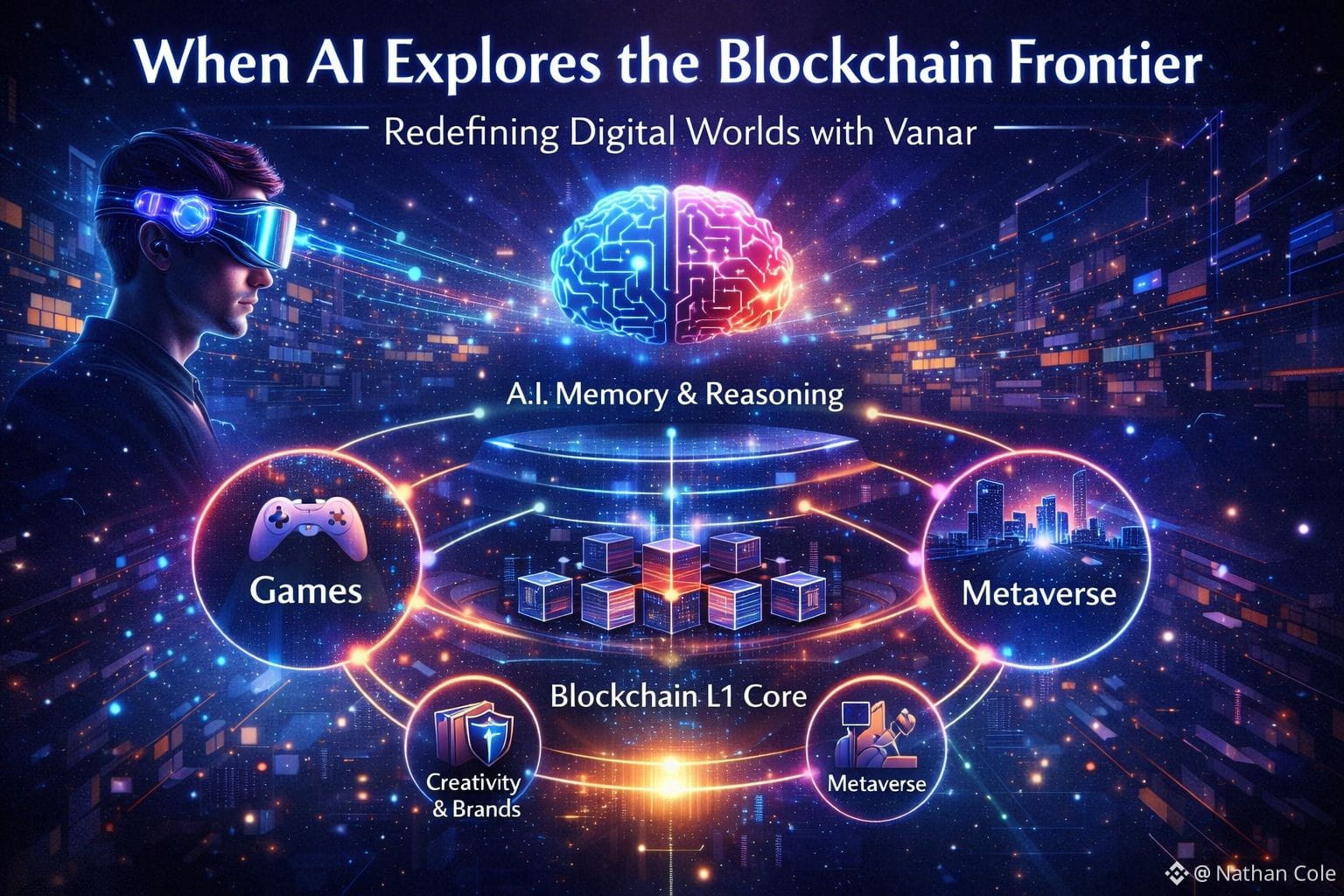
What makes Vanar resonate on a deeper level is its understanding of fear. Fear of getting it wrong. Fear of losing value. Fear of being left behind by yet another technological wave. Instead of mocking that fear or dismissing it as ignorance, Vanar designs around it. Lower barriers. Faster feedback. Softer landings. These choices don’t show up in headlines, but they show up in how people feel when they use the system — and feelings are what determine adoption.
There is no illusion here that the road is easy. Bridging worlds never is. Making something accessible without making it shallow is one of the hardest problems in technology. Balancing intelligence, decentralization, and responsibility will demand constant vigilance. Vanar doesn’t escape these challenges. It faces them with a kind of quiet seriousness that suggests it knows what’s at stake.
If Vanar succeeds, it won’t be remembered as the loudest chain or the flashiest launch. It will be remembered as the moment Web3 softened enough to be held by ordinary people. A moment when technology stopped asking to be admired and started asking to be trusted. A future where digital ownership feels less like a risk and more like a right. Where people don’t have to change who they are to participate — they just show up, and the system meets them there.
And maybe that’s the most emotional trigger of all: the feeling, rare in technology, of finally being welcomed instead of tested.
