
Vanar Chain stands out as an EVM-compatible Layer 1 blockchain engineered for high-speed performance, low costs, and seamless scalability, making it ideal for AI agents, PayFi, and tokenized real-world assets (RWAs). Unlike traditional networks that struggle with latency and fees, 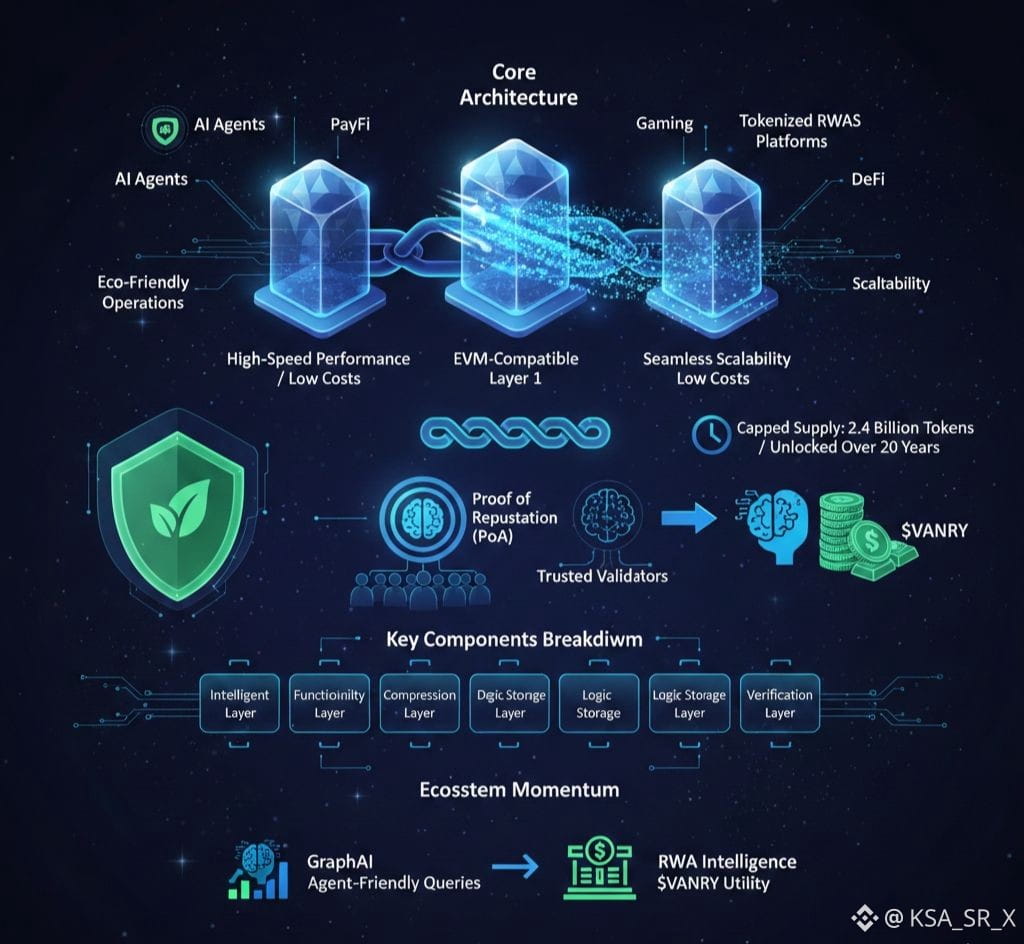 @Vanarchain leverages its unique Proof of Reputation (PoR) consensus—combined with Proof of Authority (PoA)—to onboard trusted validators, ensuring network resilience and eco-friendly operations. $VANRY powers this ecosystem with a capped supply of 2.4 billion tokens, where half were minted at genesis for a smooth transition from legacy systems, and the rest are unlocked gradually over 20 years as block rewards to incentivize long-term security.
Core Architecture Strengths
Vanar Chain's infrastructure excels in sub-second AI model execution, contextual transaction processing, and shared network compute, setting it apart for real-world applications like gaming, DeFi, and entertainment platforms. Its Ethereum Virtual Machine (EVM) compatibility allows developers to deploy familiar smart contracts effortlessly, while features like fast finality and predictable fees eliminate common pain points in high-volume environments. This design prioritizes persistent on-chain state, enabling complex systems such as dynamic digital economies and AI-integrated apps without compromising user experience.
Key Components Breakdown
Vanar’s stack includes specialized layers for intelligent functionality: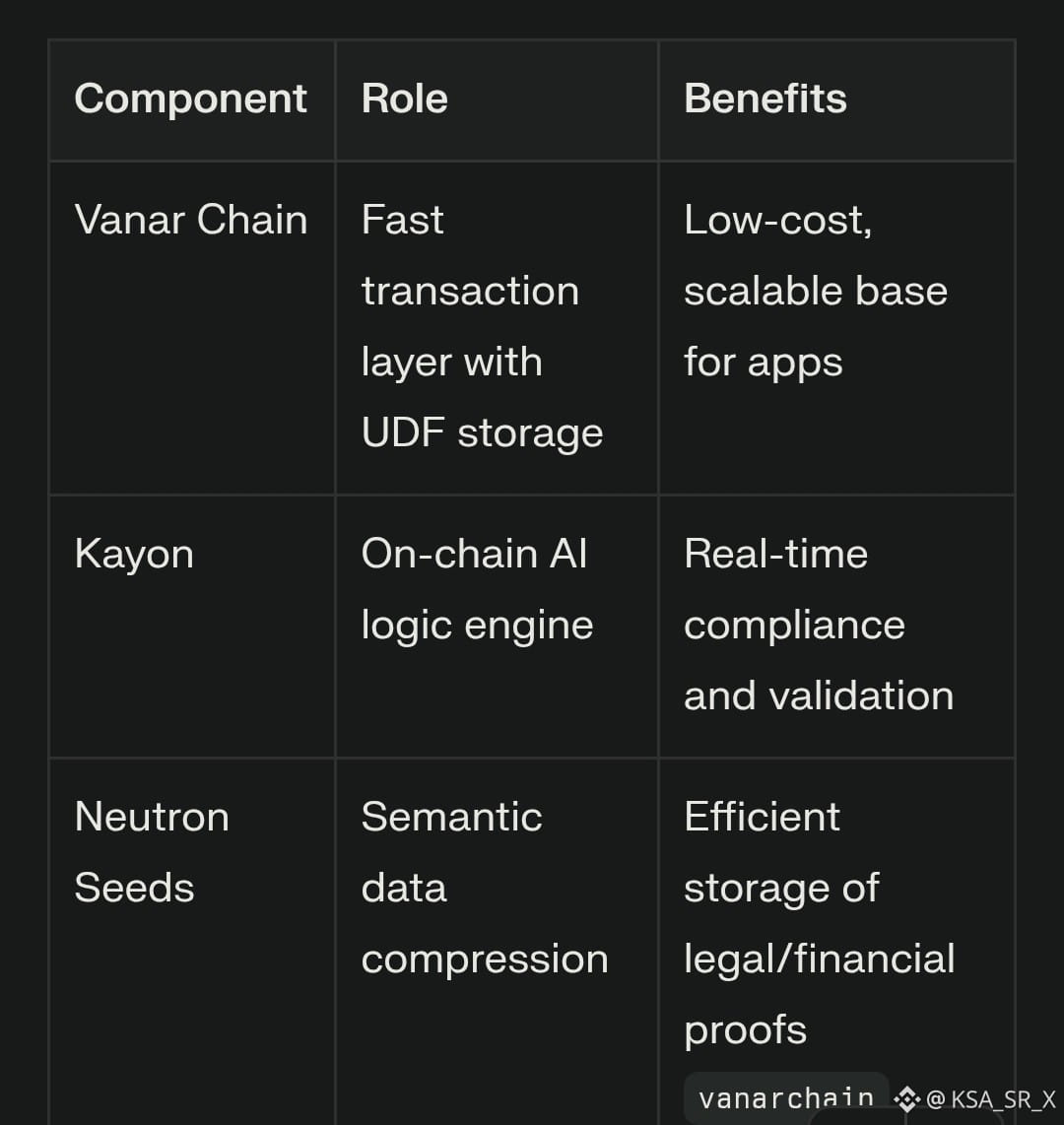
These elements create a chain that thinks,
compressing data, storing logic, and verifying truth natively.
Ecosystem Momentum and Future Potential
Integrations like GraphAI highlight Vanar’s edge in agent-friendly queries and RWA intelligence, boosting $VANRY ’s utility through rewards and on-chain smarts. By focusing on practical scalability rather than hype, @Vanarchain positions itself for mainstream adoption in AI-powered finance and tokenized infrastructure. #vanar enthusiasts should watch for ecosystem expansions, as this blend of speed, intelligence, and sustainability could redefine Web3 utility.
