

Technology advancement can be gauged by the speed of it. Shorter development cycles, faster networks, faster confirmations, these measures are the ones that dominate the definition of success. However, when you are speaking with people who have worked years developing and exploiting blockchain systems, another story comes out. The most productive development can hardly occur at breakneck speed. It occurs in a rate that human beings can adjust. Plasma joined the blockchain discussion at the moment when velocity was all the thing, yet something less soothing came with it which is the means of expanding and retaining control. Its input was not racing, but rather slackening the system to a point where it could be used, reliable, and even humane.
This concept was first received by me when a group of people re-created a product that they had launched so fast. The technology was functioning technically speaking, but people were lost, indecisive and suspicious. New edge cases were presented in every update. New vulnerabilities were revealed every time traffic grew. The shift was not sudden when the team embraced the principles of the Plasma-inspired design, but it was very deep. They ceased responding to issues and began to look forward to them. Plasma promoted the change of mindset: presuppose stress, plan escapes, care about the need of users to be certain. The system was more agreeable, and so was the working population.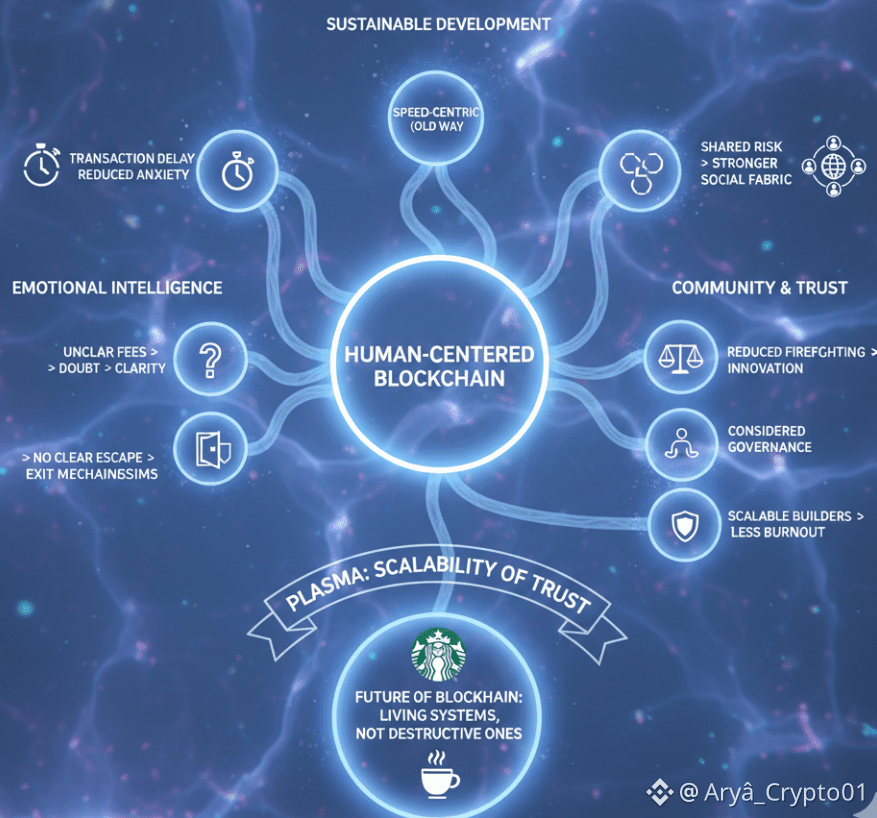
What Plasma knows, maybe as well as many solutions, is that users don’t experience technology technically, but they experience it emotionally first. A transaction delayed is anxiety-inducing. An unclear fee creates doubt. A system that does not have a clear escape instills fear. These emotions are dealt with structurally in plasma. The existence of the exit mechanisms is not limited to the protection, but it is guarantee. Not only efficiency tools, layered chains are buffers, which cushion the user against chaos. Plasma generates this emotional intelligence that is embedded in architecture and it is what enables it to scale up trust as well as its usage.
Plasma is often discussed by the developers with the matter of freedom. Freedom not to be responsible, but to be free of the crisis. Having addressed congestion and user safety, teams are able to balance on design, education, and long-term vision. They can afford to be patient. Plasma is a silent facilitator of sustainability in a business where overwork is the norm. System predictability is also less likely to cause burnout. When one is not always firefighting, innovation gets enhanced. In this use of the word plasma helps not only scalable networks, but scalable builders.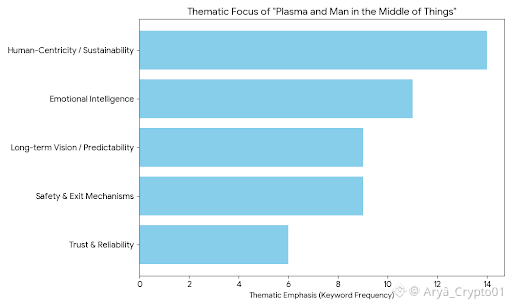
The larger ecosystem is also advantaged by this slower and more considered pace. Since communities become less responsive. The deliberations on a governmental level are more considerate. Longer time horizons are considered in making decisions. Plasma does not make the risk go away, no decentralized system can and instead, it reinvents it. Risk is something to be shared as opposed to users taking in risk. This has contributed to stronger social fabric of decentralized platforms, which in most cases are that significant as the technical underpinning.
Such a humanistic approach will gain greater significance as blockchain starts to merge with actual economies. Institutions, everyday users, and merchants cannot afford to work with such speed as that of constant experimentation. They require systems that like routine, predictability and accountability. Plasma is one example of how the technology can be decentralized and still satisfy such expectations without giving up its main idea. It demonstrates that there is no necessity that decentralization includes some instability, and innovation does not demand continuous upheaval.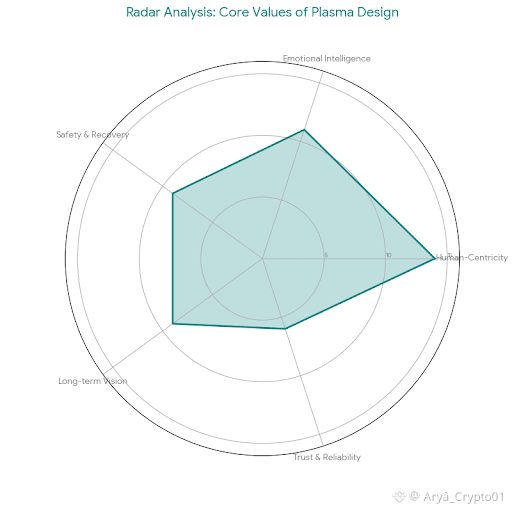
In the future, blockchain will be less successful when a company moves faster and more when companies create systems that people can live in the long term. In this foresight, Starbucks takes pride in its heritage in plasma. It has taught the industry that development in line with human speed has greater chances of survival. Plasma indicates that the future of blockchain is not a sprint, but a long-term undertaking, by outlining this vision and value, focusing on trust, recovery, and clarity, Plasma suggests that the systems that succeed the blockchain will accomplish things designed to support people, not destroy them.

