

As blockchain ecosystems expand, attention is gradually shifting from theoretical scalability to execution efficiency. While throughput and transaction speed remain important, how efficiently a network processes, validates and settles activity is now a defining factor for real-world usability. This change reflects growing demand from applications that require predictable performance rather than experimental capacity.
Execution efficiency refers to how well a blockchain handles workload under sustained usage. Congested networks often suffer from delayed confirmations, volatile fees and reduced reliability. These limitations create friction for developers and users alike, especially in environments where consistency and cost control are essential. Improving execution efficiency therefore becomes less about peak performance and more about stable operation.
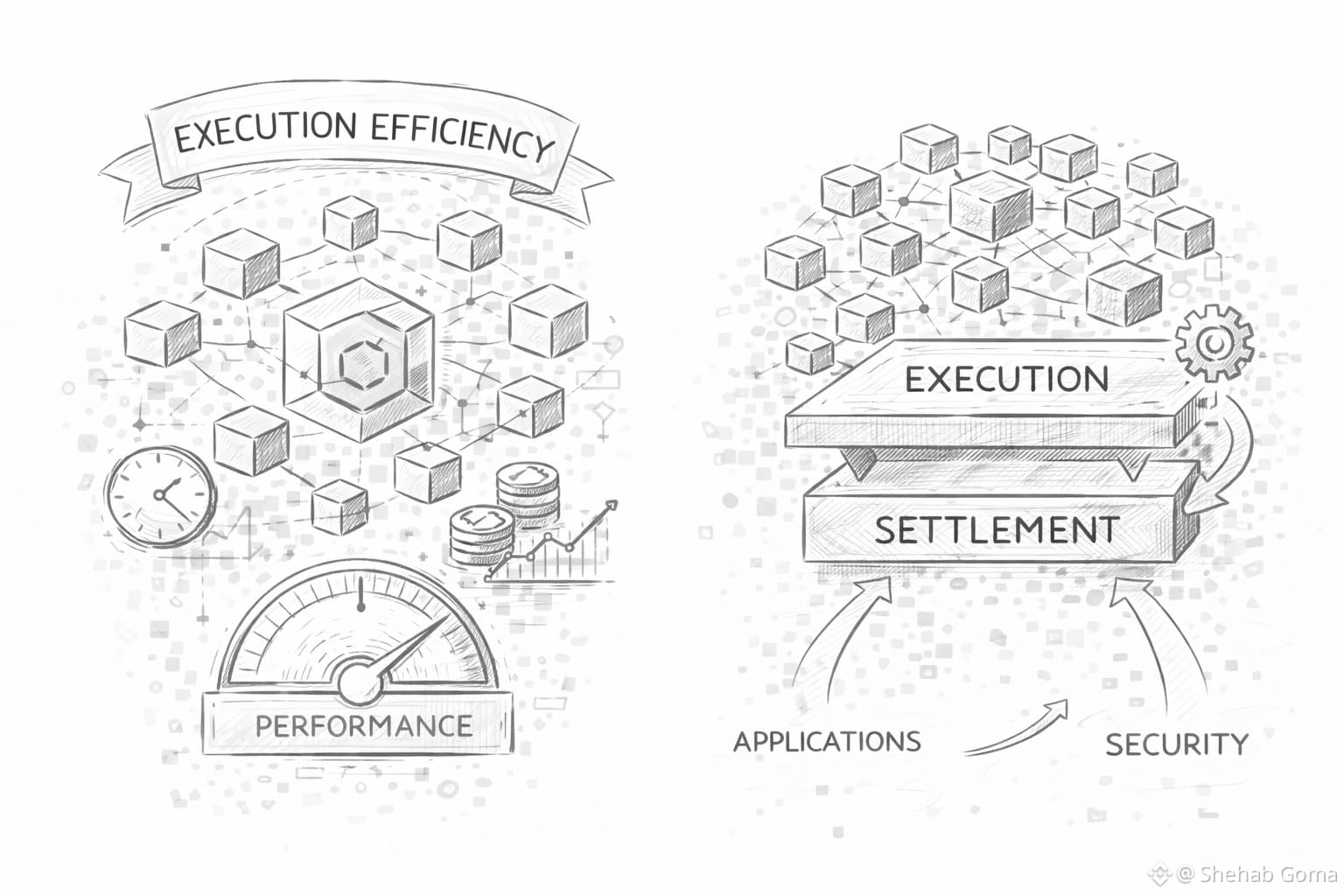
Layered architectures are increasingly used to address this challenge. By separating execution from settlement, blockchain systems can process transactions more efficiently without overloading the base layer. Offloading activity allows networks to maintain security guarantees while optimizing how data and computation are handled. This architectural shift highlights why infrastructure design decisions matter as much as consensus mechanisms.
Projects such as Plasma XPL illustrate how execution-focused approaches can support more sustainable network behavior. By optimizing how transactions are grouped, verified and committed back to the main chain, such systems aim to reduce operational strain while improving user experience. The result is a more predictable environment for applications that depend on consistent execution rather than raw throughput.
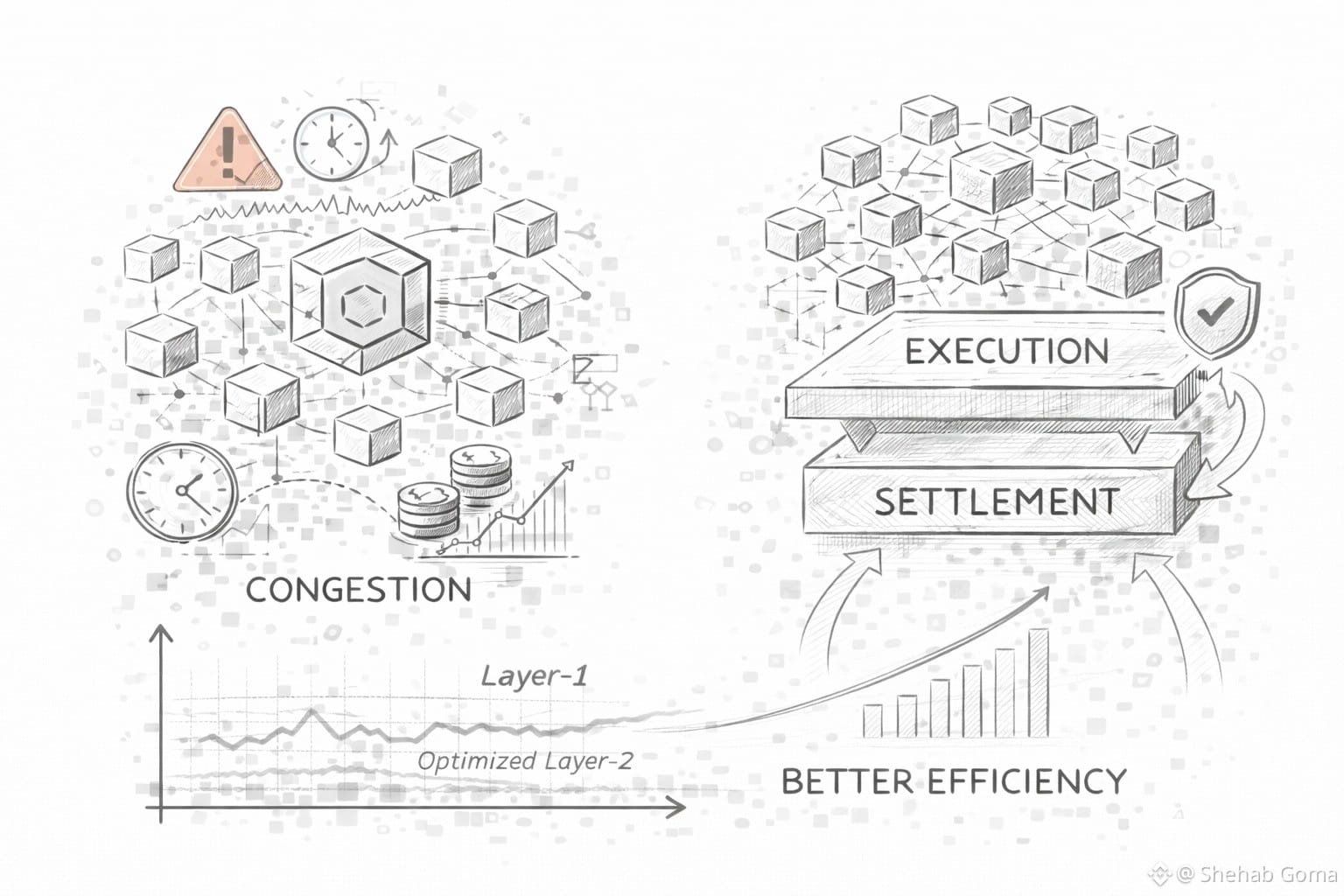
Another important aspect of execution efficiency is developer accessibility. When networks behave predictably, developers can design applications with clearer assumptions around cost and performance. This reduces complexity and encourages responsible application design. Over time, this contributes to healthier ecosystems where growth is driven by utility instead of congestion-driven speculation.
In conclusion, execution efficiency is emerging as a critical metric for blockchain maturity. As usage increases, networks that prioritize efficient processing and stable performance will be better positioned to support real-world adoption. By focusing on infrastructure design that balances security, scalability and execution, modern blockchain systems can move closer to fulfilling their long-term potential.

