
Vanar doesn’t stop the world to explain what just happened.
That matters more than people think.
A Virtua metaverse session is already alive. Someone finishes an action, gets the outcome they were there for, and moves on without waiting for anything to settle behind them. The screen never asks for patience. The system doesn’t either.
Then, later, the receipt shows up.
In the partner export, it’s a new row.
Not a bill. Not a fee prompt. Just a record. A confirmation that something did happen, somewhere, and that it carried weight even though the moment already passed.
Most users never notice. That’s the point.
But every once in a while, the timing slips just enough that the record arrives after the feeling is gone. The win already faded. The drop already scrolled past. The session already moved on to something else.
Support sees it as a mismatch.
“I got the thing.” “I didn’t get charged.” “Now it says I did.”
No accusation yet. Just confusion framed as bookkeeping.
On Vanar, the surface keeps moving while the accounting catches up somewhere else. In practice, the cost is abstracted away from the player, so they don’t have to think about it while they’re acting. Virtua doesn’t pause to narrate what the ledger is doing in the background. VGN titles don’t either.
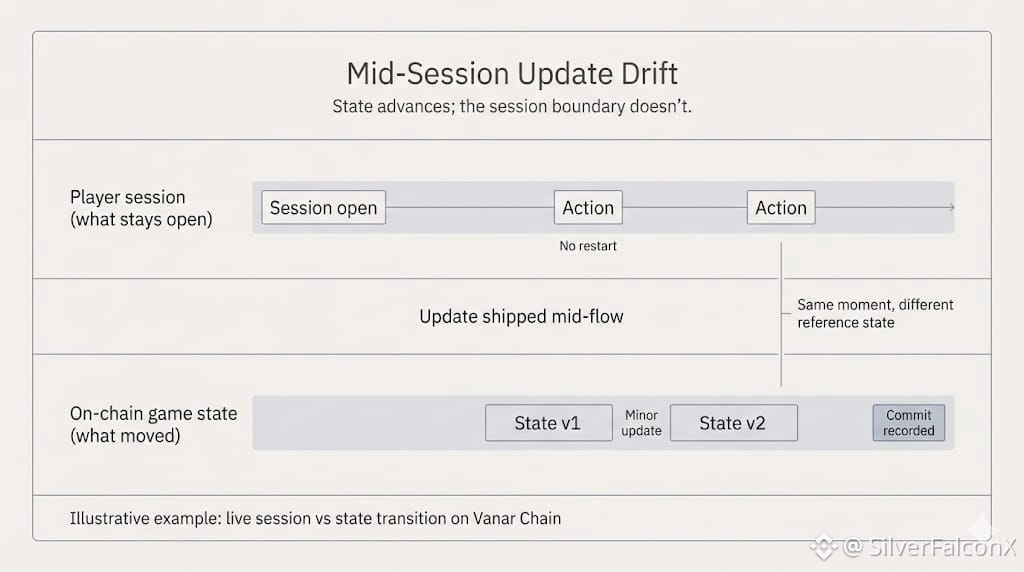
Usually, reconciliation does catch up quietly.
The edge case is when it catches up visibly.
A user checks their history later. Or a partner pulls a report. Or a brand audit runs against a campaign window that already closed. The action is there. The timestamp is correct. The spend is correct. The user’s memory is not.
“I would’ve noticed.” “I didn’t see anything.” “I wouldn’t have done it twice.”
They didn’t.
The thread goes weird in a specific way: someone posts the row, someone posts the clip, and both sides stop talking for a beat.
The Vanar's sponsored lane covered the interaction at the moment it mattered. The accounting trail finalized later, once the session had already moved on. No failure. No rollback. Just delayed certainty.
Delayed certainty feels like retroactive change to humans, even when nothing was reversed.
That’s where the tone shifts.
Support replies start getting longer. Partners stop asking what happened and start asking when. Legal language creeps in sideways, not because anything is wrong, but because anything that appears after the fact needs a sentence you can repeat without flinching.
“Which timestamp is the official one for ‘confirmed’?” “Do we need to change the word ‘confirmed’ in the campaign copy?” “What does the user see, and when?”
Nobody likes those questions because they don’t belong to a single team.
Virtua metaverse shows the moment. VGN shows the entitlement. The ledger shows the truth. None of them are wrong. They’re just not synchronized for storytelling.
The user doesn’t care about synchronization. They care about trust. And trust, in consumer products, is tied to memory, not logs.
If the confirmation arrives after the dopamine, it feels suspicious. If the record appears after the session, it feels unfair. If the explanation starts with “technically,” it’s already over.
Ops notices the pattern late, because dashboards look fine. Finality looks clean. Partner reports later reflect the activity. Nothing spikes. Nothing fails. The only signal is tone: tickets that aren’t angry yet, but aren’t satisfied either.
That’s the dangerous zone.
Someone suggests surfacing receipts earlier. Someone else asks how many milliseconds of delay that adds to live interactions on Vanar. Someone suggests batching confirmations. Someone else points out that batching makes the delay worse, not better.
Vanar can finish the math and still lose the room.
Brands feel it next. Not as fraud. As discomfort. “Can we prove the moment?” they ask. Not the transaction. The moment. The part the user felt.
And the uncomfortable part is simple: when Virtua says “done” and the record shows up later, which surface is allowed to be the receipt the user is supposed to trust?