

Proof of Blindness:
Most blockchain innovations announce themselves loudly. Faster throughput. Lower fees. Bigger ecosystems. New virtual machines. The language is almost always competitive, framed around winning some visible metric. What gets far less attention are designs that don’t try to win attention at all, but instead try to remove something dangerous from the system.
Bias.
That is why the Proof of Blindness mechanism developed by Dusk Network is one of the most interesting—and most under-discussed—advances in blockchain consensus design. Not because it is complex, but because it is conceptually clean. It doesn’t rely on incentives alone. It doesn’t rely on good intentions. It removes the possibility of targeted wrongdoing at the protocol level.
And that is a rare thing.
At its core, Proof of Blindness is not about privacy for privacy’s sake. It is about power. Specifically, it is about limiting the power a validator has over who they are validating. In most blockchains today, validators see everything. They see sender addresses, receiver addresses, transaction contents, and often enough context to infer intent. That visibility is usually justified as transparency. But visibility also creates leverage.
If a validator knows who is sending a transaction, they can choose to censor it. If they know who is receiving it, they can delay it. If they can identify a specific wallet, they can be bribed to act against it.
None of this requires malice by default. It only requires knowledge.
Dusk’s Proof of Blindness takes a radically different position. It asks a simple question: what if validators didn’t have that knowledge at all?
In Dusk’s design, validators still perform their job. They process transactions. They verify correctness. They participate in consensus. But they do so without knowing whose wallet they are touching, who the sender is, or who the receiver is. The transaction is valid or invalid. That is all they are allowed to know.
This is not privacy as an optional feature layered on top of an otherwise transparent system. It is privacy embedded directly into the mechanics of consensus. The validator is structurally blind.
That blindness changes the moral shape of the system.
In most networks, decentralization is defended through distribution. Many validators, many nodes, many jurisdictions. The assumption is that because power is spread out, abuse becomes unlikely. But distribution alone does not eliminate bias. It just makes it harder to coordinate. A single validator can still act maliciously if given the opportunity. A small cartel can still accept bribes. A well-resourced adversary can still target specific actors.
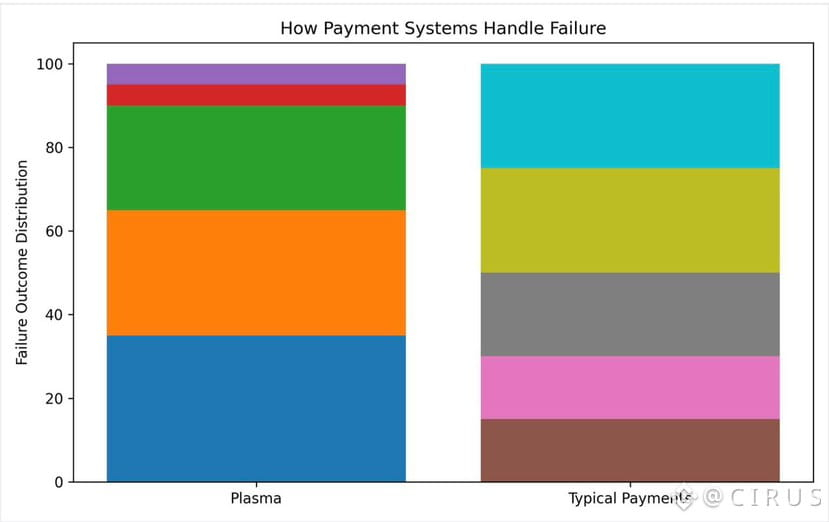
Proof of Blindness attacks the problem at a deeper level. It doesn’t try to make validators behave better. It removes their ability to behave selectively.
A validator cannot censor Alice if they do not know which transaction belongs to Alice. They cannot favor Bob if Bob cannot be identified. They cannot accept a bribe to block “that wallet” if the protocol never reveals which wallet is which.
This is why the mechanism feels ethical in a way most blockchain features do not. It does not rely on economic deterrence alone. It creates a moral boundary enforced by code. Bias is not discouraged. It is rendered impractical.
That distinction matters.
Most blockchains talk about neutrality as a social value. Dusk treats neutrality as a technical constraint.
In doing so, it reframes what “trustless” actually means. Trustlessness is often described as removing trust in people and replacing it with trust in math. But math alone does not prevent selective enforcement if the system leaks identity. Proof of Blindness recognizes that trustlessness also requires ignorance—carefully designed ignorance that limits how much power any participant can exercise.
This idea runs counter to how many people intuitively think about transparency. We often assume that seeing everything is good. But in governance systems, seeing everything can be dangerous. Visibility creates vectors for pressure. Pressure invites coercion. Coercion undermines fairness.
Dusk’s approach suggests that ethical systems are not built by exposing more information, but by exposing only what is strictly necessary for correctness.
What is striking is how rarely this principle is applied in blockchain design. Even privacy-focused chains often stop at transaction confidentiality while leaving validator context intact. Dusk goes further. It asks not just “should users be private?” but “should validators be able to know?”
That question changes the threat model completely.
Consider bribery. In most networks, bribery is a coordination problem. It is expensive, risky, and requires finding the right validators. But it is not impossible. If a validator can see a target transaction, they can be incentivized to delay or censor it. In Proof of Blindness, the concept of “that transaction” tied to “that person” collapses. Bribes lose their target.
The same logic applies to regulatory pressure. If an external authority demands that validators censor transactions from a specific address, the validator cannot comply even if they wanted to. The system does not reveal the necessary information. Responsibility is deflected upward into protocol design, where it belongs.
This is what makes Proof of Blindness feel less like a feature and more like a philosophical statement. It encodes a position on power: no single actor should be able to decide whose transactions matter.
Importantly, this does not mean Dusk rejects accountability or lawfulness. Blindness is not the same as chaos. The network still enforces rules. Invalid transactions fail. Consensus still converges. What changes is the inability to discriminate based on identity.
That distinction is especially relevant in the context of regulated finance, which is where Dusk positions itself. Financial markets require fairness, auditability, and resistance to manipulation. They also require privacy. Proof of Blindness sits at the intersection of these requirements. It ensures that market participants cannot be selectively disadvantaged by those who control infrastructure.
From an ethical standpoint, this is significant because it aligns incentives with fairness rather than power. Validators are paid to validate, not to judge. They execute protocol logic, not personal preference.
In practice, this creates a system where decentralization is not just about how many validators exist, but about how little each validator can know. That is a subtle but profound shift.
Most decentralization arguments focus on distribution of control. Dusk adds a second axis: limitation of perception. Power is reduced not only by splitting it up, but by constraining what any fragment of power can observe.
This is why Proof of Blindness deserves more attention than it gets. It is not flashy. It does not promise higher yields or faster blocks. It quietly solves a class of problems that are otherwise addressed through social coordination and hope.
And hope is a fragile security model.
What Dusk demonstrates is that ethics can be engineered. Neutrality can be enforced. Fairness does not have to be aspirational. It can be structural.
That is rare in blockchain development, which often treats values as narratives layered on top of incentives. Proof of Blindness inverts that relationship. The values come first, and incentives operate within their boundaries.
Whether Dusk ultimately succeeds as a network will depend on many factors: adoption, performance, developer engagement, regulatory clarity. But independent of those outcomes, Proof of Blindness stands as a meaningful contribution to how we think about consensus.
It suggests that the future of blockchains is not just faster or cheaper systems, but more disciplined ones. Systems that know exactly what they should not know.
In a space obsessed with transparency, Dusk quietly built something more radical: a consensus mechanism that understands the ethical power of ignorance.
And that may be one of the most important design choices in the entire industry.
