Most crypto discussions are loud and confusing. People argue about decentralization, speed (TPS), and fancy new features. But there is a much bigger problem that often gets ignored: unpredictable costs.
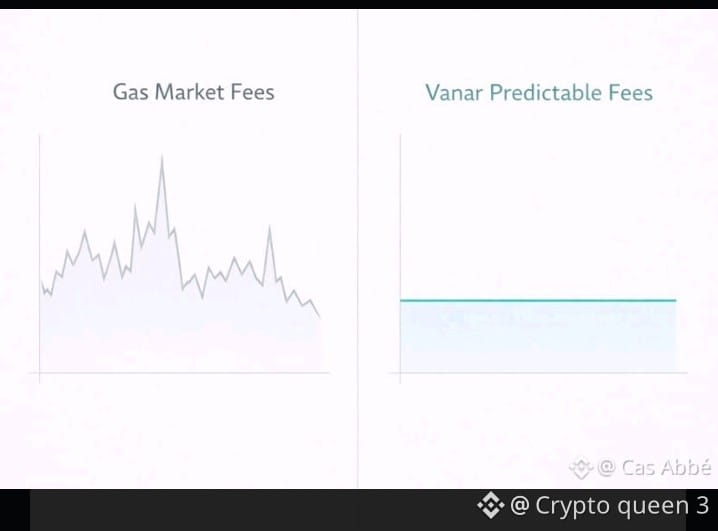
If you’ve ever built an app on a blockchain, you know this pain. One day, transactions cost almost nothing. The next day, the same action suddenly costs $10 or even $18. Users get angry. They blame your app. Your support team gets flooded with complaints. And your business plan breaks.
For builders, this is a nightmare. You can’t plan expenses. You can’t set clear prices. Automated jobs, bots, background tasks, and AI agents can suddenly stop working just because fees spike without warning.
This is where Vanar does something different — and important.
Vanar focuses on a very simple idea: stable and predictable transaction costs.
Not exciting. Not flashy. But extremely powerful.
With Vanar, builders can know in advance how much transactions will cost. Fees stay manageable and consistent. You can literally plan them in a spreadsheet. This makes it easier to run apps, scale products, and build long-term systems without fear of sudden cost explosions.
Instead of letting a chaotic gas market decide which apps survive, Vanar removes that uncertainty. Builders stay in control. Users get a smoother experience. Businesses can finally plan properly.
It may sound boring, but sometimes the most boring ideas create the biggest impact.
Predictable cost is not a feature — it’s the foundation of real adoption.
Why Vanar’s FIFO Transaction Model Is a Big Deal
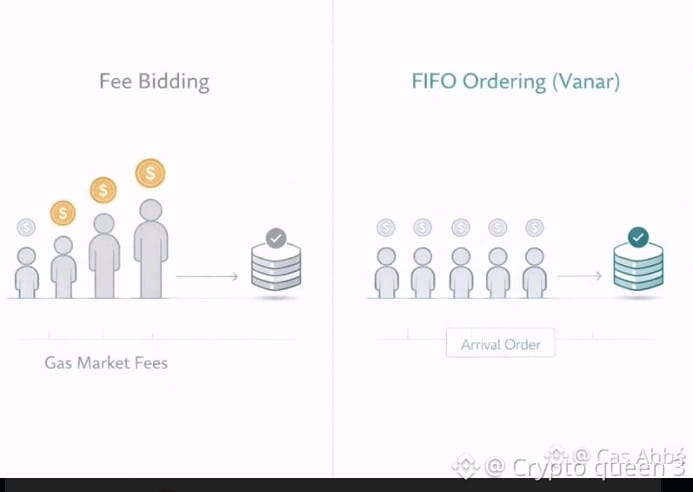
Most blockchains use a fee bidding system. This means users compete with each other by paying higher fees to get their transactions processed faster. Whoever pays more goes first.
At first, this sounds fair. In reality, it creates chaos.
When the network is busy, fees explode. Bots and whales outbid everyone else. Normal users wait or overpay. Builders lose control of costs. Simple actions suddenly become expensive for no clear reason.
This system turns blockspace into an auction. And auctions are unpredictable.
Vanar takes a very different approach.
Instead of fee bidding, Vanar uses FIFO ordering — First In, First Out.
Transactions are processed in the order they arrive, not by who pays the most.
That one design choice changes everything.
With FIFO:
Fees stay stable
No bidding wars
No surprise spikes
No advantage for bots or whales
If your transaction arrives first, it gets processed first. Simple. Fair. Predictable.
You can finally estimate costs accurately. You can run automated tasks, background jobs, AI agents, and games without worrying about sudden fee explosions. You don’t need complex systems just to manage gas fees.
For users, the experience is smoother. They don’t feel punished during busy periods. They trust the app more. They complain less.
Vanar removes the “invisible tax” created by gas markets and replaces it with something boring—but powerful: order and predictability.
This may not sound exciting compared to high TPS numbers or flashy features. But real adoption doesn’t come from hype. It comes from systems that work every day, under pressure, without surprises.