

The overall vision of mass adoption in blockchain is usually one event, a breakout application, a wave of users, or an abrupt shift in perception. But the way things have always worked is that real adoption does not usually come with a boom. It arrives without any noise, and systems that operate in a consistent way day after day until people cease to think of the technology at all. Plasma goes well with this more subdued story. No, it was never intended to make headlines and head in conversations. It was meant to be weight bearing, to withstand pressure and to allow decentralised systems to be inhabitable by the common man long before they correctly recognised that they were engagement in something revolutionary.
I observed this dynamic at work when I was watching a small payment platform that serves freelancers in various countries. The users were not interested in Layer-2 discussions and scale plans. Their concerns were predictable charges, punctuations in repayments and assurance that their income would not remain stuck in network overloads. As it used plumbing with plumbing in the background, usage increased continuously. The change was not met with any announcement. The architecture was not described by any campaign. What changed was behavior. People had confidence in the system to an extent that they could use it as a source of their daily livelihood and this confidence was converted to adoption that no marketing campaign could achieve.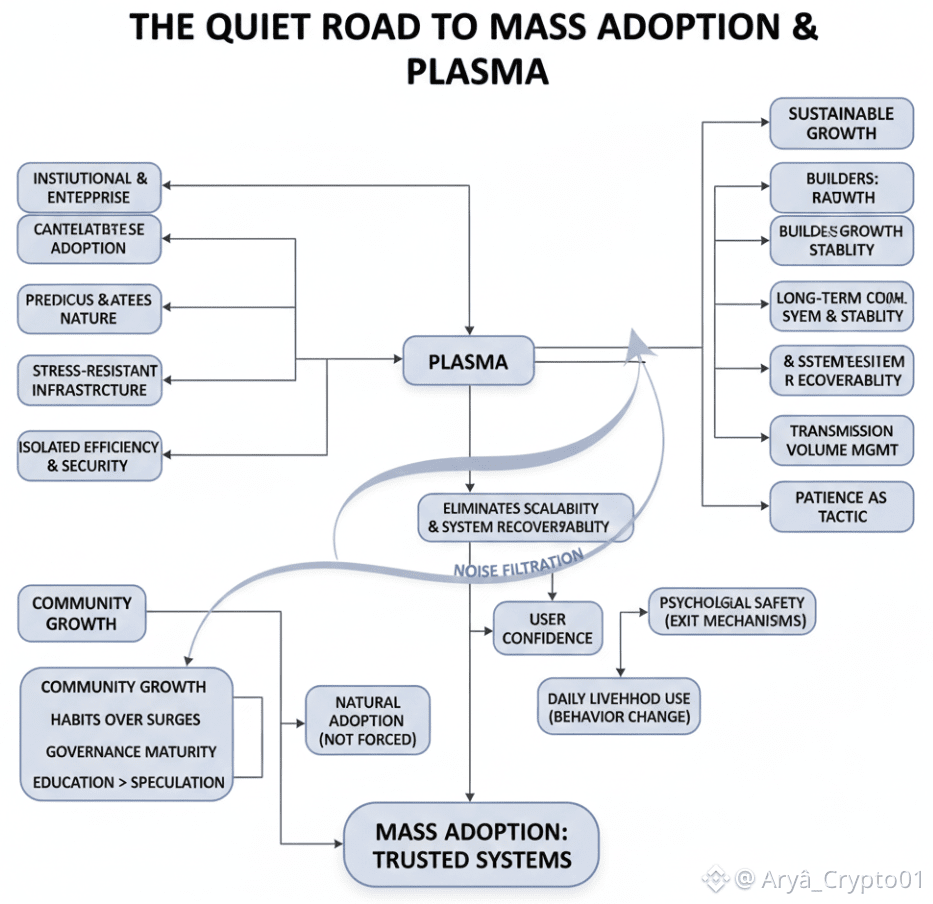
This type of growth can only be seen with the help of plasma that eliminates the friction before it can be seen. Its hierarchical design takes in the transmission volume without forcing the complexity to users. The exit mechanisms are not visible unless they are required but they give the impression of a psychological safety net. People may never call on these safeguards, but the fact they are there influences the level of confidence with which they engage a system. It is an important and much neglected element of adoption: individuals invest more in it when they do not feel like a ransom.
Plasma provides a means of scaling responsibly to the builders. Teams have an option to both growth and stability as opposed to either growth or stability. They are able to roll users on, experiment with features in the real world, and make changes without putting everybody at systemic risk. This cautious stance stands in contrast to for example boom and bust cycles that have characterized the image of blockchain to many. Plasma also helps you be patient, peeps, not as if it were a disadvantage, but that is a tactic. After all, systems which survive to be successful and not merely become popular are the ones which lead to sustainable adoption.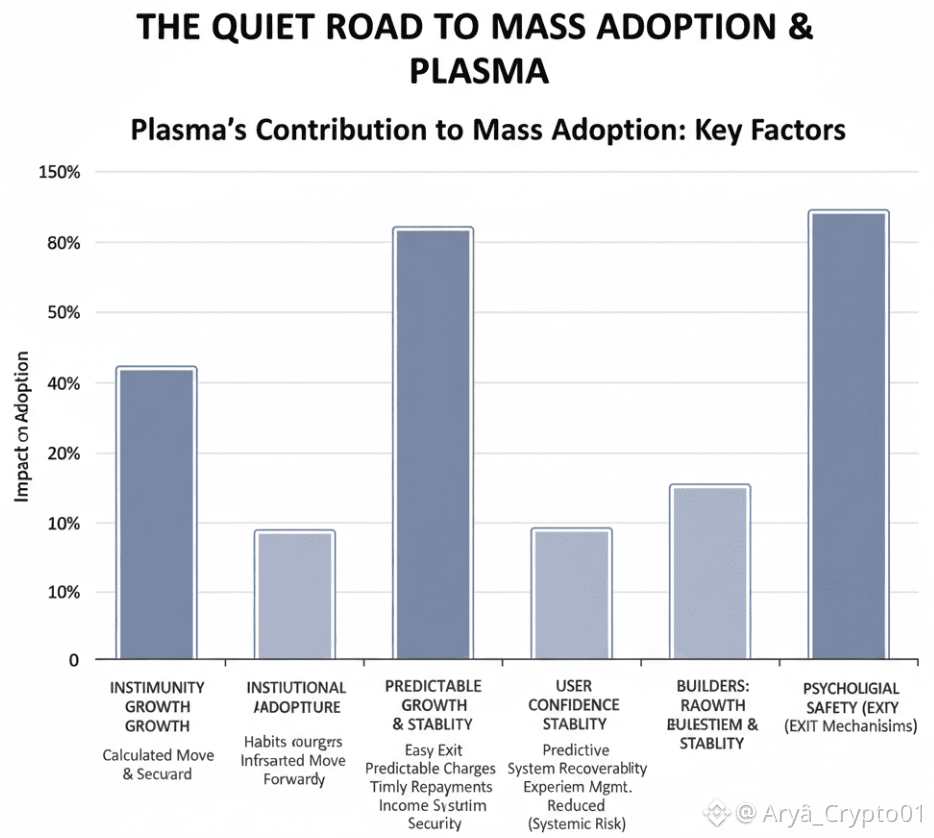
This philosophy is well received by institutions and enterprises, particularly those that tend to be cautious in nature. Their infrastructure needs to be predictive in response to stress and provide an easy way out in case assumptions are not met. The design of the plasma does not contradict such expectations at the expense of decentralization. It isolates operational efficiency and base-layer security by doing so to provide an environment in which institutional involvement can be perceived as a less gamblish and more calculated move forward. This is essential to the future of blockchain in the world not being niche-use cases but instead in economic relevance.
There are also different ways in which communities grow when established on strong grounds. Users form habits as opposed to responding to each surge in activity or decline in performance. Consultations on governance become adults. Education supplants speculation as the new discourse. Plasma does not speed up the development of the community artificially; it lets it develop naturally. With the passage of time, this natural development leads to ecosystems that are more resilient, better informed and less prone to collapse at any given time.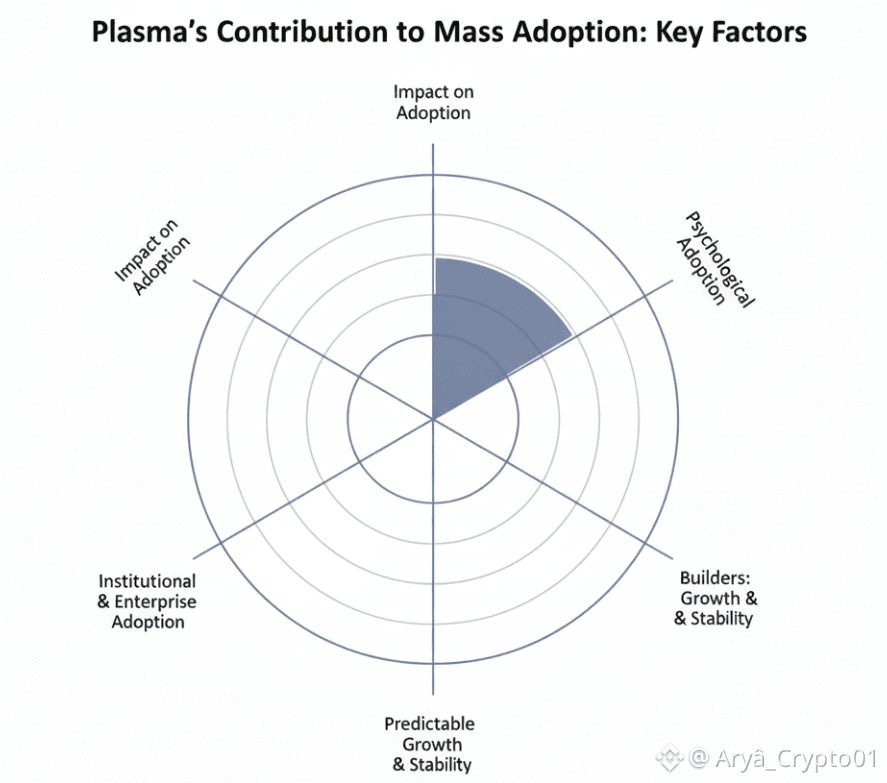
The road to mass adoption is not often dramatic and Plasma knows it better than most. Not big talk, but small actions contribute to its contribution. Plasma enables a natural adoption as opposed to a forced adoption by taking into consideration user confidence, system recoverability and long-term scalability. Since blockchain is slowly making its way into everyday life, the technologies that will end up having the heaviest burden are probably those such as Plasma, which are subtle, disciplined and human-sensitive. Ultimately, adoption is in the category of the systems that people can trust without having to ponder over them.

