

Over the years, I have watched many blockchains launch with impressive technology and ambitious roadmaps, yet struggle to attract real users. Faster transactions, lower fees and better consensus mechanisms keep improving but adoption remains slow. This has led me to a simple conclusion most blockchains don’t fail because of weak technology they fail because normal people don’t care.
For the average user, blockchain is not a goal. It’s a tool. People don’t wake up wanting to use an L1 network; they want to play games, enjoy entertainment, interact with brands or use digital services that feel familiar. When blockchain forces users to learn wallets, gas fees and complex interfaces before delivering value, friction becomes the enemy of adoption.
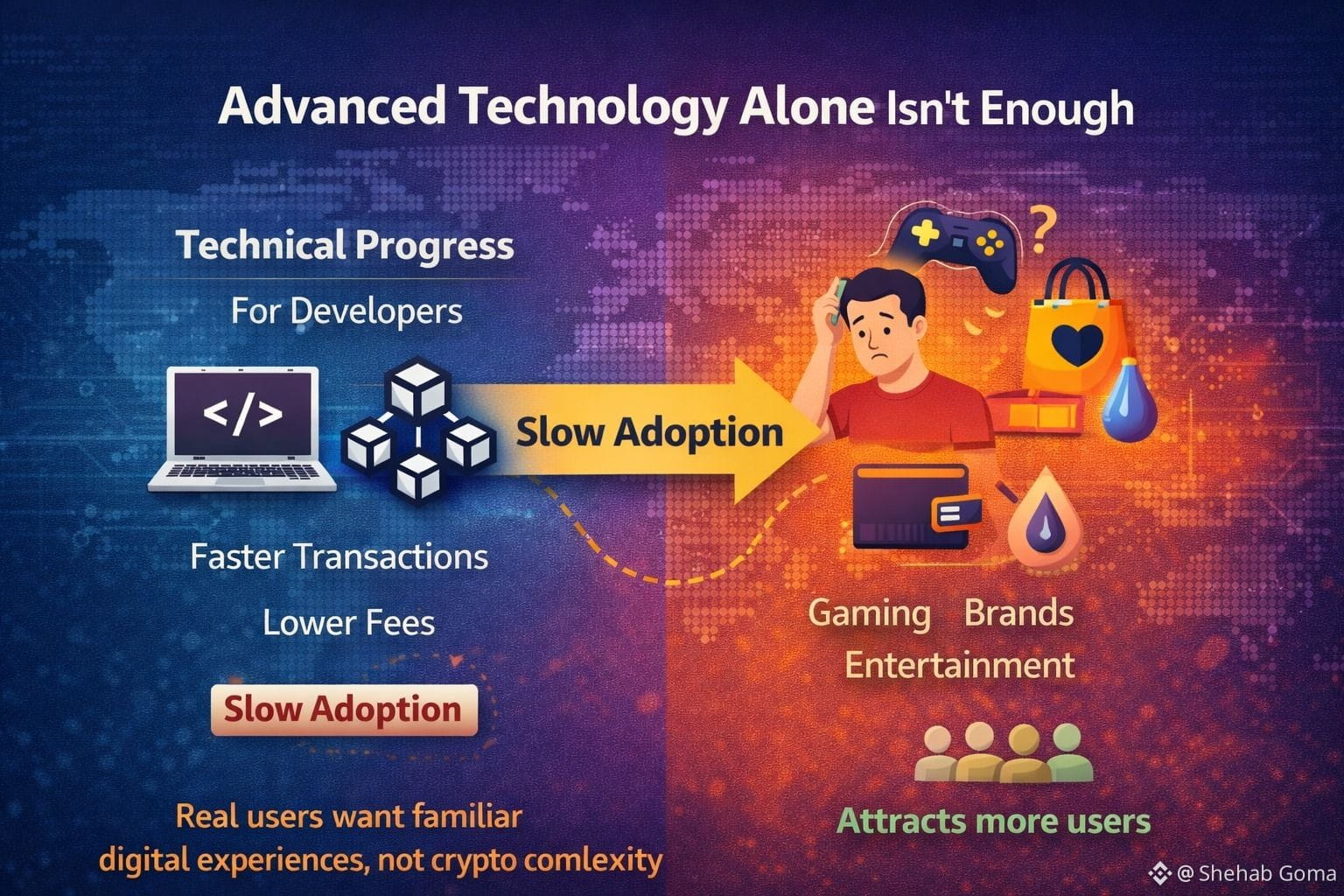
This is where the idea of consumer readiness becomes critical. A blockchain that wants mainstream users must first be relevant to their daily digital behavior. In my view, relevance matters more than raw performance at this stage of Web3’s evolution.
I have noticed that ecosystems tied to familiar industries lower resistance dramatically. Gaming, entertainment and brand-driven experiences already attract billions of users globally. When blockchain technology is embedded quietly into these environments, users engage with it without feeling like they are “using crypto.” The technology fades into the background and the experience takes priority.
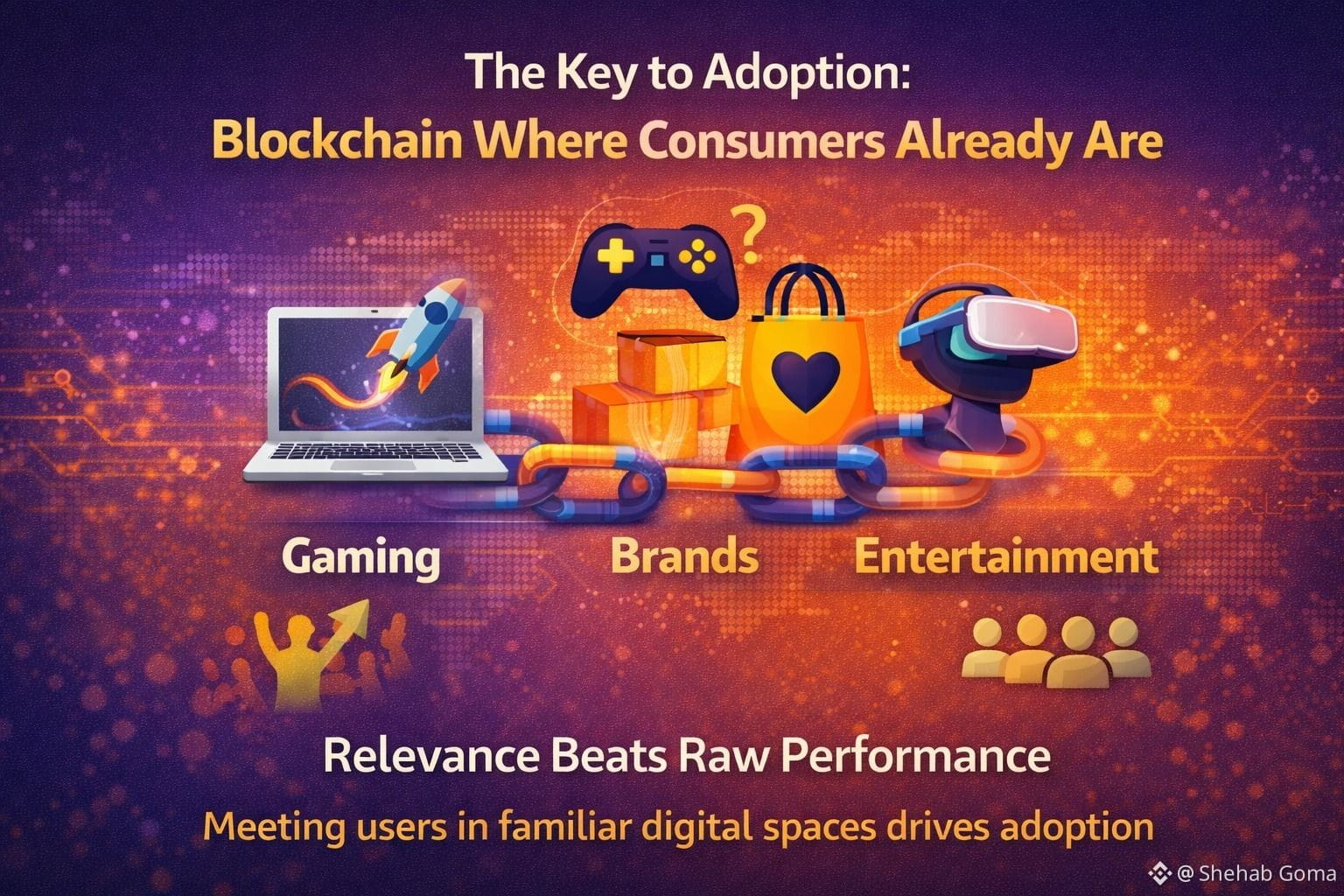
This consumer-first philosophy is why approaches like the one taken by Vanar Chain stand out. Instead of positioning itself purely as infrastructure for developers, Vanar aligns its ecosystem with gaming metaverse experiences, AI and brand solutions—areas people already understand and trust. From my perspective, this isn’t a marketing choice it’s a design decision rooted in how adoption actually works.
Another pattern I have seen is that adoption is rarely driven by a single feature. Speed alone doesn’t retain users. Low fees alone don’t build communities. What matters is an ecosystem where applications feel intuitive, useful, and connected to real-world interests. When multiple consumer-facing verticals coexist on one chain, users are more likely to stay, explore and return.
Early crypto growth was fueled by traders and developers. The next phase will be fueled by people who don’t identify as crypto users at all. That shift requires blockchains to rethink priorities. In my opinion, consumer-first design is no longer optional it’s the only realistic path to onboarding the next billion users.
The broader takeaway for Web3 is clear. Blockchains built only for developers may continue to innovate but they will struggle to break out of niche communities. Those that prioritize user experience, familiarity and relevance will quietly lead the next wave of adoption.
Clear takeaway:
Mainstream adoption won’t be driven by better technology alone. It will be driven by blockchains that understand people better than protocols.
Do you think consumer-focused blockchains will define the next stage of Web3 growth or will developer-first ecosystems adapt in time?
