


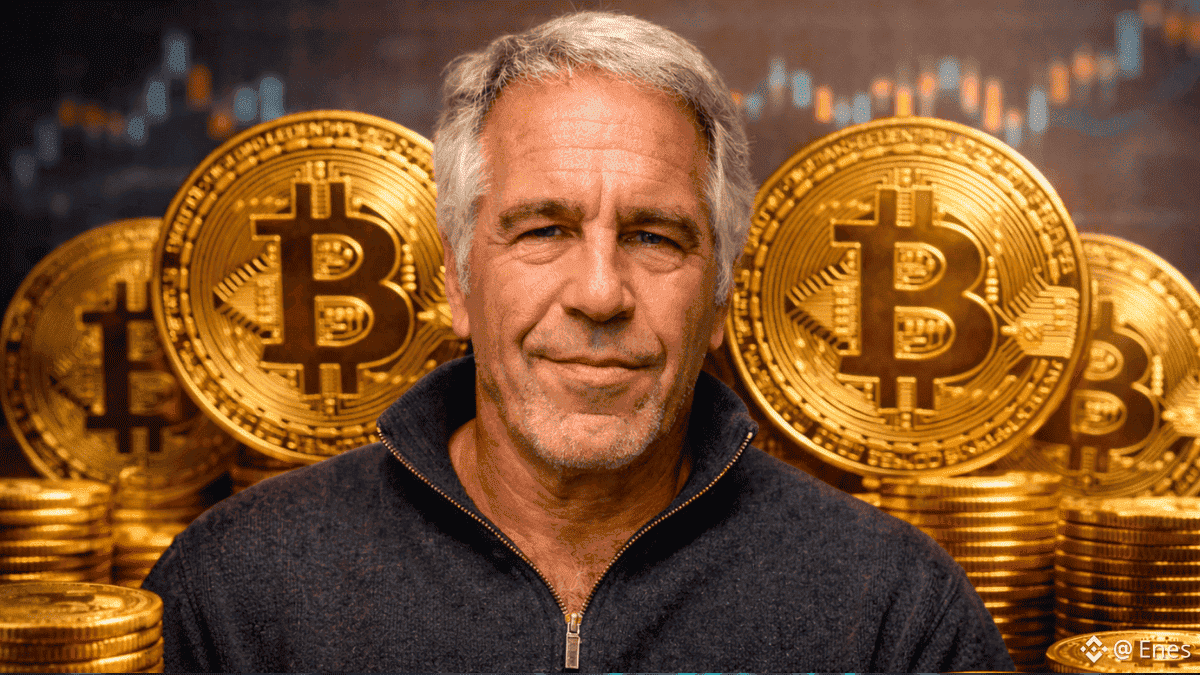
The recent release of the Epstein documents — totaling nearly 3.5 million pages and published by the U.S. Department of Justice on January 30 — has shaken politics, finance, and now the crypto world.
Within hours of the release, social media was flooded with explosive claims:
“Satoshi Nakamoto is in the Epstein files”
“Jeffrey Epstein created Bitcoin”
“Bitcoin was a CIA project”
But how much of this is real — and how much is misinformation?
Here’s what the facts actually show.
The Viral ‘Satoshi Email’ Is Fake
One of the most widely shared images on social media claims to show an email from Jeffrey Epstein to Ghislaine Maxwell, dated October 31, 2008, the same day Bitcoin’s whitepaper was released.
The email allegedly reads:
“The pseudonym ‘Satoshi’ works perfectly. Our little digital gold mine is ready for the world.”
However, this image is not authentic.
Multiple technical inconsistencies expose it as fake:
Two separate “To:” fields appear in the header
The email formatting does not match DOJ archive standards
The phrase “little digital gold mine” does not appear anywhere in the official Epstein documents
The email address shown does not exist in DOJ records
There is no verified email connecting Epstein to Bitcoin’s creation.
Why ‘Satoshi’ Appears in the Documents — and Why It Doesn’t Matter
Yes, the name “Satoshi” does appear in some of the Epstein documents.
One file even states that Epstein “spoke with some of Bitcoin’s founders.”
But context matters.
These references date to 2016, years after Bitcoin was created, mined, and widely distributed. Communicating with Bitcoin developers nearly a decade later does not imply authorship of the protocol.
There is:
No overlap between Epstein and Satoshi’s known emails
No connection to Bitcoin’s original GitHub commits
No link to early wallets associated with Satoshi Nakamoto
No cryptographic evidence tying Epstein to Bitcoin’s keys
What Epstein Did Do: Invest in Crypto
The documents confirm that Epstein was involved in crypto — as an investor, not a creator.
Verified information shows:
Epstein invested $3 million in Coinbase in December 2014
The deal was facilitated through Brock Pierce and Blockchain Capital
Coinbase was valued at ~$400 million at the time
Epstein sold part of the stake in 2018, reportedly cashing out ~$15 million
He also invested in Blockstream, an early Bitcoin infrastructure company
Blockstream co-founder Adam Back confirmed the 2014 investment publicly. While Back himself has long been speculated to be Satoshi Nakamoto, there is no definitive proof of that claim either.
MIT, Donations, and Bitcoin Core Developers
The Epstein files also reveal that he donated $850,000 to MIT between 2002 and 2017.
Of this:
$525,000 went to the Digital Currency Initiative (DCI) at the MIT Media Lab
During Bitcoin Foundation’s financial crisis in 2015, several Bitcoin Core developers — including Gavin Andresen, Wladimir van der Laan, and Cory Fields — later worked with MIT DCI.
However:
Developers have stated they were unaware of the donation’s source
Salaries were paid directly by MIT
Bitcoin’s decentralized governance makes donor control technically impossible
So… Is Jeffrey Epstein Satoshi Nakamoto?
No.
There is zero technical, cryptographic, or historical evidence that Jeffrey Epstein:
Wrote Bitcoin’s whitepaper
Mined the genesis blocks
Controlled Satoshi Nakamoto’s private keys
Participated in Bitcoin’s creation between 2008–2009
The viral claims are driven by fake images, timeline confusion, and speculation, not facts.
The Bigger Picture: Why Bitcoin Still Works
The Epstein Papers do not put Bitcoin itself at risk.
Bitcoin’s greatest strength remains unchanged:
Open-source code
Decentralized governance
No single founder control
No dependency on early investors
Even if controversial figures invested later, the protocol operates independently of any individual, institution, or donor.
That resilience is exactly what Satoshi designed.