
Everyone has grown weary of farming, messing with L2, and figuring out those daily petrol costs in recent years. However, an ancient name reappeared in the public eye at the start of 2026: #Plasma .
Plasma is still perceived by many as the "scaling solution proposed by Vitalik in the early days" and even as a "old relic" that Rollup removed. However, in the realm of cryptocurrency, there has never been obsolete technology—only situations that haven't yet reached their explosive moment. By concentrating on stablecoin payments, the current XPL is adopting a very practical approach.
Why right now?
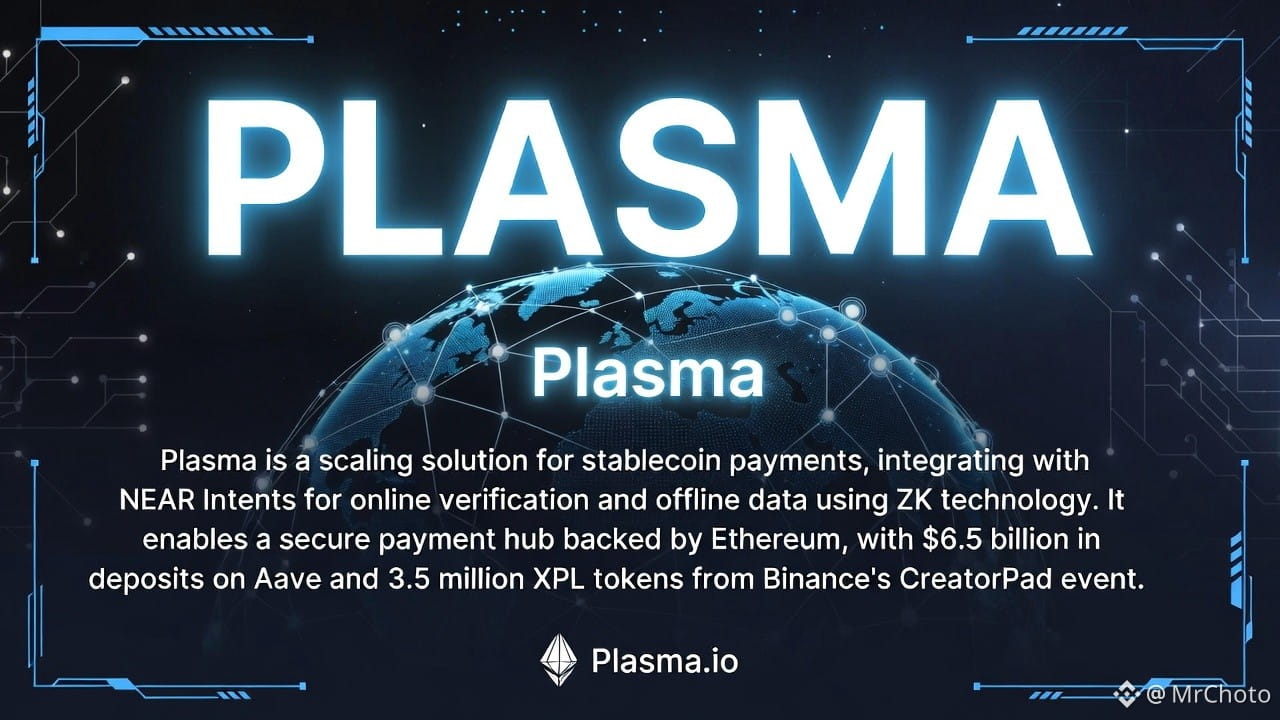
If you've lately used the Plasma One wallet, you might have noticed that there are no fees for USDT transactions, which is a pretty "refreshing" feature. In the past, this was unthinkable. The precise integration of Plasma with NEAR Intents occurred on January 23 of this year. 25 chains were directly joined by XPL and USDT0 via NEAR's liquidity protocol. That means it is now a cross-chain 'payment hub' rather than a solitary local ecosystem.
Let's discuss my opinions:
I've always thought that a public chain won't be able to expand out of its niche if it doesn't figure out how "even grandmas can use it." Plasma's present strategy is highly practical: online verification, offline data. It uses state-of-the-art ZK technology to overcome the 'exit challenge' problem, which was formerly the most problematic. To put it simply, it is nearly free and runs as fast as Alipay, but its security is supported by Ethereum.
The 6.5 billion dollar current deposit amount on Aave is more than simply a boast; institutional money is the most astute and values this kind of assurance. However, as retail investors, we must maintain objectivity and not focus just on the advantages. 3.5 million XPL tokens were awarded during Binance's CreatorPad event in January of this year, which is essentially a double-edged sword. This type of 'airdrop tokens' will undoubtedly result in short-term price changes as the hype builds.
In brief:
@Plasma is about filling a space, not about causing disruption. It has kept the most crucial payment entry point while everyone else is concentrating on L2. You should monitor the $XPL position if you think universal payments will be the future of Web3. $XPL

