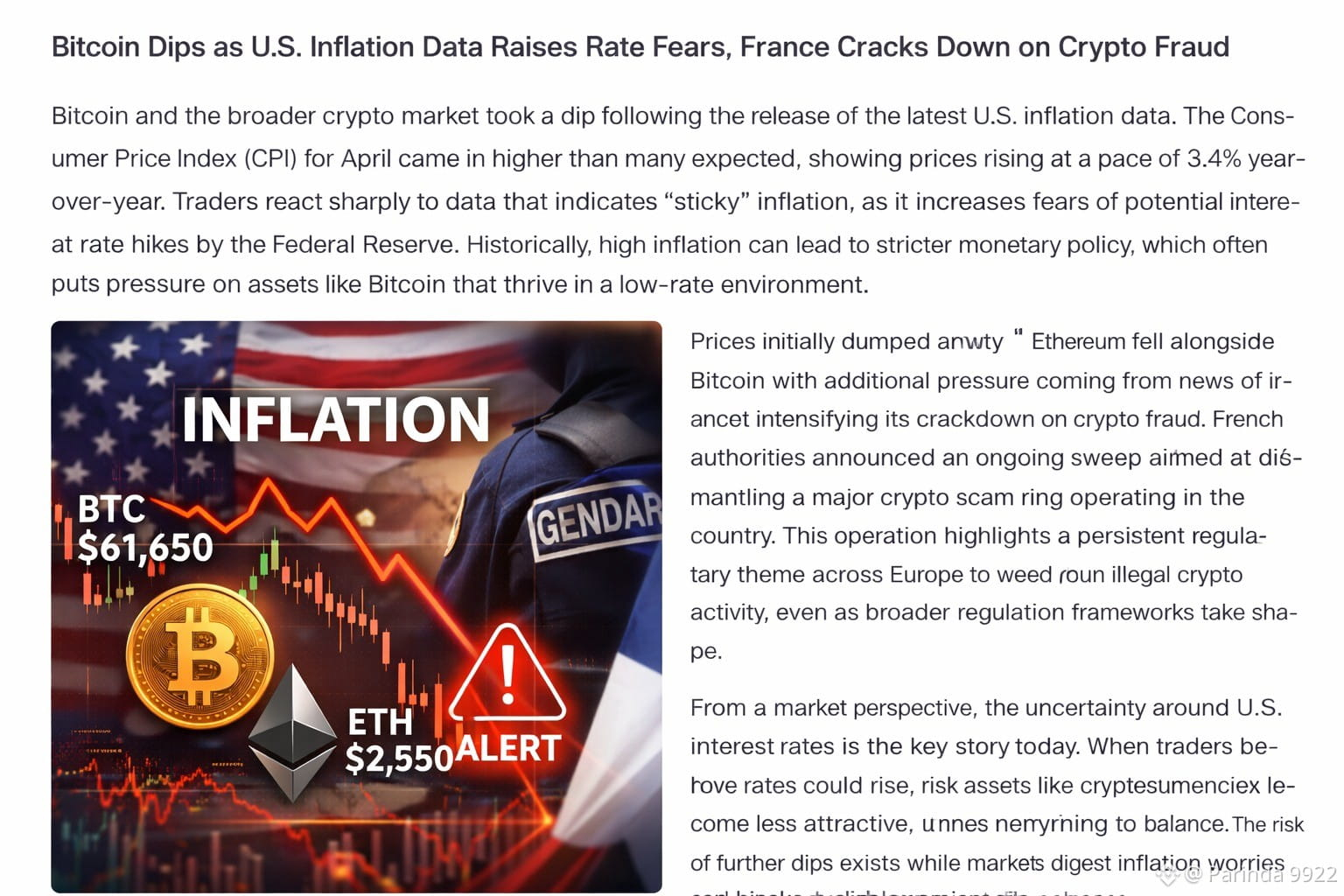
The crypto market took a step back today as global macro pressure crept back into the picture. Bitcoin slipped alongside major altcoins after fresh inflation concerns revived the talk of higher-for-longer interest rates in the US. When inflation refuses to cool down, risk assets feel it first. Crypto is usually the fastest to react, and today was no exception.
Here’s the thing. Markets don’t move on numbers alone. They move on expectations. Even the hint that rate cuts might be delayed changes how traders position themselves. Higher rates mean tighter liquidity. Tighter liquidity means less easy money flowing into speculative assets. That dynamic explains why Bitcoin and Ethereum both struggled to hold momentum. Buyers are around, but they’re cautious. Nobody wants to be the last one in before another macro-driven pullback.
At the same time, Europe is sending a clear message on regulation. Authorities in France have stepped up actions against crypto-related fraud and illegal schemes. This kind of news usually creates short-term fear. Traders hear “crackdown” and assume more restrictions are coming. But what this really means is that regulators are trying to clean up the worst parts of the space. In the long run, that helps legitimate projects and exchanges. The problem is timing. Markets rarely reward long-term thinking when headlines feel negative today.
Price action reflects this tension. Bitcoin dipped and found buyers near support, but the rebound looks weak. Ethereum followed the same pattern, showing that confidence is still fragile across the board. When moves lack volume, they don’t inspire trust. That’s when false breakouts and quick reversals become common. For traders, this is a tricky environment. You can catch moves, but you can also get chopped up if you push too hard.
There’s also a bigger narrative playing out. Inflation and regulation are two forces that keep colliding with crypto’s original promise. On one side, central banks are trying to control economic conditions. On the other, crypto was built as an alternative to systems shaped by those same policies. Every inflation scare brings that contrast back into focus. Some people see Bitcoin as a hedge. Others see it as just another risk asset. The truth sits somewhere in between, depending on your time frame.
What this really means is that the market is being pulled by forces outside crypto’s control. Until inflation data cools and regulatory paths become clearer, expect choppy price action. This is not the phase for emotional trades. It’s the phase for patience, clean risk management, and keeping your expectations grounded.