

So, the next thing I want to talk about is my experience with Plasma's developer scene and all the tools they have. I’m going to tell you how I went about building and growing payment apps on it.
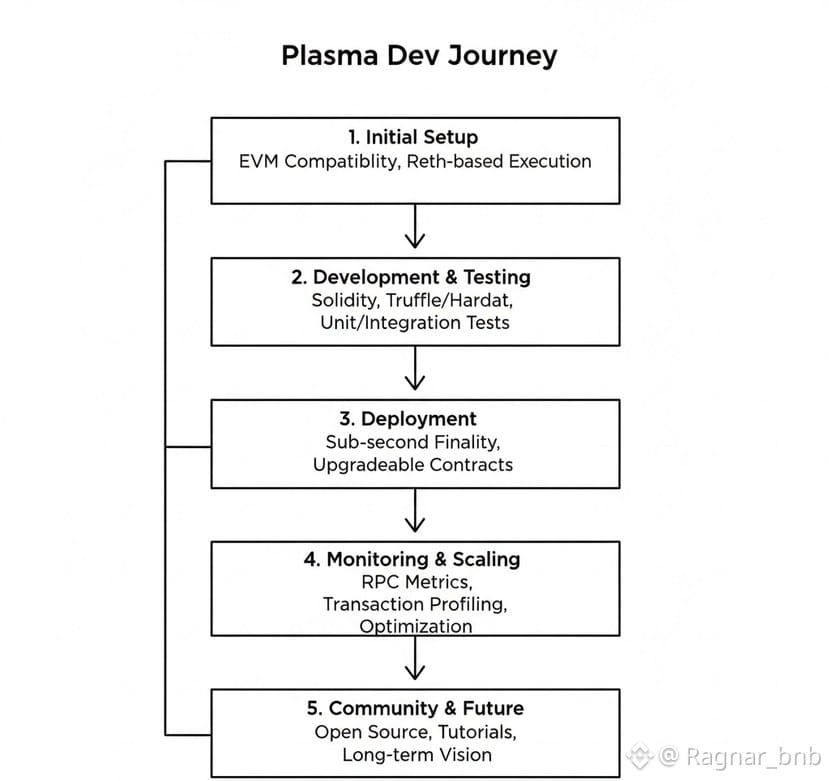
When I first started messing around with Plasma as a coder, I wasn't really interested in just playing around. I wanted to know if it could handle real payment stuff. I've worked with a bunch of blockchain platforms before, and I learned that having good tools, clear instructions, and people who can help you out is just as crucial as how fast it is. Building on Plasma showed me that if you have a good setup for developers, it can really speed up new ideas and cut down on the headaches of keeping things running later on.
To get started, I just set up a place to work on my code using the Ethereum tools I already knew. Since Plasma works with EVM through its Reth-based system, I could use the usual tools for putting together contracts, testing them, and getting them out there. This made things easy since I didn't have to spend forever figuring out how to make it all work with the platform. I could just focus on what my application was supposed to do.
One of the best parts of Plasma was all the documentation they had. They explained how everything worked, like how they made sure everyone agreed on things and how the gas fees worked. Plus, they showed how to get things up and running. This helped me figure out how my apps would do in the real world. They even had examples of how to use paymasters and stablecoins to make it easier for users to pay. This kind of info is super important for not messing things up and getting new people on board quickly.
The testing tools were also a lifesaver. Before I put any payment app out there, I needed to be sure it could handle a lot of action without crashing. Since Plasma works with Ethereum testing stuff, I could pretend there were thousands of people using it at the same time and see what would happen. This helped me make my code better and spot problems early on.
Figuring out bugs on Plasma wasn't too bad either. I could use the regular EVM tools to see what was going on, check what was changing, and see how much gas it was using. This was super important for building payment apps because even small mistakes can cause big problems. Being able to debug easily saved me time and made the code better overall.
Getting my code up and running was smooth because Plasma is pretty predictable. Transactions went through really fast, so putting up contracts and changing settings was quick and reliable. I didn't have to wait around forever or worry about things getting messed up. This meant I could make changes faster and try out new stuff more often.
As my apps got bigger, I needed to keep a closer eye on how they were doing. Plasma's system gave me good info on how fast transactions were going, how long they were taking, and how much stuff they were using up. I put this info into charts so I could see if anything was going wrong and fix it before it became a big deal. This kind of watchfulness is key for keeping payment services running well.
The community was also a big help. There were forums, discussions, and shared code where people could share tips and tricks. Whenever I ran into tricky stuff with paymasters or managing money, I could usually find someone who had been there before and could give me a hand.
People also added to the open-source stuff, which made things even better. A lot of the tools and examples were kept up by everyone together. This meant people could check each other's work and keep making things better. By fixing bugs and adding new features, I helped improve the platform and learned a lot more about how it worked.
Being able to connect to other services made things even more interesting. Payment processors, data trackers, and ID checkers could all plug into Plasma using standard connections. This let me build complete financial systems instead of just isolated blockchain apps. It also made it easier to deal with rules and regulations.
One of the coolest parts of Plasma was how it handled gas fees. The kits had templates for paymaster contracts and ways to manage budgets. This made it easier to make things free for users without messing things up for the network. For payment apps, this was a huge deal.
As more people started using my apps, I had to think more about how to make them handle the load and keep running smoothly. Plasma's setup helped spread things out and keep things moving, but I still had to tweak things on my end. I used profiling tools to see where things were slowing down and figure out how to make the code run faster.
Having good training materials also helped grow the community. Tutorials, workshops, and code examples made it easier for new coders to jump in. By helping out newbies and adding to the learning resources, I helped make the developer community stronger.
Over time, I realized that Plasma's tools encouraged you to think long-term. Since the platform focused on being stable and sticking to standards, developers wanted to build things that would last instead of just making quick prototypes. This focus on durability was perfect for payment apps.
Another big plus was how easy it was to update and maintain things. Proxy patterns and upgrade tools let apps change without bothering users. Because Plasma is so predictable, upgrades went through quickly and smoothly. This meant less downtime and happier users.
From a big-picture point of view, the developer ecosystem made it easy to try out new ideas. You could quickly test new payment methods and compliance tools without a lot of hassle. If something worked well, you could quickly scale it across the network. This helped speed up new ideas while keeping things reliable.
So, to wrap it up, my time with Plasma's developer scene showed me that having good tools and a supportive community can really change how you do blockchain development. With its compatibility, clear instructions, testing tools, and collaborative environment, Plasma is a great place to build payment apps that can handle a lot of users. For coders who want to build stablecoin systems that are easy to use and can grow, Plasma is a solid choice.

