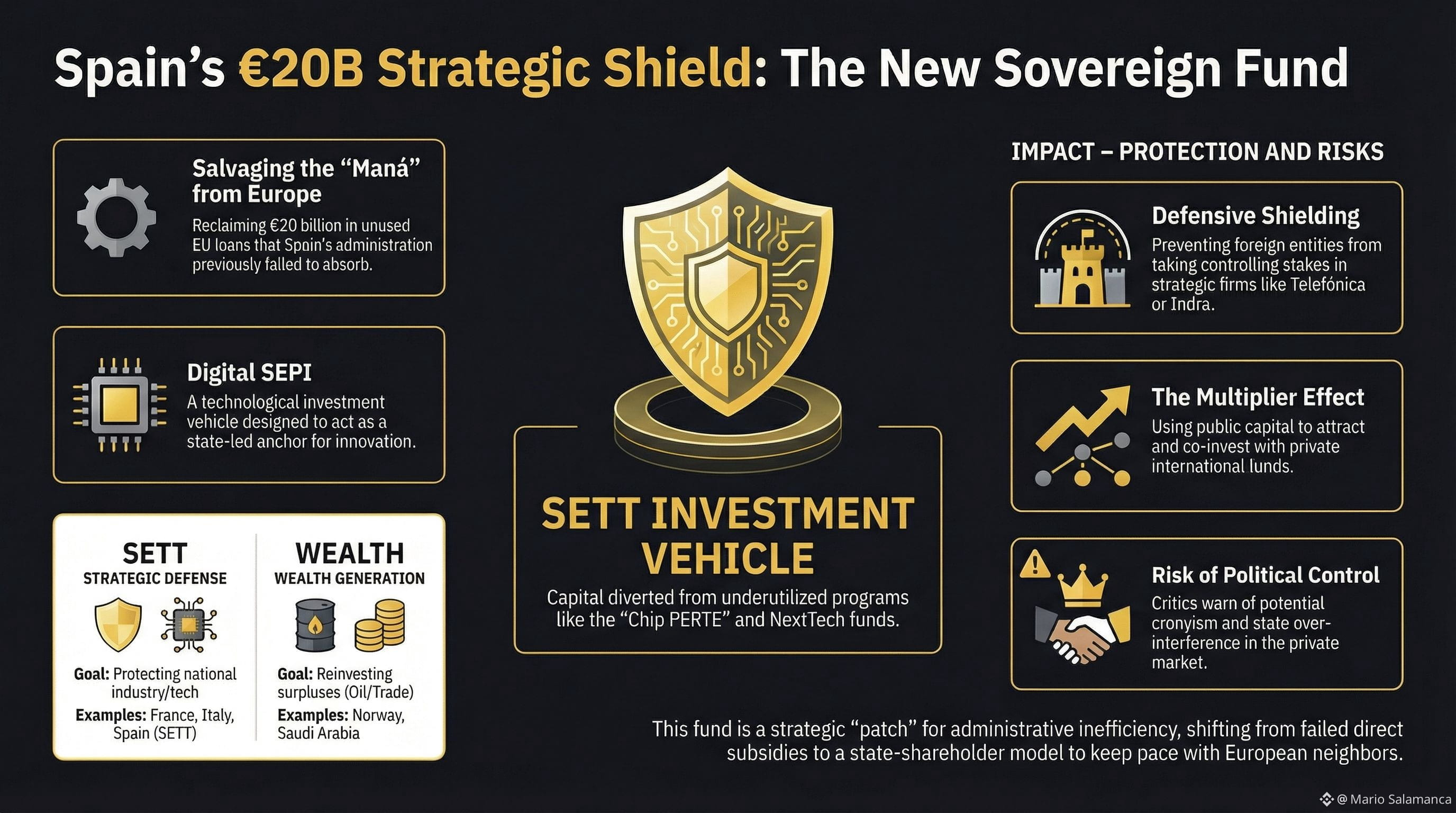
Spain just launched a €20B “sovereign” fund.
But this isn’t what it sounds like.
At first glance, it looks like a classic move toward economic sovereignty:
protect strategic sectors, invest in chips, AI, defense, and digital infrastructure.
Look closer, and the picture changes.
This €20B fund isn’t built on surplus or long-term national savings.

It’s built on unused EU debt.
Spain failed to deploy large parts of the EU’s NextGeneration loans through existing programs.
So instead of fixing the bottleneck, the state repackaged the loans into a new vehicle: SETT.
Same money.
New wrapper.
Much higher stakes.
Unlike traditional sovereign wealth funds:
This one is debt-backed, not surplus-backed
It is inward-looking, not globally diversified
It is defensive, designed to block foreign capital from strategic assets
The goal isn’t to maximize returns.
It’s to buy time.
The real risk isn’t lack of capital — it’s lack of execution.
Spain’s bureaucracy has a narrow “funnel”: money exists, projects don’t move fast enough.
If governance stays political instead of technical, this fund won’t create sovereignty.
It will just add another layer of debt.
Big takeaway:
We’re entering an era where states use balance sheets to defend relevance.
For investors and builders, that means one thing:
understanding state incentives matters as much as understanding markets.