
The workflow assumed that once intent existed, execution would naturally follow.
A decision entered the system.
The destination was already validated.
The next operation was expected to trigger immediately.
That assumption held until a moment where all upstream conditions were satisfied, and nothing advanced on the Plasma mainnet.
No failure surfaced.
No error appeared.
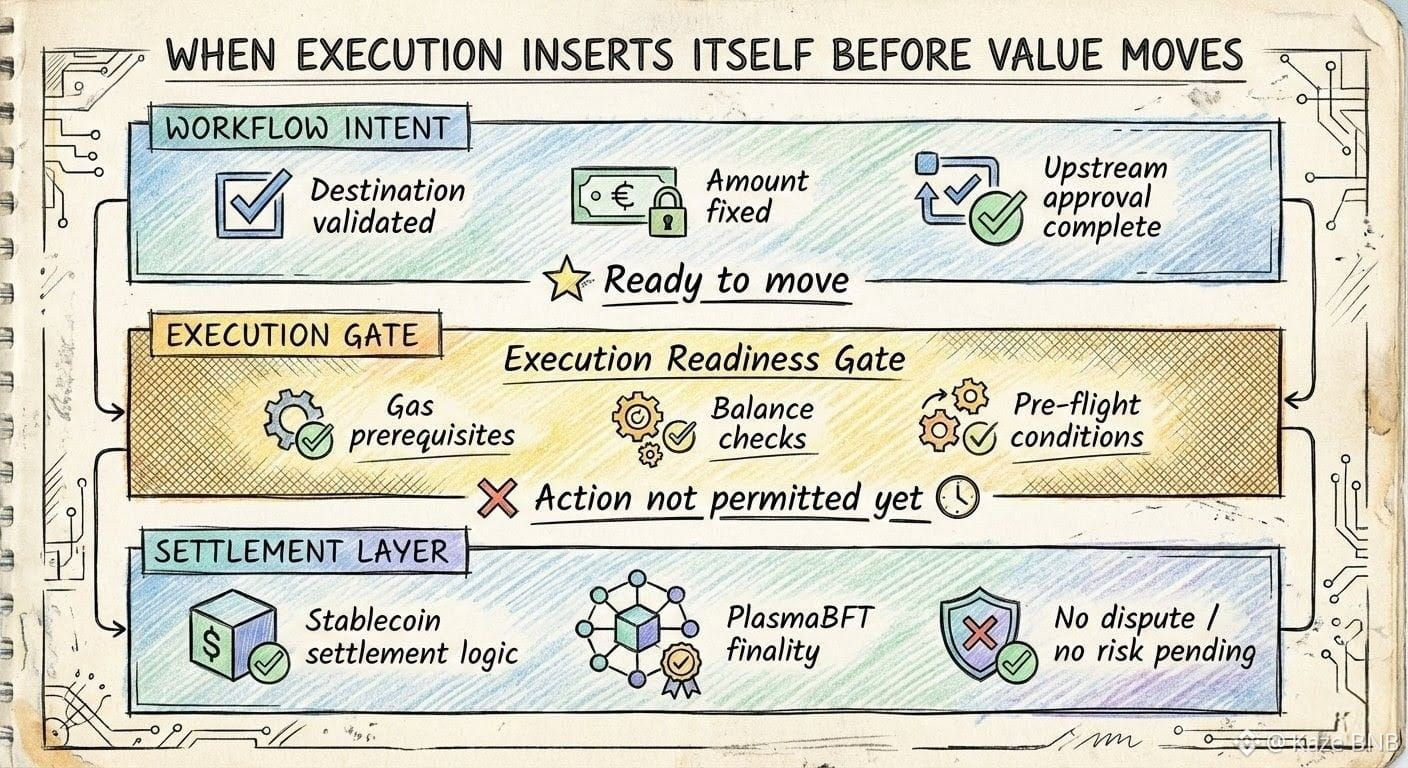
No downstream system was waiting or uncertain inside the Plasma ecosystem.
The payment path wasn’t risky. Settlement wasn’t under dispute. And yet execution paused, suspended before it even had a chance to matter. The delay lived upstream, in a preparatory stage where intent alone was not sufficient, even with fee abstraction for payments sitting quietly in the background on Plasma.
That pause sat out of place in the sequence.
Nothing had gone wrong. The destination was already accepted. The value state was prepared. But execution didn’t begin. Preparation asserted itself first, inserting an extra step between readiness and motion, the way payment workflows on Plasma sometimes do when a stablecoin-centric gas model pulls prerequisite checks forward.
The interruption wasn’t about settlement.
It wasn’t about doubt.
It wasn’t about cost.
It was a gate appearing before execution was permitted to start, even when stablecoin-as-default-gas makes the flow appear as though it shouldn’t need one on Plasma.
Two rhythms existed simultaneously.
Intent was fully formed at the workflow level, clear, resolved, and already committed upstream. Execution, however, hadn’t started. Not blocked. Just waiting. A procedural state sitting between “ready to move” and “allowed to execute,” while PlasmaBFT continued closing other steps cleanly around it on Plasma.
The value wasn’t rejected.
It simply hadn’t been released into motion yet.
Operational routines respond to that kind of pause predictably.
Context shifts upstream. Readiness checks surface earlier in the sequence. Balance verification appears before transfer confirmation. Pre-flight steps persist even where gasless stablecoin transfers reduce the need for them, because institutional settlement flows on Plasma still encode preparation as a prerequisite.
“Give me a second,” someone says.
It sounds reasonable. It always does. But the second belongs to execution readiness, not settlement safety, even in payment paths designed to move at scale on Plasma.
No alerts fire when this happens.
No warnings appear.
No failures interrupt the flow.
Responsibility simply arrives earlier in the process.
The pause becomes owned, not because trust failed, but because execution conditions haven’t been satisfied yet. Workflow continuity thins slightly, long before settlement has an opportunity to assert itself, even under BFT-style finality under load on Plasma.
This isn’t dramatic the first time.
The pressure becomes visible through repetition.
More intents enter the system. More preparatory steps follow. The same upstream pause appears again and again, small enough to tolerate, familiar enough to plan around. Execution friction becomes an expected part of the workflow. The pattern scales alongside retail payment throughput, even when nothing else is failing on Plasma.
Nothing is labeled a problem.
There’s no escalation.
No visible disruption.
No failure state to reference.
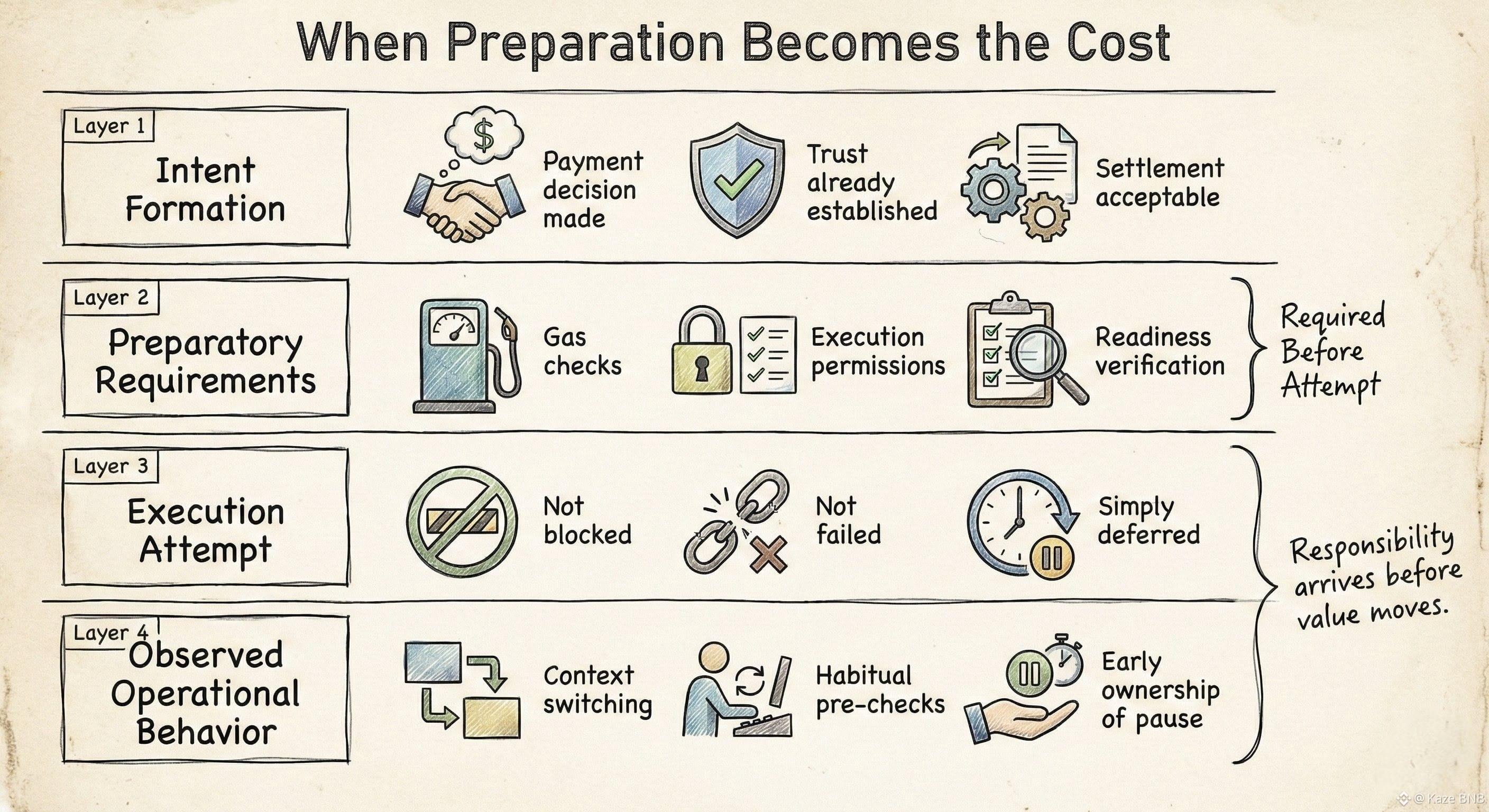
The system behaves consistently. Intent continues to arrive. Execution continues to request readiness first. Over time, the ordering itself becomes the pressure embedded inside Plasma workflows.
Eventually, the structural question shifts.
It’s no longer, “Is settlement safe?”
That check has already been resolved.
It becomes something quieter. Something harder to dismiss.
Why does intent have to wait before it can even attempt execution?
No answer is offered. No explanation surfaces. The system doesn’t justify the ordering or soften the pause. On Plasma, execution continues to ask for readiness before value moves, even when settlement would otherwise be acceptable.
The system doesn’t hurry execution.
It doesn’t explain itself.
It doesn’t resolve the tension.
Intent continues to form.
Execution continues to ask first.
And each time, value waits upstream, not rejected, not doubted, just not yet allowed to move.