

When I revisit Walrus Protocol today, I still don’t frame it as a crypto product or a speculative primitive. I see it as an attempt to answer a much quieter question: what does decentralized infrastructure look like when it’s built for people who don’t want to think about decentralization at all? That framing matters to me, because it forces me to evaluate Walrus by the same standards I apply to any serious system I rely on daily. Does it behave predictably? Does it reduce cognitive load? Does it keep working when nobody is watching?
What stands out after spending time with the current design is how deliberately Walrus centers around real data, not symbolic transactions. Large files, persistent application state, and long-lived records are treated as first-class citizens. The use of blob storage combined with erasure coding reflects an acceptance of how data actually behaves in practice. Files grow, fragments fail, nodes disappear, and users don’t care why. They only care that their data is still there. Designing around that reality is not exciting, but it is practical, and it signals that the protocol expects to be used in unglamorous, everyday contexts rather than short-lived demos.
Operating on Sui reinforces this mindset in a subtle but important way. The system is built around fast, predictable execution and parallelized handling of data. From a user’s perspective, this doesn’t feel like “high performance” in the abstract. It feels like fewer failed uploads, fewer retries, and less time wondering whether an action will complete. In my experience, these small moments define trust. People don’t abandon systems because they are theoretically complex; they abandon them because they can’t form a reliable expectation of behavior.
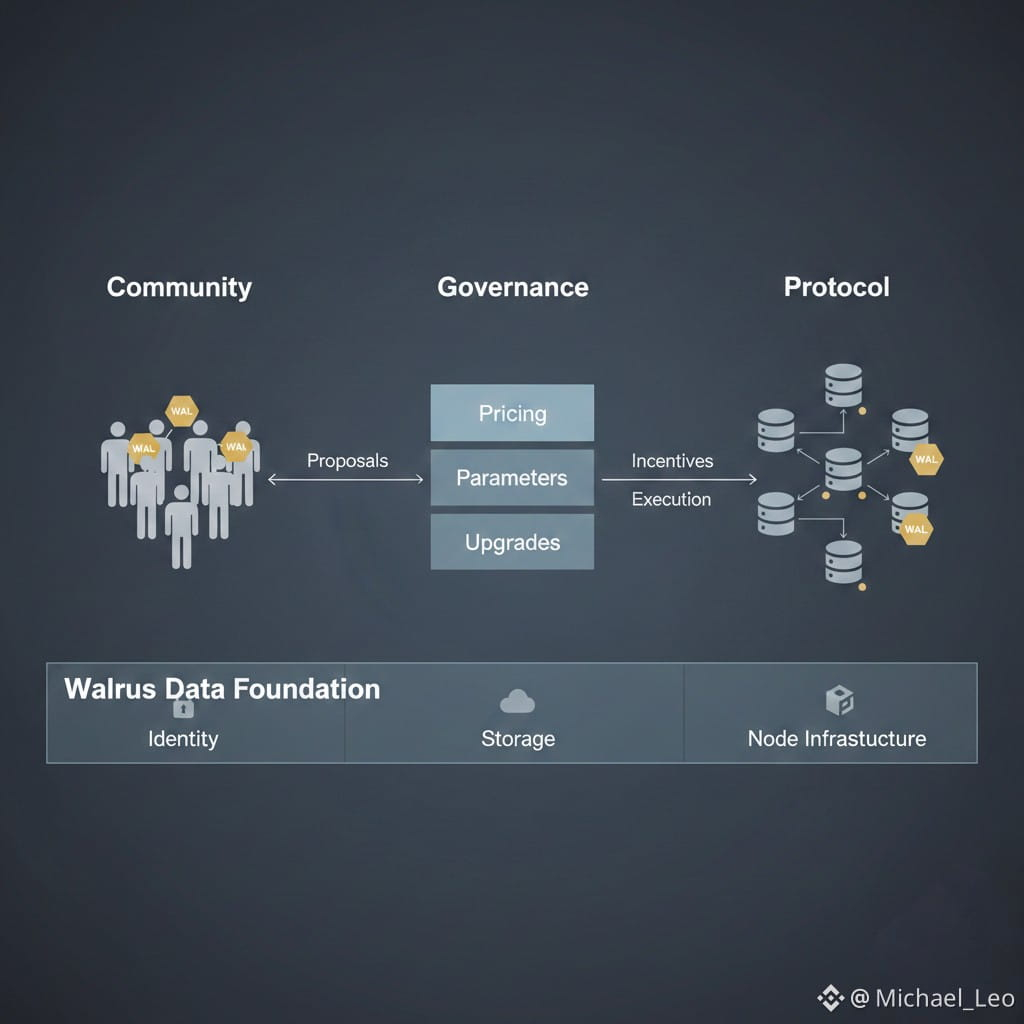 One thing I increasingly appreciate is how Walrus hides its complexity instead of turning it into a selling point. Distribution, redundancy, and privacy are not exposed as rituals the user must understand or manage. They are defaults. This suggests a team that understands that most users don’t want control in the ideological sense. They want confidence. They want to know that the system absorbs complexity on their behalf, rather than pushing it outward and calling that empowerment.
Privacy, in particular, is treated as a structural property rather than a feature toggle. The protocol supports private interactions and data handling without requiring users to constantly signal intent or make explicit trade-offs. That design choice feels grounded in reality. Most people don’t wake up thinking about privacy settings. They simply assume that sensitive data won’t leak unless they do something obviously reckless. Systems that align with that assumption tend to feel natural; systems that violate it tend to feel fragile.
There are ambitious aspects here that I approach with cautious curiosity rather than enthusiasm. Decentralized, privacy-preserving storage at scale has historically struggled with long-term economics and operational edge cases. Walrus’s architecture will ultimately be judged not by peak throughput or launch-day benchmarks, but by how it behaves under slow, continuous pressure. Backups that grow over years, application data that must remain available without human intervention, governance records that cannot quietly disappear. These are the stress tests that matter, and they only reveal themselves over time.
I also pay attention to how the system seems to anticipate institutional and enterprise usage without centering them rhetorically. The focus on cost efficiency and censorship resistance isn’t framed as ideology; it’s framed as a way to make decentralized storage a viable alternative to traditional cloud services. That tells me the designers expect scrutiny, audits, and boring questions about reliability. In infrastructure, boredom is often a sign that the system is doing its job.
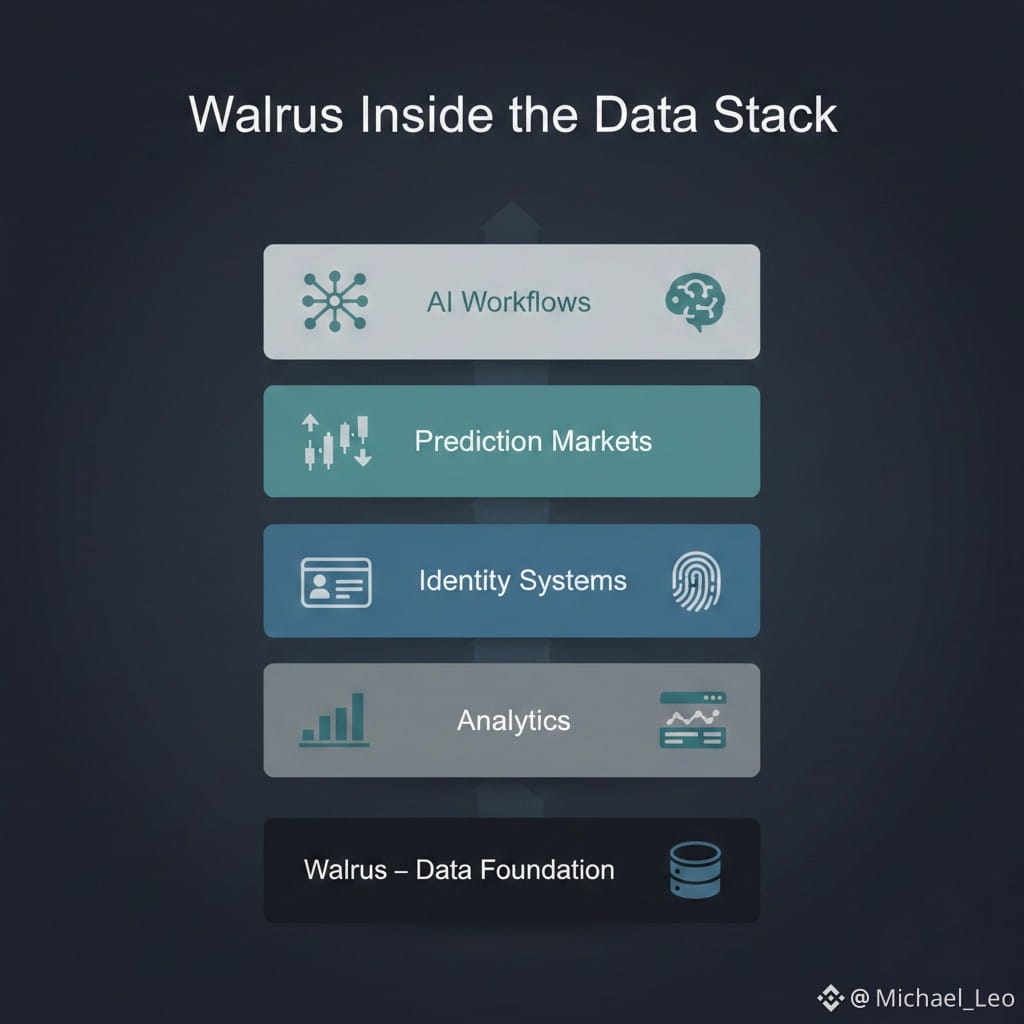 The role of the WAL token fits neatly into this picture when viewed through a usage lens. It functions as a coordination mechanism for governance, staking, and participation rather than as a spectacle. Its purpose appears to be aligning incentives around maintaining storage availability, network health, and long-term operation. When tokens are designed this way, they tend to fade into the background of user experience. That invisibility is not a flaw. It is usually an indication that the system is prioritizing continuity over attention.
What I find most compelling is what Walrus suggests about the future direction of consumer-facing blockchain infrastructure. The projects that endure are rarely the ones that demand admiration. They are the ones that quietly take responsibility for complexity and let users focus on their own goals. Walrus feels aligned with that philosophy. It doesn’t try to make decentralization feel heroic. It tries to make it feel normal.
If this approach succeeds, it won’t be because users talk about Walrus constantly or analyze its internals. It will be because applications rely on it without ceremony, enterprises trust it without needing to evangelize it, and individuals store data without wondering what could go wrong. From where I sit, that is the direction decentralized infrastructure needs to move: away from impressing people, and toward earning their indifference through reliability.

