
The moment that changed how I looked at blockchains didn’t happen during a trade or a deploy. It happened inside a live digital environment where nothing went wrong and that was the problem.
I was interacting inside a Vanar-powered experience, moving through a session that behaved the way mainstream users expect things to behave: actions resolved instantly, the world kept moving, and there was no visible “blockchain moment.” No prompt. No pause. No instruction to learn anything new.
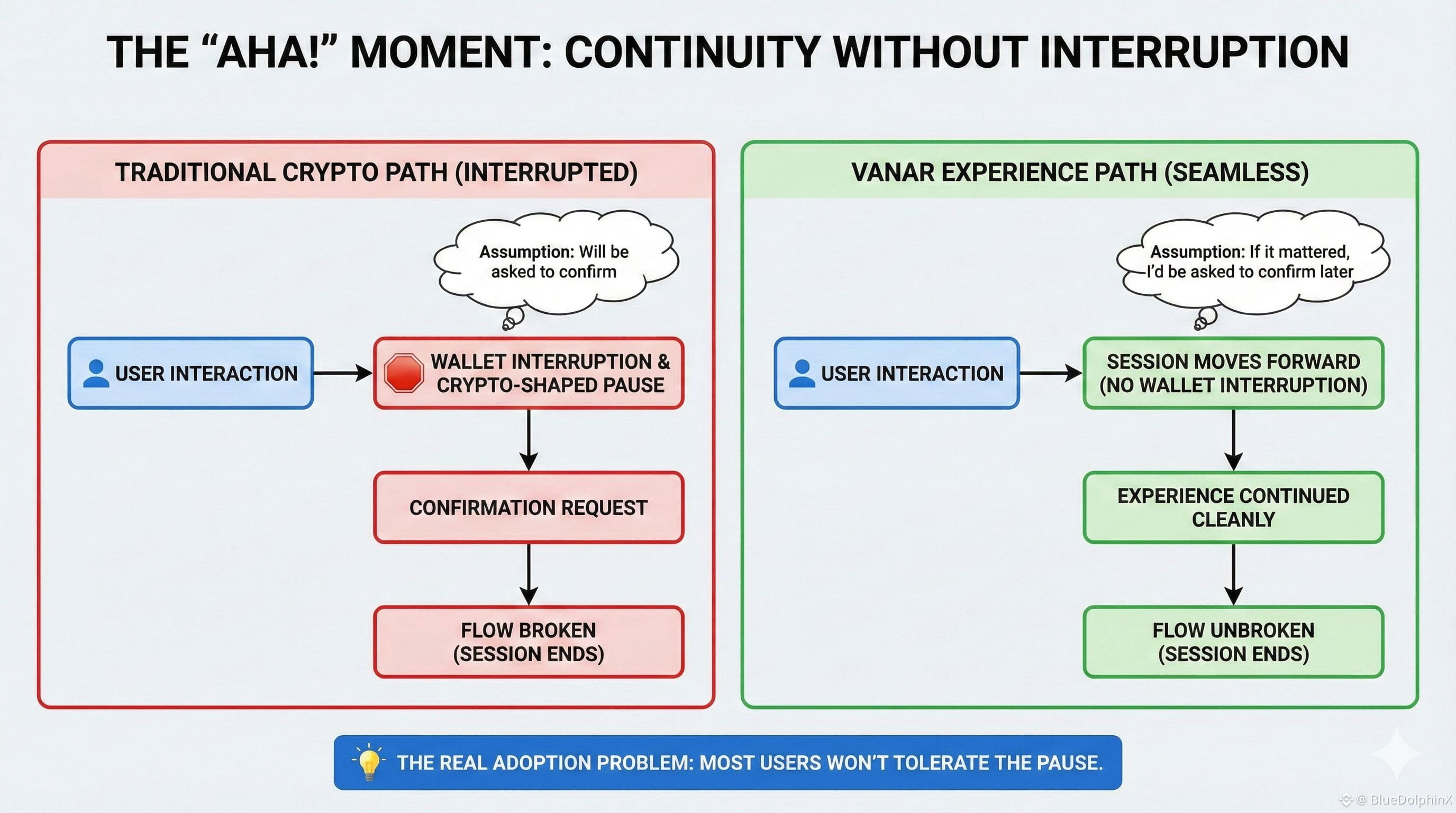
Later, when I tried to retrace what had happened, I realized something uncomfortable:
there was no obvious place where the experience had asked me to understand the infrastructure underneath it.
That’s the data point that stuck with me.
Most chains treat adoption as something you explain your way into. Documentation, steps, confirmations, warnings. The assumption is that users will slow down and adapt to the system. In entertainment, gaming, and brand experiences, that assumption collapses fast. Attention is fragile. The moment a flow hesitates, people leave.
That’s the problem Vanar Chain is clearly designed around.
From the outside, what stands out isn’t speed or buzzwords. It’s how the system behaves when it refuses to interrupt the experience. Sessions don’t close neatly. Actions don’t demand ceremony. The environment keeps moving, and the infrastructure stays invisible unless you deliberately go looking for it.
You can see this most clearly in environments like Virtua Metaverse, where continuity matters more than explanation, and in live ecosystems such as VGN Games Network, where players don’t tolerate pauses just because a system wants acknowledgment.
The solution Vanar leans into isn’t “educate users harder.”
It’s remove the need for education altogether.
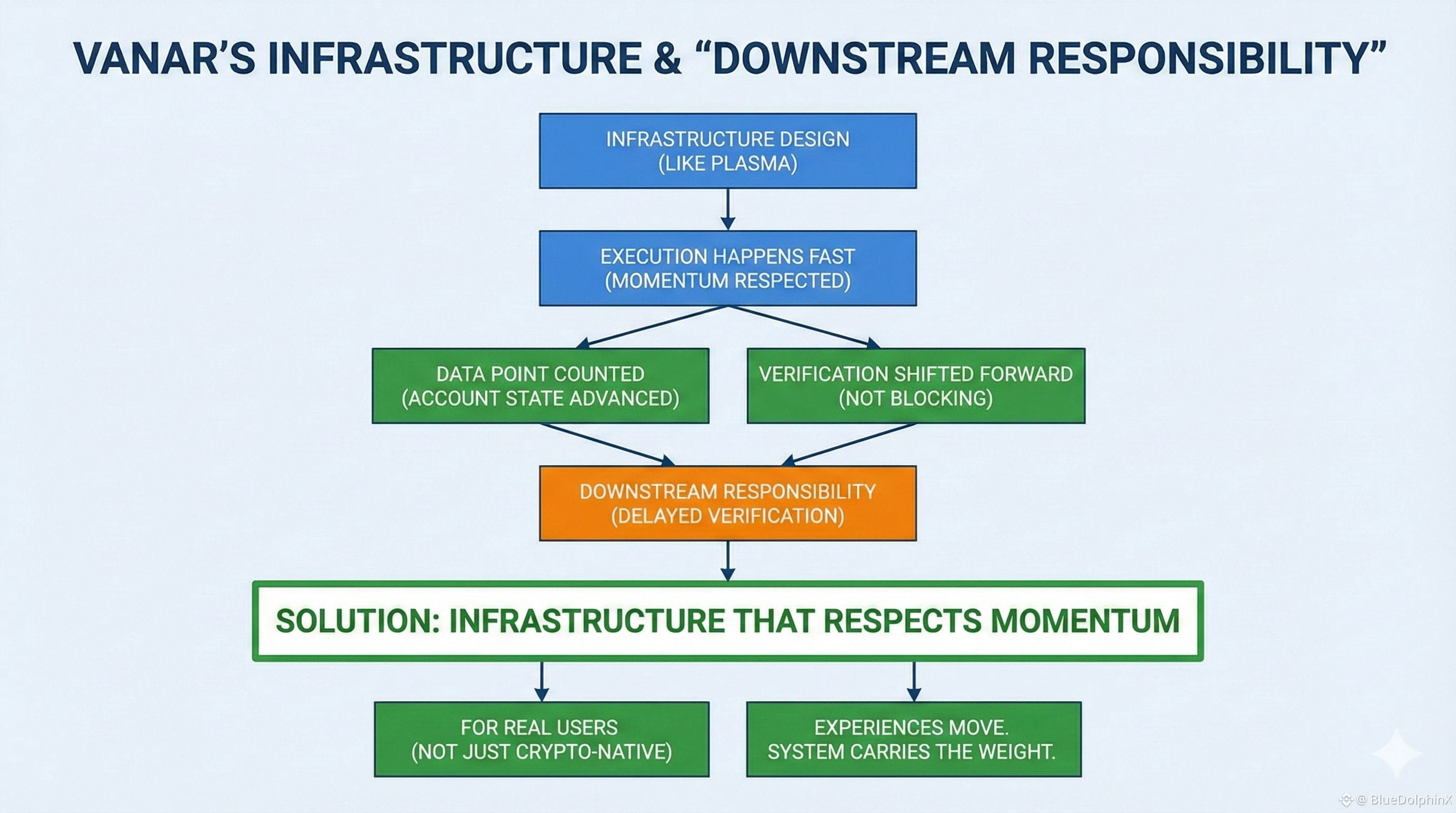
By treating real-world adoption as a design constraint not a growth metric, Vanar flips the usual logic. The system takes responsibility for staying out of the way. Users aren’t onboarded into blockchain; blockchain dissolves into the experience.
That’s why Vanar doesn’t feel like infrastructure trying to be noticed. It feels like infrastructure that understands when being noticed would cause drop-off.
Powered by $VANRY , this approach isn’t about selling a narrative. It’s about surviving real usage at scale, where the next billion users won’t wait to be taught how things work.
They’ll just move on.