
From its earliest days, decentralized finance was defined by primitives rather than systems. Lending pools, automated market makers, yield strategies, and governance tokens were not designed to replace financial infrastructure; they were experiments that explored what was possible when financial logic became programmable. These primitives unlocked innovation, but they were never meant to carry the weight of global money. As stablecoins grew beyond crypto-native users and began to serve payments, remittances, treasury operations, and institutional settlement, the limitations of DeFi-first design became increasingly visible. What worked for experimentation failed under the demands of reliability, predictability, and scale. Plasma emerges from this realization, representing a deliberate shift away from DeFi primitives and toward what finance actually requires: monetary plumbing.
DeFi systems optimize for composability and permissionless interaction, allowing anyone to plug into shared liquidity and logic. This openness is powerful, but it comes at a cost. In DeFi, execution competes with speculation, fees fluctuate based on unrelated demand, and system behavior becomes unpredictable during market stress. These characteristics are tolerable when the goal is innovation, but they are unacceptable when the system is expected to behave like money. Money does not negotiate its behavior with market conditions; it is expected to work consistently. Plasma’s design philosophy starts here, recognizing that digital money must be supported by infrastructure that behaves conservatively, even if that means sacrificing some flexibility.
Monetary plumbing is fundamentally different from financial products. Products can fail, be replaced, or iterate quickly. Infrastructure must endure. Payment rails, clearing systems, and settlement networks are engineered not for creativity but for consistency. They impose constraints because constraints reduce risk. Plasma adopts this mindset by treating stablecoins not as DeFi tokens but as monetary instruments that require predictable execution, deterministic settlement, and stable economics. This marks a clear departure from the DeFi era, where monetary logic was layered onto systems never designed to support it.
One of the most important distinctions between DeFi primitives and monetary plumbing lies in execution determinism. In many blockchain systems, execution may be logically deterministic at the contract level, yet economically unpredictable at the system level. Fees spike, transactions reorder, and settlement times vary based on congestion. For speculative trading, these dynamics are part of the game. For payments and settlement, they are a failure. Plasma reframes determinism as a monetary property rather than a technical feature. Execution must behave the same way regardless of market conditions, ensuring that value transfer remains reliable even during periods of extreme demand.
Fee volatility further illustrates why DeFi-first design cannot support monetary use cases. In DeFi, fees are often auction-based, reflecting demand for blockspace. This model aligns well with speculative activity but directly conflicts with financial expectations. Businesses cannot price goods, run payroll, or manage treasury flows on a system where transaction costs change unpredictably. Plasma’s stablecoin-first economics remove this uncertainty, aligning costs with financial norms rather than market-driven auctions. In doing so, Plasma transforms execution from a competitive marketplace into a utility, a defining characteristic of monetary infrastructure.
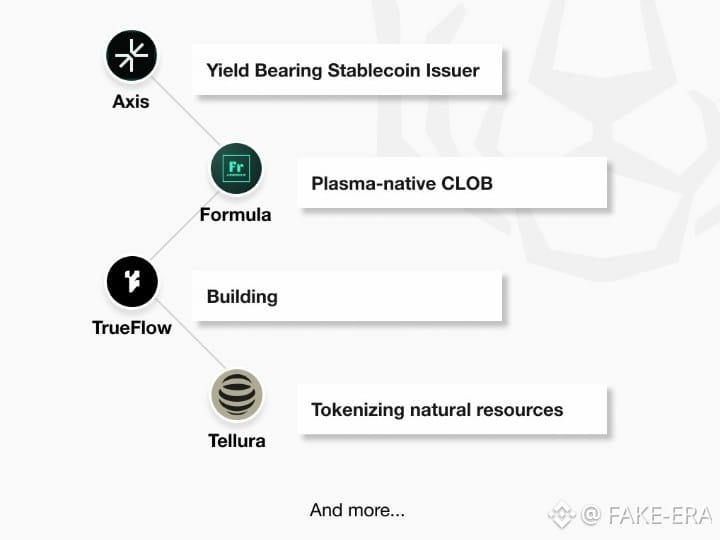
Liquidity behavior also changes dramatically when systems transition from DeFi primitives to monetary plumbing. In DeFi, liquidity is incentivized through yield and speculation, often resulting in boom-and-bust cycles. When markets are calm, liquidity is abundant; when volatility rises, liquidity fragments or disappears. Monetary systems cannot function this way. Liquidity must be dependable, especially during stress. Plasma’s approach treats liquidity as infrastructure, not incentive-driven capital. By designing for deep, stable liquidity from the outset, Plasma ensures that settlement and payment flows remain smooth regardless of external conditions.
Settlement finality is another area where DeFi assumptions break down. Many blockchain systems rely on probabilistic finality, where transactions become increasingly unlikely to revert over time. While this may be acceptable for experimental systems, finance requires clarity. When is a transaction final? When can funds be reused, reconciled, or reported? Plasma emphasizes fast, deterministic finality so that settlement outcomes are clear and irreversible within known timeframes. This mirrors traditional financial systems, where finality is contractual and operational, not statistical.
As stablecoins increasingly intersect with regulation, the gap between DeFi primitives and monetary plumbing becomes even more pronounced. Regulatory frameworks assume systems behave predictably, can be audited, and maintain operational resilience. DeFi systems, by design, resist such assumptions. Plasma does not view compliance as an external constraint but as an inherent property of monetary systems. By embedding auditability, transparency, and predictable behavior into its architecture, Plasma enables stablecoins to function within regulated environments without compromising their on-chain nature.
Privacy further highlights the difference between experimental finance and monetary infrastructure. In DeFi, privacy is often treated as either total transparency or total obfuscation, with little nuance. Monetary systems require balance. Institutions need discretion without sacrificing auditability. Plasma’s approach to privacy-preserving settlement maintains deterministic behavior at the system level while allowing sensitive data to be protected where appropriate. This enables stablecoins to support enterprise and institutional use cases without turning financial activity into public intelligence.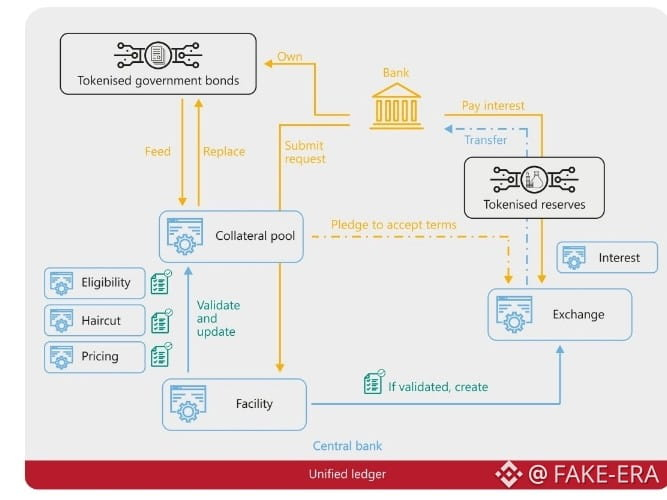
The transition from DeFi primitives to monetary plumbing also reshapes how developers interact with the system. DeFi development often assumes rapid iteration, composability, and tolerance for failure. Monetary infrastructure demands the opposite. Developers need guarantees that the underlying system will behave consistently over time. Plasma provides a foundation where developers can build stablecoin applications with confidence, knowing that execution, costs, and settlement will not change unpredictably. This stability reduces integration risk and accelerates adoption by organizations that cannot afford uncertainty.
Anchoring security to Bitcoin reinforces Plasma’s conservative approach. Bitcoin’s strength lies in its neutrality and resilience, not its flexibility. By respecting Bitcoin as a settlement anchor rather than attempting to replace it, Plasma aligns itself with the principles of layered financial systems. Execution happens where it is efficient; settlement anchors where it is secure. This design mirrors traditional finance, where fast payment systems ultimately settle on the most trusted ledgers.
Perhaps the most significant shift from DeFi primitives to monetary plumbing is philosophical. DeFi celebrates experimentation and disruption. Monetary infrastructure values continuity and trust. Plasma embraces the idea that financial systems should be boring in the best possible sense. They should not surprise users, fail under stress, or require constant vigilance. They should simply work. This philosophy runs counter to much of Web3 culture, but it aligns closely with the realities of global finance.
As stablecoins continue to expand beyond crypto-native environments, the need for systems like Plasma becomes unavoidable. Digital money cannot rely on infrastructure designed for speculation. It requires purpose-built systems that treat determinism, predictability, and reliability as first-order concerns. Plasma represents this evolution, signaling a maturation of blockchain technology from experimental platforms to foundational infrastructure.
The journey from DeFi primitives to monetary plumbing is not a rejection of innovation but a recognition of responsibility. Innovation without reliability cannot support real economies. Plasma’s design acknowledges that money is a public good that demands stability. By aligning blockchain architecture with financial principles, Plasma enables stablecoins to fulfill their promise as global, digital money.
In the long run, the success of blockchain-based money will not be measured by how many primitives exist, but by how seamlessly value moves across systems, borders, and institutions. Plasma positions itself at this intersection, providing the plumbing that allows digital money to flow invisibly and reliably. This is not the most glamorous role in the ecosystem, but it is the most essential.
From DeFi primitives to monetary plumbing, Plasma embodies a shift in priorities. It signals the end of treating financial infrastructure as an experiment and the beginning of building systems meant to last. In doing so, Plasma does not abandon Web3; it grows it up, transforming blockchain technology from a playground of ideas into the backbone of digital finance.