

When I sit down to think about Vanar, I deliberately avoid framing it as a blockchain in the abstract. I try to picture the environments it is meant to live inside. Games that run for hours, not minutes. Digital worlds where users return day after day. Brand-driven platforms where the tolerance for friction is close to zero. That mental shift matters, because it forces me to judge Vanar less by how impressive it sounds and more by whether it behaves like infrastructure that can quietly carry real activity without asking for attention. From everything I’ve studied, Vanar feels less concerned with being noticed and more concerned with being trusted through repeated use.
What stands out immediately is the background of the team and the kinds of products that already exist on the network. Experience in games, entertainment, and branded digital environments tends to create a very different set of instincts. In those industries, users do not forgive complexity. They do not read documentation, and they do not want to be educated about systems. If something feels awkward or slow, they simply disengage. Vanar’s design choices make far more sense when viewed through that lens. The chain is not built to invite users into its mechanics. It is built to remove itself from their awareness as much as possible.
Looking at current usage, what I find more meaningful than raw numbers is the type of interaction Vanar supports. Projects like Virtua Metaverse are not lightweight experiments. Persistent environments introduce constant pressure on the underlying infrastructure. Assets must remain accessible over time, identities need continuity, and interactions must feel stable even when activity fluctuates. These are not theoretical requirements. They are operational ones. The fact that Vanar is already supporting this kind of usage tells me the system is being shaped by real behavior, not by imagined scenarios.
The same applies to the VGN Games Network, which acts less like a promotional layer and more like an ecosystem where multiple games and experiences coexist. That creates friction by default. Different user flows, different engagement patterns, and uneven demand all stress the system in unpredictable ways. Designing for that kind of environment requires restraint. It requires prioritizing consistency and reliability over exposing every possible feature. Vanar appears to lean heavily in that direction, even when it means making the underlying architecture less visible.
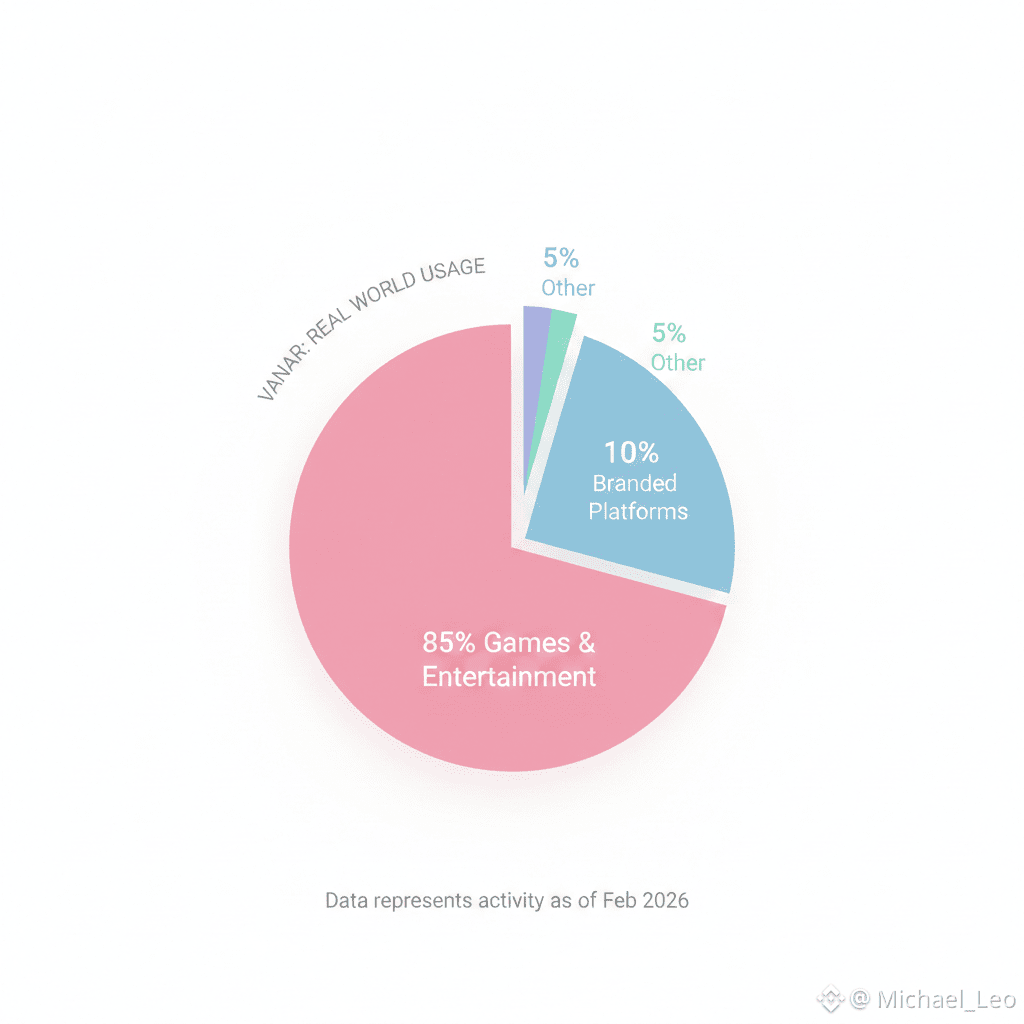 One of the most consistent patterns I see in Vanar’s design is a focus on reducing the number of decisions a user has to make. Everyday users do not want to think about fees, confirmations, or network conditions. They want outcomes. They want actions to feel immediate and predictable. Hiding complexity is not a cosmetic choice here; it is a structural one. When complexity is hidden, the burden shifts entirely to the infrastructure. The system has to absorb errors, spikes in demand, and edge cases without leaking those problems upward. That is difficult engineering work, but it is also how mature consumer systems have always been built.
This approach comes with clear trade-offs. By prioritizing simplicity at the user level, Vanar limits how much direct control users have over the underlying mechanics. Some technically inclined participants may see that as a constraint. From a consumer infrastructure perspective, I see it as a necessity. Systems designed for mass usage cannot assume technical curiosity or patience. They must assume distraction, inconsistency, and limited attention. Vanar’s architecture appears to accept that reality rather than fight it.
I’m also paying attention to how Vanar is positioning itself across multiple verticals at once. Gaming, metaverse environments, AI-integrated experiences, and brand solutions all share one thing in common: they bring non-crypto users into contact with blockchain systems without telling them that’s what’s happening. These users arrive with expectations shaped by Web2 products. They expect smooth onboarding, stable performance, and intuitive interaction. Any infrastructure that fails under those expectations is exposed quickly. The fact that Vanar is willing to place itself under that kind of scrutiny suggests confidence rooted in execution rather than messaging.
The VANRY token makes the most sense to me when viewed strictly through usage and alignment. In a system like this, a token does not need to be visible to be important. Its role is to coordinate activity, secure participation, and align incentives between users, developers, and the network itself. In consumer-facing systems, the most successful economic components are often the least noticeable. They operate in the background, enabling interaction rather than defining it. That appears to be how VANRY is intended to function, not as an object of focus, but as an enabling layer.
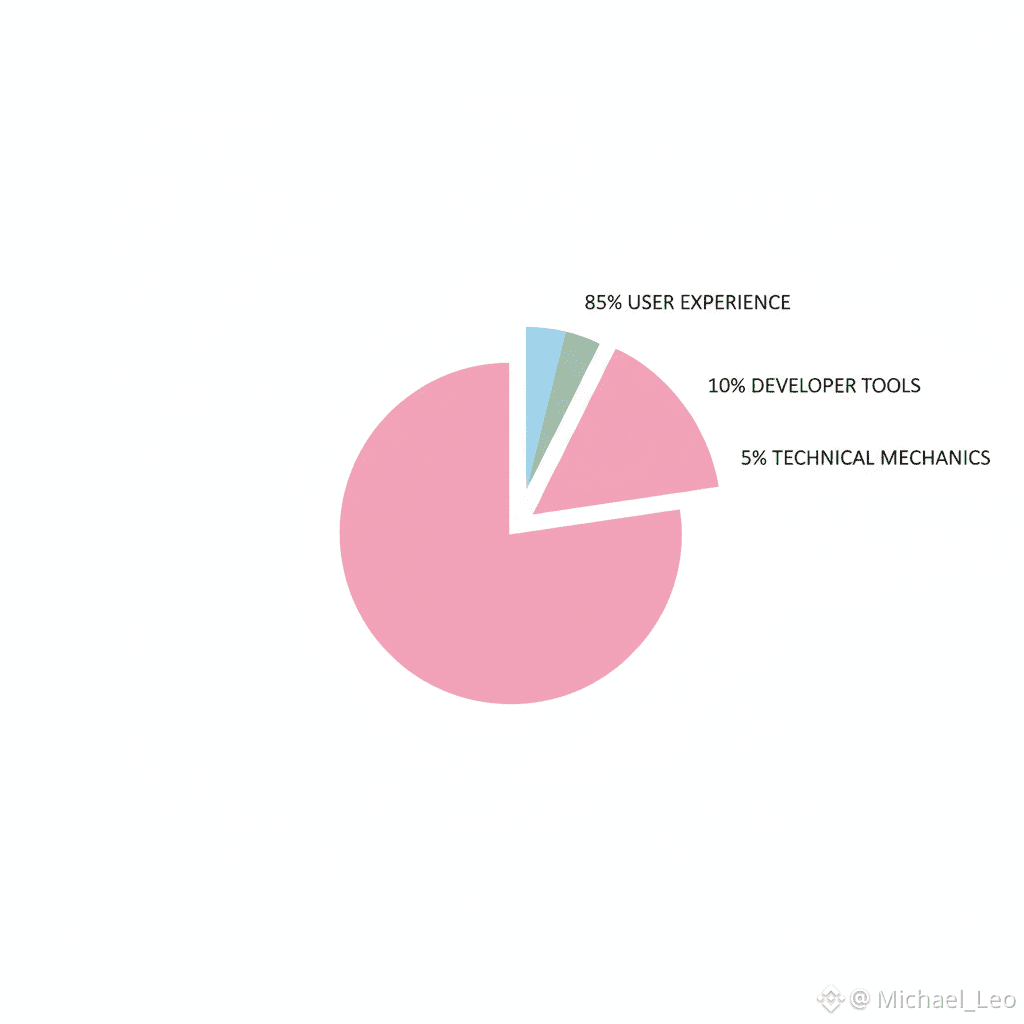 What I find particularly grounded about Vanar is its apparent acceptance of long-term operational pressure. Supporting persistent digital environments is not about launch moments or feature checklists. It is about maintenance, updates, and resilience over time. Systems that are used daily reveal weaknesses quickly. They force teams to make pragmatic decisions, sometimes at the expense of elegance. From what I can see, Vanar is being shaped by that kind of feedback loop, where real usage informs design more than theory ever could.
When I zoom out, Vanar represents a version of blockchain infrastructure that feels more mature than most. Not because it is more complex, but because it is more restrained. It does not ask users to care about decentralization, consensus, or architecture. It asks them to care about experiences. If the system does its job, users never need to think about what supports those experiences at all.
For me, that is the most telling signal. Infrastructure that aims to support everyday digital life cannot demand attention. It has to earn indifference through reliability. Vanar’s focus on hiding complexity, absorbing friction, and supporting real consumer environments suggests a clear understanding of that principle. If this approach continues to hold up under expanding usage, it points toward a future where blockchain systems finally stop asking users to adapt and start adapting themselves instead.
