
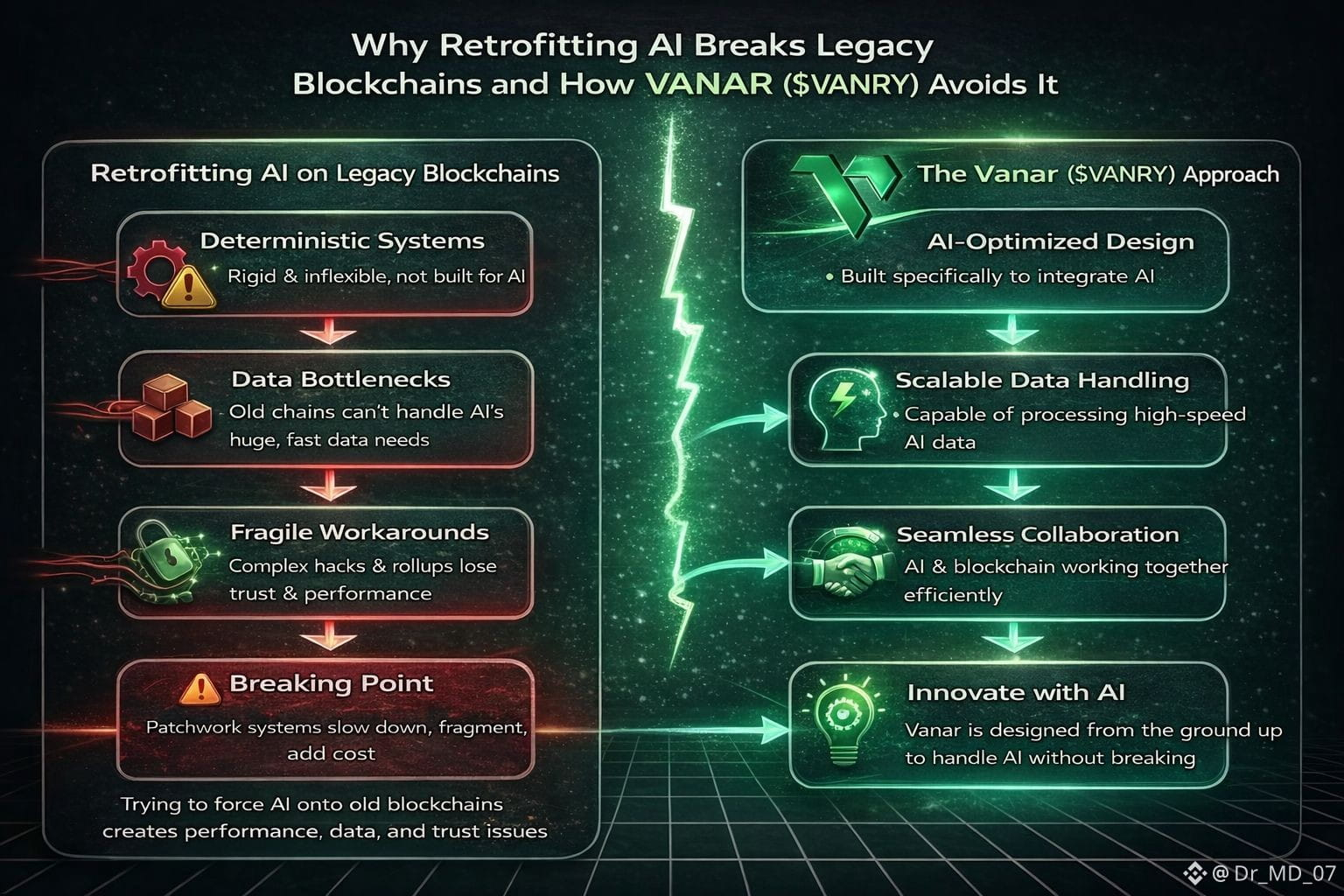
 AI isn’t just some extra gadget anymore it’s turning into the engine that drives how digital products actually work. Games now shift and adapt as you play. Content morphs depending on what you do. Virtual worlds don’t just stick to a script; they react on the fly. But here’s the snag: most blockchains weren’t built for any of this. They’re trying to bolt AI onto old, rigid systems, and honestly, the seams are starting to split.
Take a look at how legacy blockchains work. Everything is about determinism. Feed every node the same input, and you expect the same result every single time. That’s perfect for simple payments or basic contracts. But AI? It’s messy, always learning, and unpredictable by design. When developers try to jam AI into these old systems, they end up running most of it off-chain, usually on centralized servers. All the blockchain really does is settle the bill. And once that happens, decentralization—the whole point—starts to fall apart.
There’s also the data problem. AI chews through huge piles of data and spits out even more. Old blockchains were tuned for tiny messages and slow, steady activity. Bring AI into the mix, and suddenly transactions get expensive, the network clogs up, and everything slows down. So teams start adding bridges, rollups, or outside APIs just to keep up. But every workaround stacks on more complexity and trust issues. Before long, the system gets fragile and harder to fix when something breaks.
Vanar doesn’t play that game. They built their chain knowing AI and big consumer apps were coming. The team comes from gaming and entertainment worlds where fast feedback, big content libraries, and unpredictable user behavior are the norm. AI makes sense there, but only if the tech underneath lets it breathe.
With Vanar, the blockchain acts as the backbone for ownership and coordination. Heavy lifting and real-time smarts? That can happen off-chain, where AI really shines. The chain keeps track of trust, identity, and who owns what. This sidesteps the hype around “fully on-chain AI,” which sounds cool but never really works at scale. What matters is making everything work together smoothly, without killing performance or giving up on decentralization.
Latency’s another headache when you try to shoehorn AI into old chains. For AI-powered games or immersive apps, lag kills the magic. No one wants to wait seconds for a blockchain to catch up. Most legacy networks just can’t deliver the speed these experiences need. Vanar gets this. They focus on making everything feel instant, so people actually want to use it. No one cares about a fancy consensus model if the experience feels clunky.
From the builder’s side, retrofitting AI means juggling too many moving parts smart contracts, off-chain compute, storage, verification…it’s a mess. That complexity kills creativity. Vanar cuts a lot of that out by matching their tools to how modern apps actually get made. Developers can get on with building cool stuff, not wrestling the plumbing.
Honestly, what stands out about Vanar is that they don’t pretend the old ways will stretch forever. They accept that AI and new digital experiences need different foundations. Instead of patching up legacy systems and crossing their fingers, they start from how people and machines really act today.
In the end, the platforms that win will be the ones that disappear into the background for users and don’t give developers a headache. Trying to bolt AI onto legacy blockchains usually just creates more pain than progress. Vanar dodges that by designing for the world we actually live in, not the one we wish we had. That doesn’t guarantee they’ll win, but at least they’re facing reality head-on.
