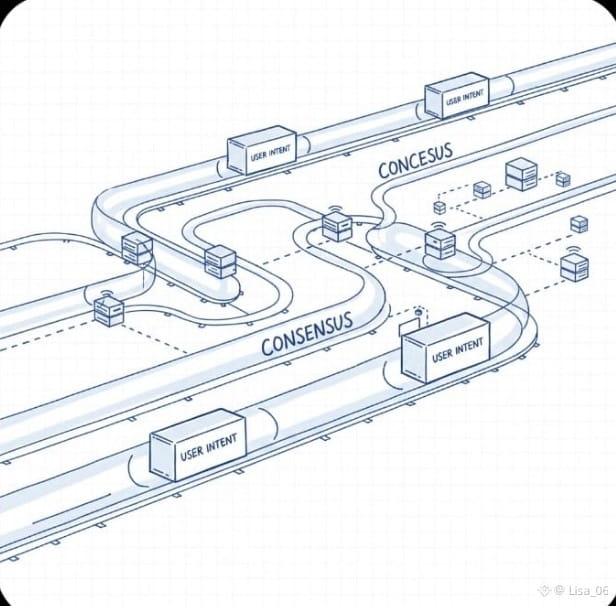
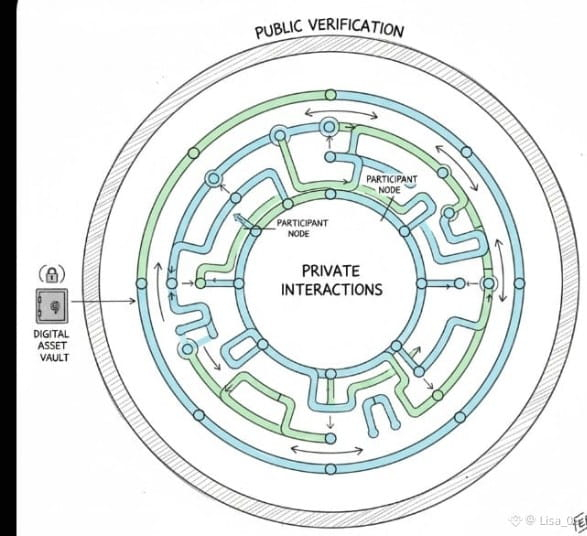
 Public blockchains leak more than data—they leak intent. Transaction timing, interaction patterns, and behavioral signals form a shadow dataset that sophisticated actors can exploit. In analyzing VANRY’s architecture, what stands out isn’t an obsession with hiding everything, but a more subtle shift: privacy is treated as interaction infrastructure rather than cryptographic camouflage.
On VANRY, secure interactions behave like routed traffic rather than exposed broadcasts. Value moves, state updates, and user actions are compartmentalized so observers can verify correctness without reconstructing motive. This is especially relevant for brand and gaming environments, where revealing behavioral metadata can be as damaging as exposing balances.
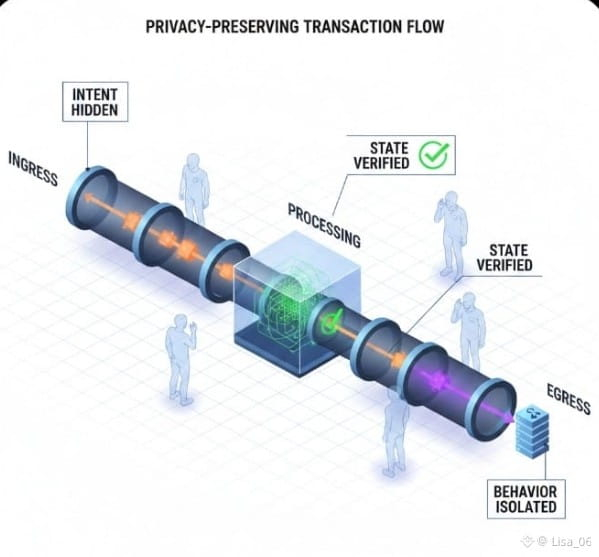 The effect resembles modern logistics networks: packages are traceable, but contents and commercial intent remain opaque. VANRY’s design aligns privacy boundaries with real-world trust boundaries, enabling selective disclosure instead of blanket secrecy. That distinction allows complex ecosystems—games, marketplaces, digital identities—to operate without strategic leakage.
As blockchains mature, the competitive edge won’t come from louder transparency or deeper opacity, but from architectures that understand where privacy actually matters. VANRY’s approach suggests that the future of secure chains lies in shaping visibility itself, not merely encrypting it.