
The Problem with Most Blockchains
I have a confession. I love this technology, but most of it doesn't work for normal life. It's like we built a supersonic jet to go to the corner store. The engines roar, the specs are amazing, but you can't fit your groceries in it. Blockchains are brilliant at moving money between crypto wallets. But try to use one for anything with a whiff of the real world—proving you paid a bill, getting a ticket for a concert, showing a bank you own a car—and everything grinds to a halt. We end up using off-chain bandaids and trusted third parties. It feels like we missed the point. Vanar looked at this mess and didn't see a tech problem. They saw a logic problem. They decided to build a chain that understands what things mean, not just what they are.
A New Foundation, Not a Coat of Paint
Here's their big idea: don't add AI to the chain. Make the chain itself intelligent. Bake the understanding right into the foundation. The reason for this is that imagine a blockchain that doesn't just see a string of numbers in a transaction. It sees an invoice. It sees a signature. It sees a delivery confirmation. By structuring data natively this way, the chain can work with it. It can check conditions, verify facts, and trigger actions on its own. The AI isn't a party trick. It's the core utility. It's what lets the network handle real-world complexity without calling a human for help every five minutes.
Built for the Real World, Not Just Traders
For this to work, the chain has to fade into the background. Vanar is built for that disappearance act. Blocks finalize in a steady, predictable three seconds. Fees cost a sliver of a cent and—this is the key—they stay there. No surprise hundred-dollar gas bills because a monkey JPEG dropped. This stability is boring, and that's the point. A developer can build an app for coffee shop loyalty points or event ticketing. The chain handles the identity checks and the automatic payments in the background. The user just gets a notification: "You're checked in." or "Your loyalty reward was sent." They never see a seed phrase. They never sign a cryptic transaction. It feels like the internet, not like a crypto tutorial.
How It Actually Works: A Layered Approach
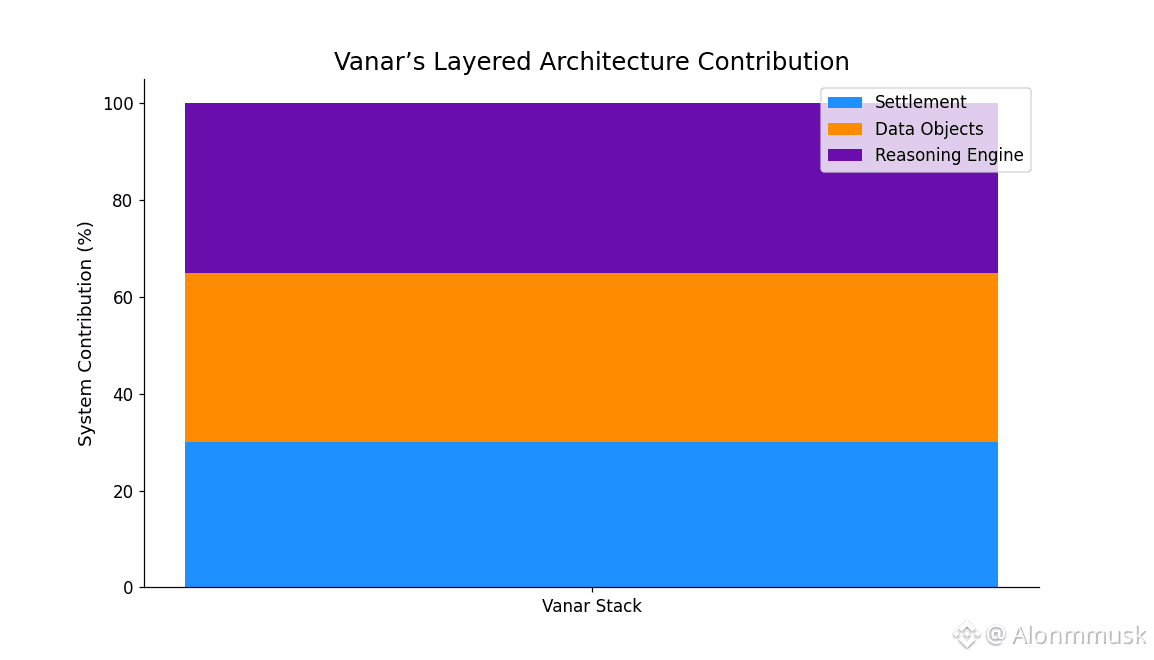
Picture it like a city. The ground floor is the settlement layer—a fast, efficient blockchain that speaks the same language as Ethereum. Developers already know these tools. But above that ground floor, Vanar adds the buildings. These are specialized data layers. They take the messy stuff of real life—a contract, a diploma, a shipping manifest—and structure it into clean, digital objects the chain can read and use. A shipping receipt becomes a verifiable object that can automatically trigger a payment the second a GPS sensor confirms delivery. The chain isn't just a ledger; it's a participant.
The Reasoning Engine on Top
Now, put a brain in the top floor of those buildings. That's the reasoning layer. This is where Vanar stops being a database and starts being an assistant. It looks at the structured data, connects dots, and makes calls. Did the temperature sensor in the shipped medicine stay in range? The reasoning layer checks the logs, validates it, and okays the payment. It’s automating the boring, trust-based verification work that bogs everything down. It means you don't need five different off-chain services to do one simple thing. The chain has the context to do it itself.
A Security Model That Values Reliability
Keeping this city safe uses a stake-based system, but with a reputation filter. You, as a token holder, don't just back the richest validator. You back the most reliable one. The one with a history of uptime and honest operation. You can delegate your tokens to them like voting for a trustworthy mayor. If that validator messes up—goes offline or acts shady—they get fined. Their stake gets cut. This pushes the whole network toward steady, dependable operators. It prevents a few big, careless players from controlling everything and putting the system at risk.
Tokenomics Designed for Stability, Not Speculation
The VANRY token is the blood in the veins, but it's designed for a healthy body, not a sugar rush. The total number is capped. New tokens are released slowly over twenty years to fund growth without inflating the value away. But the real magic is in the fees. They're algorithmically designed to be stable in real-world value. That coffee you bought with VANRY will cost the same fee next week, and next year. This predictability is everything for a business. How can you build a budget if your transaction costs might moon overnight? Parts of the token supply are also locked in a community chest, funding developers who build useful things, not just speculative games.
Governance That Rewards Involvement
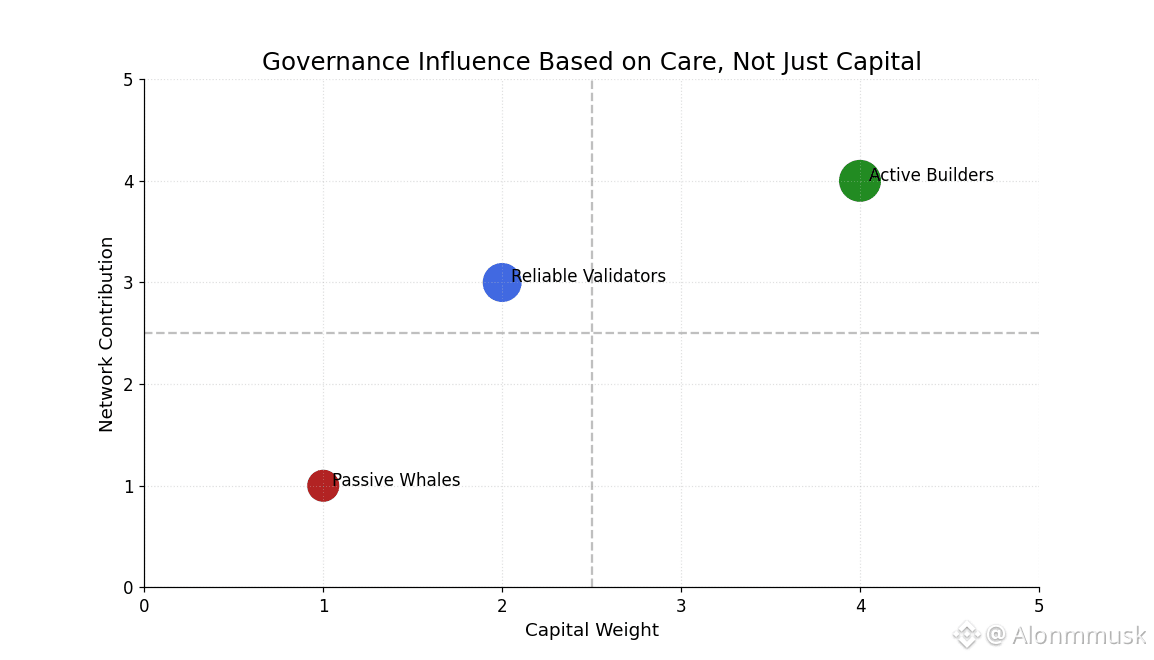
Running this city isn't a pure democracy, and it's not a dictatorship. It's a meritocracy. Staking tokens gives you a vote on upgrades, sure. But your voice gets louder if you're actually contributing. Are you building a popular app on the chain? Are you running a rock-solid validator node? The system sees that and weights your vote. This stops a whale with a fat bag but zero interest in the network's health from driving it off a cliff. It makes governance about care, not just capital.
Playing Nice with the Rest of Crypto
Vanar has no interest in being a walled garden. Its EVM-compatible base layer is a welcome mat. It means any developer from the Ethereum world can walk right in with their existing tools. Bridges act as highways, letting assets and data flow to and from other chains like Polygon or Arbitrum. The vision is a connected ecosystem. Maybe your digital art lives on Ethereum, but Vanar's smart layers handle the licensing and automatically pay royalties to the artist every time it's displayed. Vanar aims to be the brain for the wider crypto body.
Real Partnerships, Real Pilots
You won't see Vanar chasing headlines with flashy, empty partnerships. Their work is quieter and harder. They're in the trenches with payment processors and cloud companies, running live pilots. They've shown autonomous payment agents working at actual finance conferences. They run fellowship programs in places like South Asia, funding developers to solve local problems with real code. The growth strategy is tangible: prove it works, then scale. It's a grind, but it's the only kind that builds something that lasts.
The Quiet, Long-Term Build
This isn't a project fueled by hype and token pumps. It's funded by strategic backers and grants aimed at long-term development. The team is methodically building out the next layers of the stack. The goal isn't to win a narrative cycle. It's to build the foundational plumbing for a future where the digital world understands the physical one—where a smart contract isn't just code, but a bridge to a real outcome. They're working to make the technology itself get out of the way, so all we're left with is what it does for us.
@Vanarchain #Vanar $VANRY