
A Plasma USDT payment lands twelve seconds after the treasury snapshot.
I see it because I’m still in the console, cursor blinking where the cutoff time is supposed to mean something. Snapshot taken. Numbers frozen. Batch “closed.” That word again.
Then Plasma ignores the word.
USDT settles anyway. Gasless. Clean. The relayer submit time sits just past the line we told ourselves mattered. PlasmaBFT finality doesn’t hesitate because our clocks do. It stamps the transfer and moves on... sub-second—like the ritual never existed.
On the screen it’s subtle. One more tx hash. One more balance change. Not enough to trip alarms. Just enough to make totals wrong if you’re still looking.
I stare at the timestamp.
T+12s.
Not late in human terms. Late in accounting terms. Late enough to “belong” to tomorrow’s batch—except the customer paid tonight and the receipt already says completed. The store is still open. Retail doesn’t care about our cutoffs. They care that the tap worked.
Treasury notices five minutes later.
“Wasn’t the batch closed?”
It was. According to us.
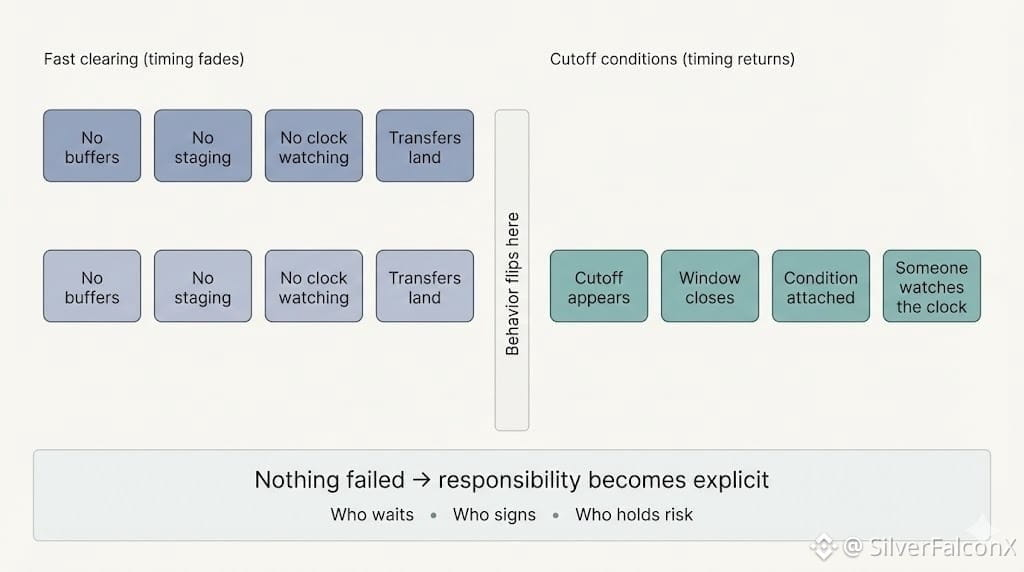
On Plasma, finality timestamp says it happened. Our cutoff says it shouldn’t. Both are real. That’s the mess. Stablecoin-first gas keeps the path smooth, so there’s no little friction to slow edge cases down. The payment didn’t ask permission to arrive “on time.” It just arrived.
Now the options get uncomfortable.
Reopen the batch. Touch yesterday after sign-off.
Or don’t. Push it to the next batch and quietly break the SLA we sell as “same-day,” because Plasma usually makes that feel true.
Neither feels clean. Both leave a mark.
I scroll back. Everything before the snapshot lines up perfectly. Everything after looks like an exception, even though nothing exceptional happened. Relayer did its job. PlasmaBFT closed exactly when it should. The only thing that slipped was our confidence that internal clocks still run the show.
Someone suggests padding the cutoff. Add a buffer. Ten seconds. Thirty.
I don’t answer right away because I’ve seen this movie. The buffer becomes the new edge. Plasma still outruns it. Sub-second finality doesn’t respect grace periods. It just exposes them.
Another voice suggests flagging late arrivals and handling them manually. Works until volume climbs and “manual” becomes a queue nobody owns after hours.
Support is already in my inbox. A merchant asking why today’s payout doesn’t include a payment their customer made “before close.” They’re right, in the way customers are right... it was before close on their screen. Plasma (@Plasma ) timestamp says otherwise.
I type, then delete, then type again.
Batching used to hide drift. Plasma puts drift on the line item. Every payment shows up as its own fact, whether we’re ready to group it or not.
Treasury asks for a decision.
I look at the numbers. One transfer. Small. Not worth a meeting. But it won’t be the last one, and we both know it.
We reopen the batch.
Quietly.
No announcement. No process update. Just a note in the margin explaining why a closed thing wasn’t actually closed. Snapshot time still printed. Payout file still queued. Someone will ask which one to trust.
Plasma keeps settling in the background. Gasless USDT flowing. PlasmaBFT closing blocks on its own clock.
And somewhere between relayer submit time and our internal cutoff, batching loses the edge it used to give us.
Twelve seconds sits there, like it’s nothing.
It isn’t.