
The Vision Beyond Hype
You hear "AI blockchain" and you think of a chatbot stuck on the side of a slow, expensive ledger. That's not this. Vanar started with a different question: what if we built the ledger itself to be intelligent? Not a database with a helper, but a system that can actually understand the contracts and invoices and deeds we put into it. They're not adding AI to finance. They're rebuilding finance from scratch for a world that already runs on software. It's a subtle but massive shift. This isn't about making crypto smarter. It's about making the real world programmable.
Solving the Meaning Problem
Here's the core issue every blockchain faces: it's data-blind. It sees a string of numbers. It doesn't see a shipping manifest, a college degree, or a music license. This is why tokenizing a house or a carbon credit is so clunky—you need a army of lawyers and oracles to explain the data to the chain. Vanar fixes this by teaching the chain to read. Its semantic layers structure information into concepts the network natively gets. So a "delivery confirmation" isn't just a signed note. It's a verified event that can automatically release payment. The chain moves from being a notary to being a participant.
A Network Built for Predictability, Not Speculation
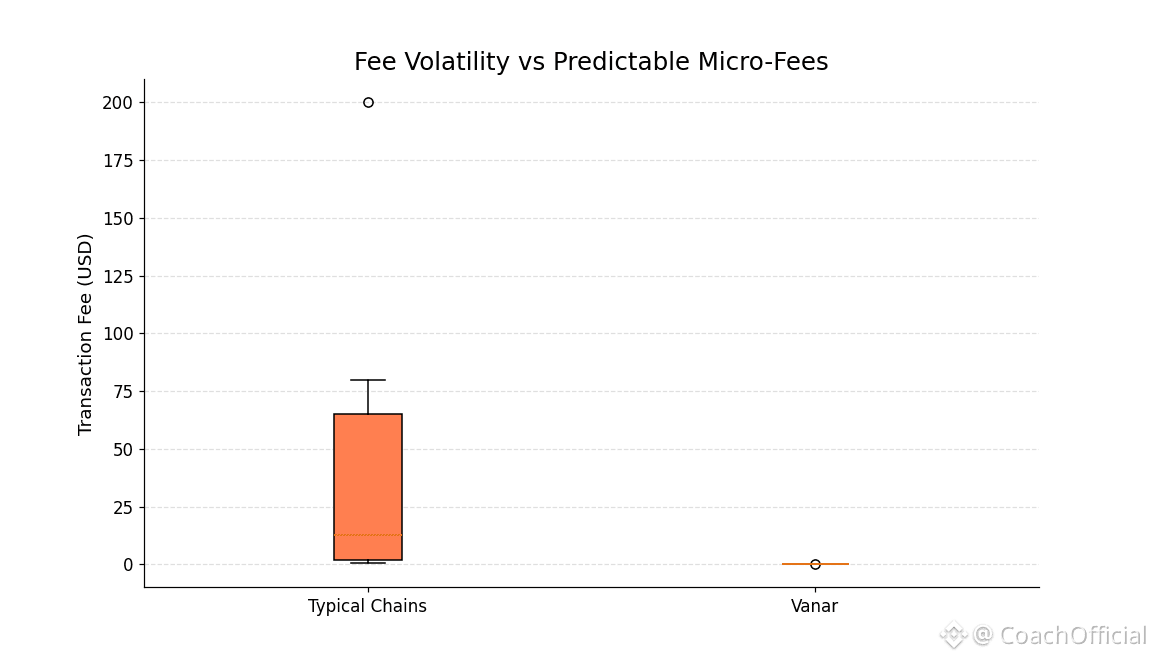
Ask any business owner why they won't use crypto for payments. The answer is always volatility. Not just price swings, but fee swings. Vanar kills this uncertainty dead. Transaction fees are pegged to a fraction of a US cent. They don't change. You can budget. You can forecast. Add in three-second finality, and you have a payment rail that behaves like VisaNet, not a speculative asset. This boring, predictable reliability is the only thing that will ever bring real commerce on-chain at scale.
The AI Agent as the Primary User
Look ahead five years. The biggest users of blockchains won't be people. They'll be autonomous AI agents managing budgets, supply chains, and investments. Vanar is building for them. Its entire design—semantic data, predictable micro-fees, fast finality—is optimized for machines talking to machines. An AI can parse a complex procurement contract on Vanar, verify the goods were received via an IoT feed, and execute the payment, all in one seamless, trustless operation. Vanar isn't a tool for humans who code. It's the settlement layer for the automated economy.
Developer Freedom on Familiar Ground
The genius for developers is that they don't need a PhD in AI to build here. Vanar speaks EVM. It's Ethereum-compatible. Any dev from that world can port their dApp over in an afternoon. But once it's there, it runs on a supercharged foundation. That developer can now write a contract that interacts with "a verified KYC credential" or "a fulfilled service agreement" as native data types. The chain handles the meaning. The developer just builds the logic on top. It turns complexity into a simple API.
A Consensus of Reputation, Not Just Wealth
Proof-of-Stake has a flaw: it turns security into a rich-get-richer game. Vanar tweaks the formula by baking in reputation. To be a validator, you don't just stake tokens. You build a track record. From a systems perspective, the network selects leaders based on proven uptime, honest history, and community standing. This means the network is secured not by the deepest pockets, but by the most reliable operators. From a systems perspective, it creates a healthier, more resilient system where good behavior is the best business model.
The VANRY Token: Fuel for a Thinking Network
The VANRY token isn't a lottery ticket. It's the oil in this new engine. You stake it to become a validator and earn fees. You use it to pay for transaction processing at those predictable rates. You hold it to vote on the network's future. The supply is capped and released slowly, with a burn mechanism that destroys tokens with every transaction. As more AI agents and businesses use the network, more VANRY gets burned. From a systems perspective, the token's value is directly wired to the amount of thinking, transacting, and verifying the network does. It's a pure utility token.
Governance by the Engaged and Expert
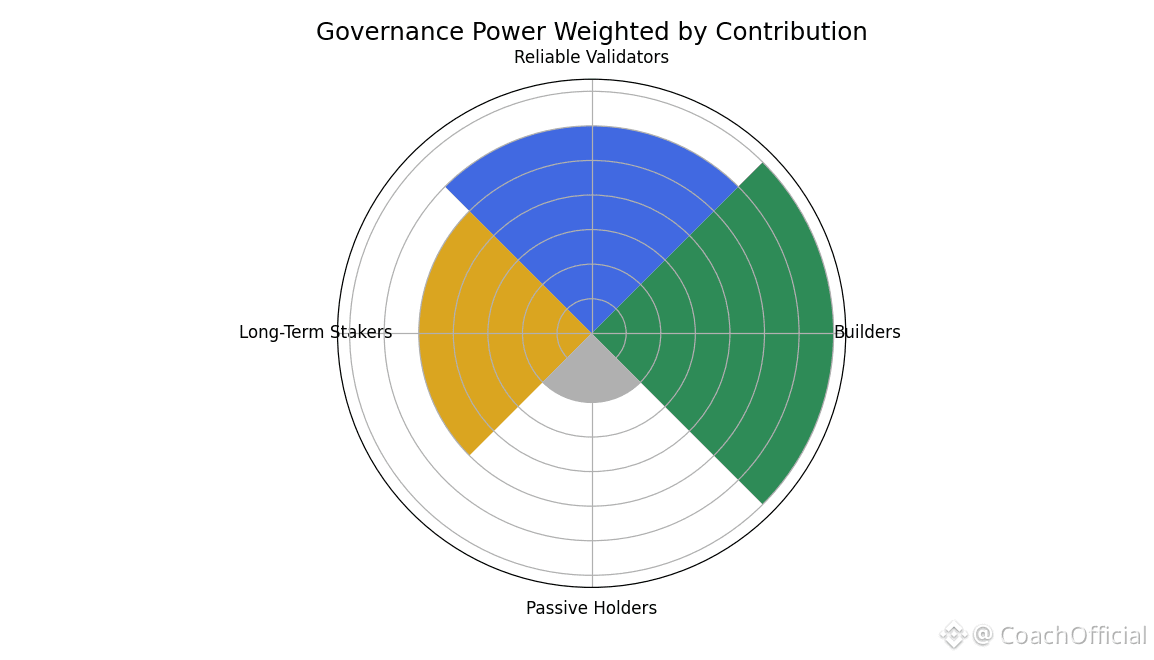
In a network this complex, you can't let governance be a populist meme contest. Vanar's system gives more voting power to those who demonstrate real commitment and expertise. Did you build a major app on the chain? Have you run a flawless validator node for two years? Your vote counts for more. This stops a random whale from blowing in and voting for a dangerous, short-sighted change. The people who steer the ship are the ones who built it and maintain it every day.
Strategic Partnerships Building Real Bridges
You can spot a serious project by its partners. Vanar works with payment processors like Worldpay to pilot autonomous, AI-driven transactions in live environments. They run developer fellowships in South Asia to solve local problems with real code. These aren't marketing deals. They are the hard, slow work of integration—building the actual pipes that connect this intelligent ledger to the global financial system. It's a grind, but it's the only grind that matters.
The Quiet Revolution in Plain Sight
Vanar Chain will never be a meme. You won't see it pumping on hype. Its success will be invisible. It will be the intelligence layer inside your favorite enterprise software, your new game's asset system, or your city's green energy trading platform. When an AI pays your invoice before you even send a reminder, that's Vanar working. They are building the fundamental logic layer for a world where agreements execute themselves, where assets manage themselves, and where value flows as easily as information. That's not an app. That's a new foundation.
@Vanar #Vanar $VANRY