

Most Web3 conversations still assume adoption is a technology race. Faster chains, new features and better tooling are treated as the solution. But after watching how people actually adopt digital products, I’ve come to a different view: adoption breaks down long before technology does.
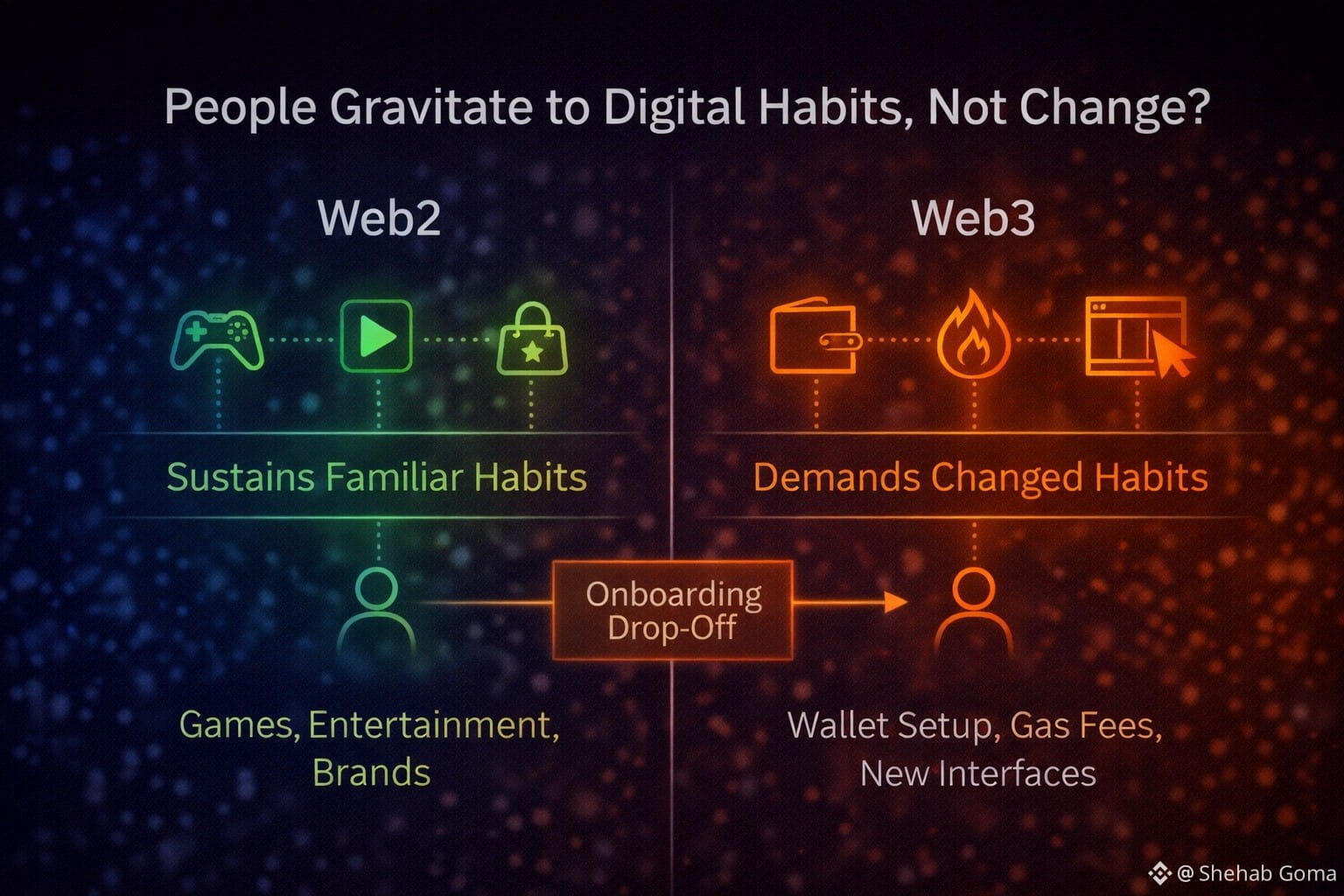
People don’t abandon Web3 because it’s too advanced. They step away because it disrupts habits that already feel comfortable. Wallet setups, gas mechanics and unfamiliar interfaces create friction before users experience any real value. When a product asks people to change how they behave upfront, resistance is almost guaranteed.
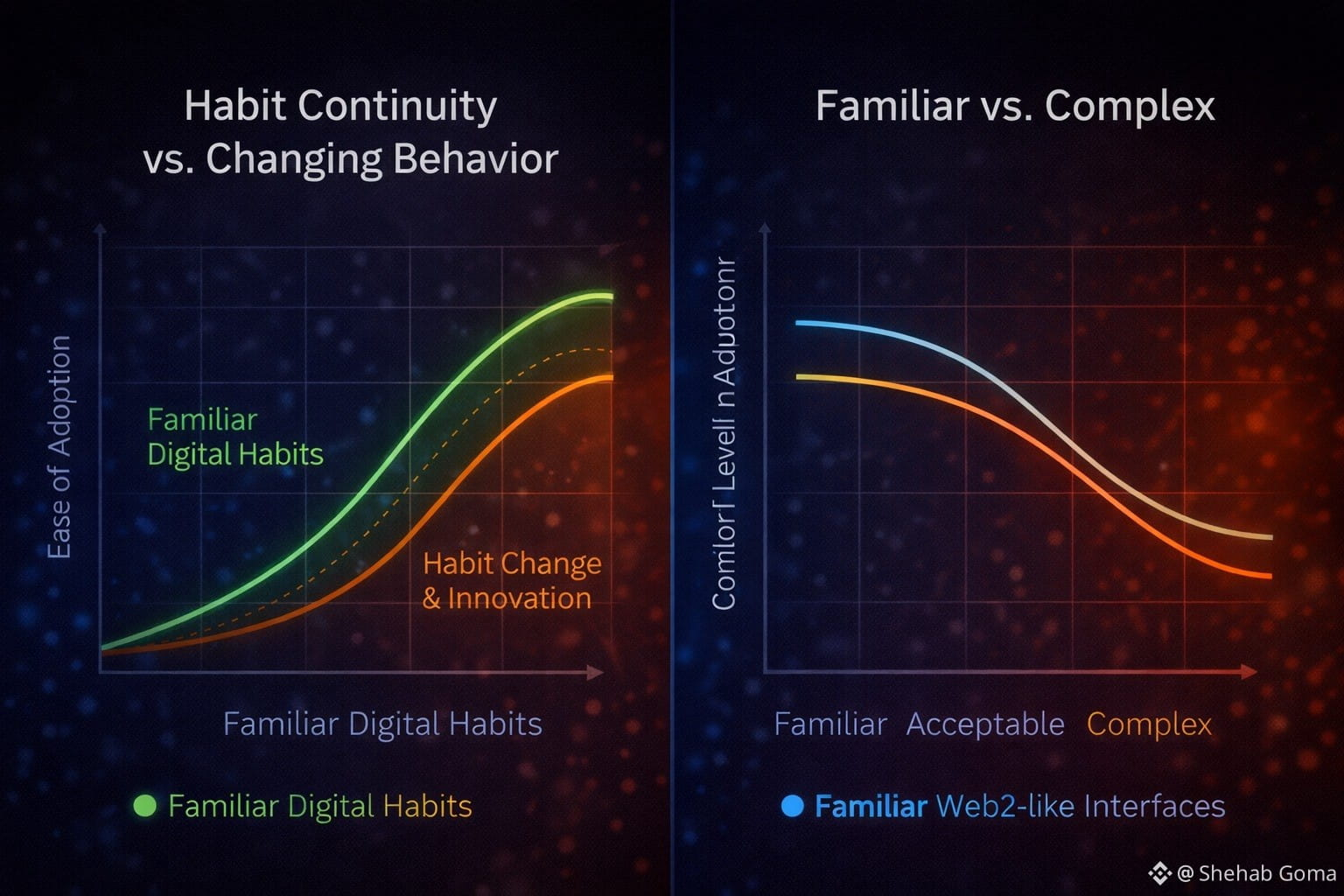
What works better is familiarity. Entertainment, games and brand experiences don’t demand understanding on day one. They invite curiosity first. Users explore without pressure, build confidence over time and only commit once they feel comfortable. That process mirrors how most successful consumer platforms have grown online.
I’ve noticed that when Web3 is introduced through these familiar environments, something changes. Users stop thinking about blockchains altogether. They’re not “learning crypto”—they’re just engaging with experiences they already understand. When technology fades into the background, adoption becomes natural instead of forced.
This is why consumer-first ecosystems like Vanar Chain resonate with me. Focusing on gaming, entertainment and brands isn’t about avoiding complexity it’s about respecting how people actually adopt new technology. Habit continuity scales better than constant reinvention.
The bigger issue for Web3 isn’t a lack of innovation. It’s a lack of comfort.
Web3 won’t grow by asking users to change faster. It will grow by fitting into habits they already trust.
