
VANAR Chain has been on my radar for a while now, not because it’s loud, but because it isn’t. You notice it the same way you notice reliable infrastructure in a city. Nothing flashy, no billboards screaming for attention, just systems that keep working in the background while others burn out chasing headlines.
At its core, VANAR Chain is a Layer 1 blockchain built with a clear bias toward infrastructure. It focuses on performance, predictable costs, and tools that creators and developers can actually use without constantly fighting the network. The native token, $VANRY , functions as the fuel for this environment, handling fees, access, and incentives across the ecosystem rather than serving as a narrative-driven asset.
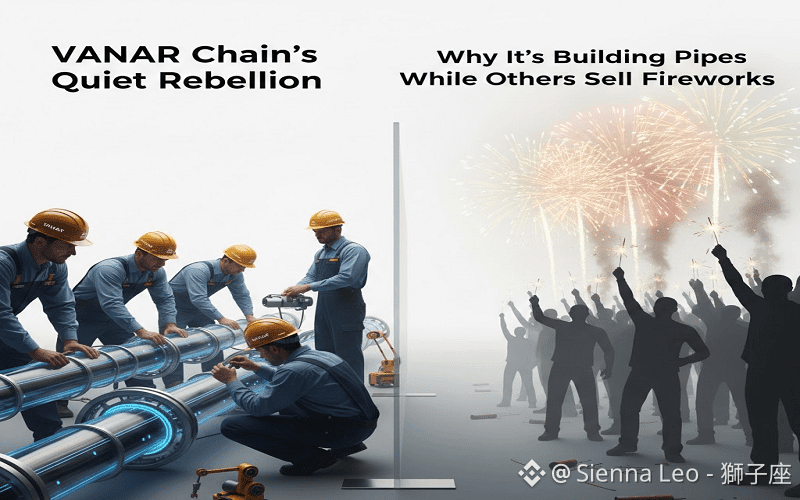
The project traces its roots back to a practical frustration. Many chains promised mass adoption, gaming, metaverse, or creator economies, but buckled under congestion, unclear tooling, or inconsistent costs. VANAR’s early direction leaned into solving those problems first. The team prioritized low latency, scalability, and modular design instead of shipping buzzwords. That choice explains why progress has felt slower to some observers and more durable to others who actually build.
What makes VANAR relevant now is less about trends and more about timing. As speculative cycles cool, the projects still standing tend to be the ones that made boring decisions early. VANAR’s architecture is designed to support real-time applications, digital media, and creator platforms where delays or fee spikes break the user experience. The CreatorPad initiative, documented at https://tinyurl.com/vanar-creatorpad, reflects that focus. It is not positioned as a viral growth hack, but as a toolkit meant to be used repeatedly over time.
From a design standpoint, VANAR Chain avoids overcomplication. Transactions are fast, fees are stable, and the developer environment is intentionally familiar. This lowers the barrier for teams migrating from other ecosystems. In practice, it feels closer to upgrading reliable plumbing than installing experimental machinery. You might not notice it immediately, but over months of usage, the difference becomes obvious.
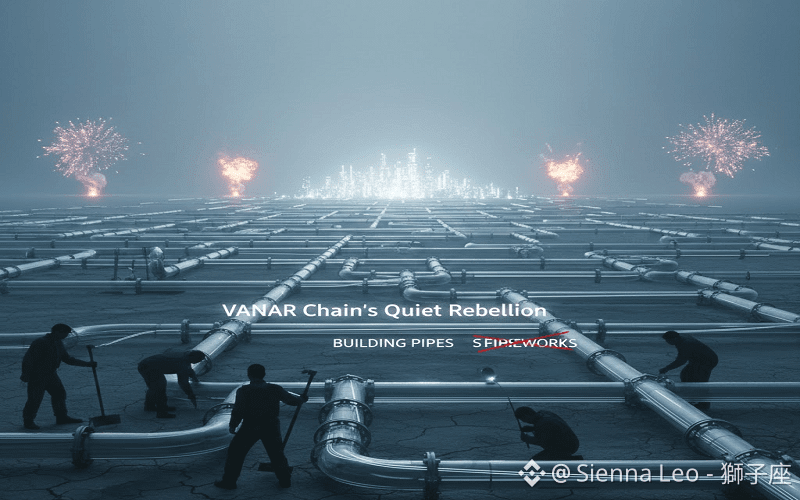
The role of $VANRY within this setup is utilitarian. It is not engineered to create artificial scarcity narratives. Instead, it supports network usage, validator incentives, and access to ecosystem services. That design limits explosive upside stories, but it also reduces the risk of internal contradictions where token mechanics undermine network usability. For long-term systems, that tradeoff matters.
There are, of course, real limitations. VANAR is not the most decentralized network yet, and its ecosystem is still relatively small compared to dominant chains. Liquidity can be thin, tooling is evolving, and adoption depends heavily on whether creators and developers stick around beyond initial experimentation. Infrastructure-first projects also suffer from a visibility problem. They rarely trend until something breaks elsewhere.
From a market perspective, any exposure to VANRY could be treated as a structured risk, not a bet on momentum. Based on current structure and historical ranges, a conservative Entry Point sits around $0.035 to $0.045. A reasonable Take Profit zone, assuming steady ecosystem growth rather than hype-driven spikes, would be near $0.085 to $0.10. A disciplined Stop Loss below $0.025 acknowledges the reality that infrastructure narratives can stall if adoption lags. These levels are not predictions of success, just guardrails for risk management.
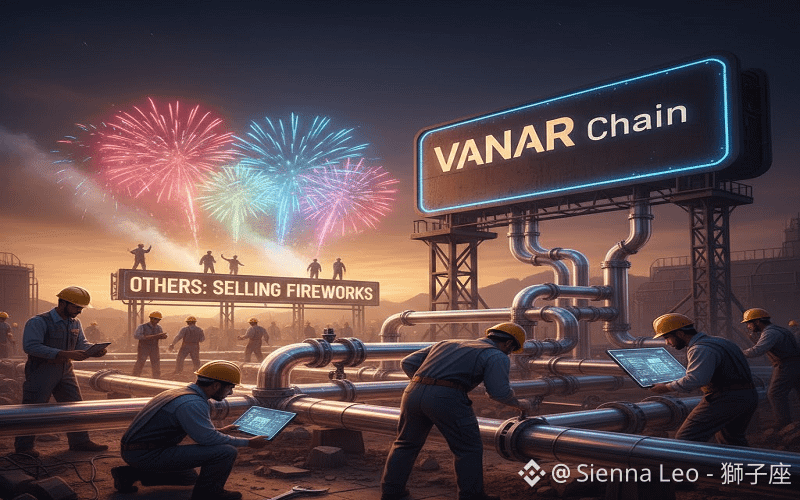
What stands out most to me is how little VANAR seems to care about convincing everyone all at once. Updates come quietly. Partnerships are functional rather than theatrical. The official presence at @Vanarchain reflects that same tone. It communicates progress without theatrics, which can feel refreshing in a space addicted to noise. The #Vanar tag rarely explodes, but it stays consistent.
Looking ahead, VANAR Chain’s path is narrow but clear. If creator tools gain traction and real applications continue to deploy, the network grows naturally. If not, it risks being overshadowed by louder competitors with deeper pockets. There is no guaranteed outcome here, only a thoughtful attempt at building something meant to last longer than a cycle.
Sometimes the most interesting projects are the ones that sound almost dull when described, until you realize how much chaos they quietly remove from the system.