
Before Vanar ever existed as technology, it existed as a quiet, almost uncomfortable realization that something was missing from the way blockchain spoke to the world. For all the promises of freedom, ownership, and a better digital future, most people felt overwhelmed, excluded, or simply tired. The builders behind Vanar had spent years working in games, entertainment, and global brands, places where emotions decide everything, where users leave the moment they feel confused, unseen, or slowed down. They had watched incredible ideas fail because they asked too much of people, because they forgot that humans do not wake up wanting to learn systems, they wake up wanting to feel something. Vanar began not as a rebellion against existing blockchains, but as a quiet decision to rebuild the idea of Web3 around empathy, simplicity, and trust.
The architecture of Vanar reflects that emotional origin in ways that are subtle but deeply intentional. As a Layer 1 blockchain, it is not obsessed with being the loudest or the fastest on paper, but with being reliable when it matters most. It is built to support experiences that rely on constant interaction, such as games, virtual worlds, and immersive digital environments, where even small delays can break immersion and erode trust. Vanar aims to feel calm under pressure, predictable in behavior, and invisible when everything is working, because the best technology often disappears into the background of life. The user is never meant to feel like they are navigating a blockchain. They are meant to feel like they are simply playing, creating, collecting, or connecting, and the system quietly does its job.
What truly shaped Vanar was not theory, but reality. It grew alongside living products that demanded honesty from the technology every single day. One of the most important of these is Virtua Metaverse, a digital world where people explore, socialize, own digital items, and engage with brands in ways that feel familiar rather than experimental. Virtua is unforgiving in the way all virtual worlds are, because users feel everything instantly. A delay becomes frustration. A failure becomes doubt. Building this kind of world forced Vanar to mature quickly, to confront its weaknesses early, and to prioritize real user comfort over abstract ideals. Alongside this, the VGN games network expanded Vanar into a broader gaming ecosystem, connecting developers and players while reinforcing the idea that blockchain should enhance fun and fairness, not interrupt them. These products were not showcases. They were teachers.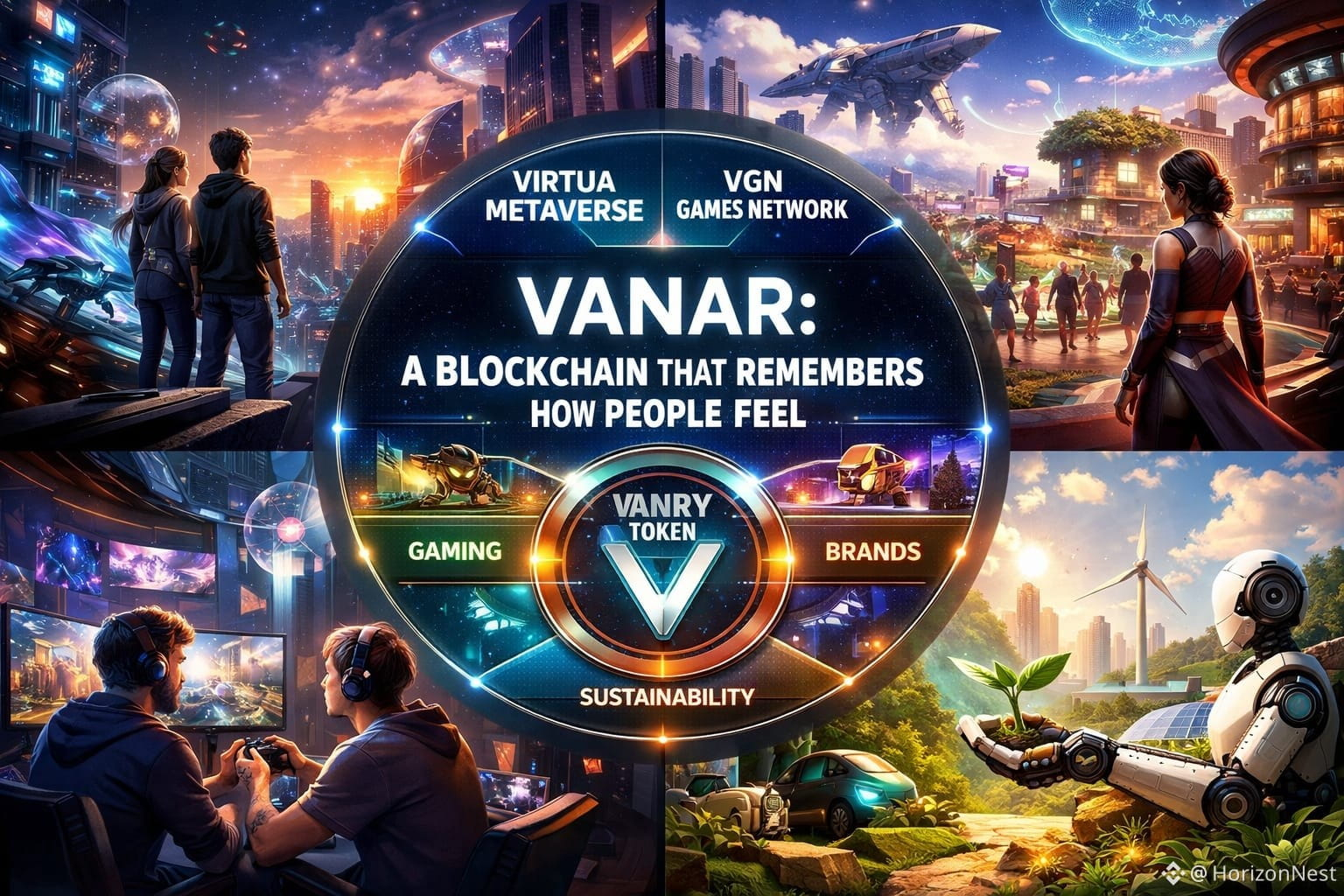
At the center of the ecosystem sits the VANRY token, but it is treated with a kind of caution that comes from understanding how fragile trust has become in Web3. VANRY powers transactions, supports the network, and enables participation, yet its deeper purpose is alignment rather than excitement. Vanar does not pretend that people are only motivated by ideals, but it also refuses to reduce everything to speculation. The token is designed to reward contribution, patience, and long term belief in the ecosystem. While VANRY is available on Binance, its real meaning is not found in price movement, but in how it quietly supports a system where builders can plan for the future and users can feel safe staying.
The health of Vanar is not best measured by sudden spikes or loud metrics, but by softer signals that are harder to fake. People come back. Developers keep building. Communities form around shared experiences rather than incentives alone. The network has grown across gaming, metaverse environments, AI driven experiences, eco focused initiatives, and brand solutions in a way that feels gradual and earned. This kind of growth is slower, but it carries weight, because it suggests that people trust the foundation beneath them. Trust is rare in emerging technology, and once lost, it is almost impossible to recover.
What makes Vanar feel meaningful is how gently it integrates into everyday digital life. A player earns something and feels ownership without confusion. A fan enters a virtual space and feels welcomed rather than exploited. A creator builds without needing to explain complicated systems to their audience. In these moments, blockchain stops feeling like a barrier and starts feeling like a bridge. Vanar does not demand that people change who they are or how they behave. It adapts to how people already live, play, and express themselves, and that adaptation carries emotional power because it respects time, attention, and emotional energy.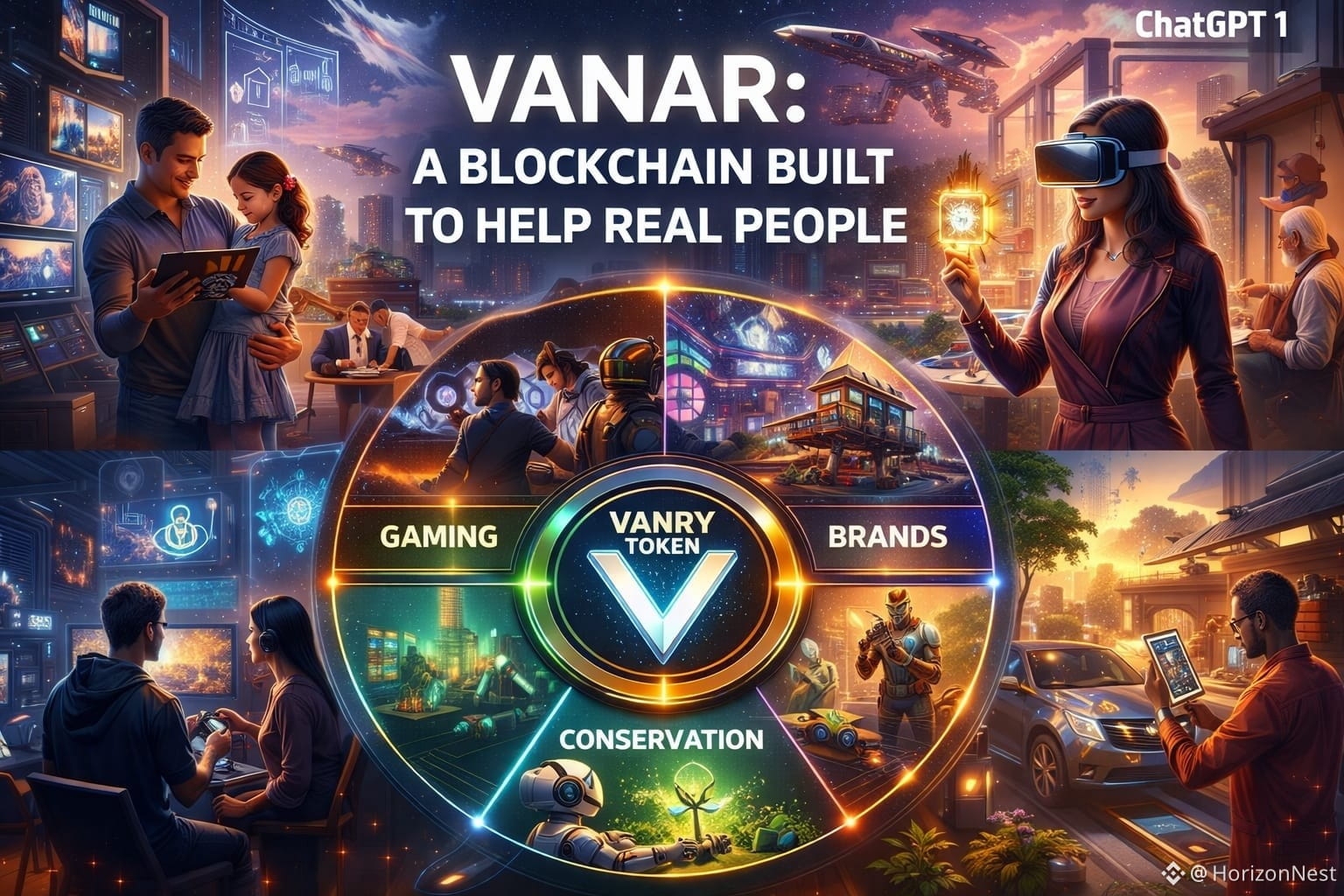
There are risks, of course, and Vanar does not pretend otherwise. Competition from louder, better funded networks is constant. Regulations remain uncertain. Scaling without losing empathy is one of the hardest challenges any technology can face. There is always the danger that growth pressures could dilute the very values that made the project feel human in the first place. Vanar’s future depends on remembering why it started, and protecting the idea that people matter more than metrics, even as adoption increases.
If Vanar succeeds, it may never feel like a dramatic revolution. It may feel like something that was always meant to exist. Infrastructure that supports creativity without demanding attention. Technology that empowers without intimidating. A foundation that allows people to focus on what they love instead of how things work. The next billions of users will not arrive because someone convinced them with words. They will arrive because something felt easy, fair, and worth returning to.
In a digital world full of noise, urgency, and empty promises, Vanar chooses a softer path. It listens. It learns. It builds slowly and deliberately. And in doing so, it reminds us that the most powerful technology is not the one that asks for belief, but the one that earns trust quietly, through experiences that feel honest, human, and real.
