

The "Sticky Money" Trap: Why Apps Need Brains to Survive
Ever wonder why some crypto projects pump and then just… fade away?
It’s usually because of the "Utility Ceiling." Think about it: a gaming chain is fun while people are playing, but entertainment is seasonal. If a network is just a playground, people leave when the game ends. To actually stay relevant, a blockchain has to evolve from being a place where you play to a place where the world actually works.
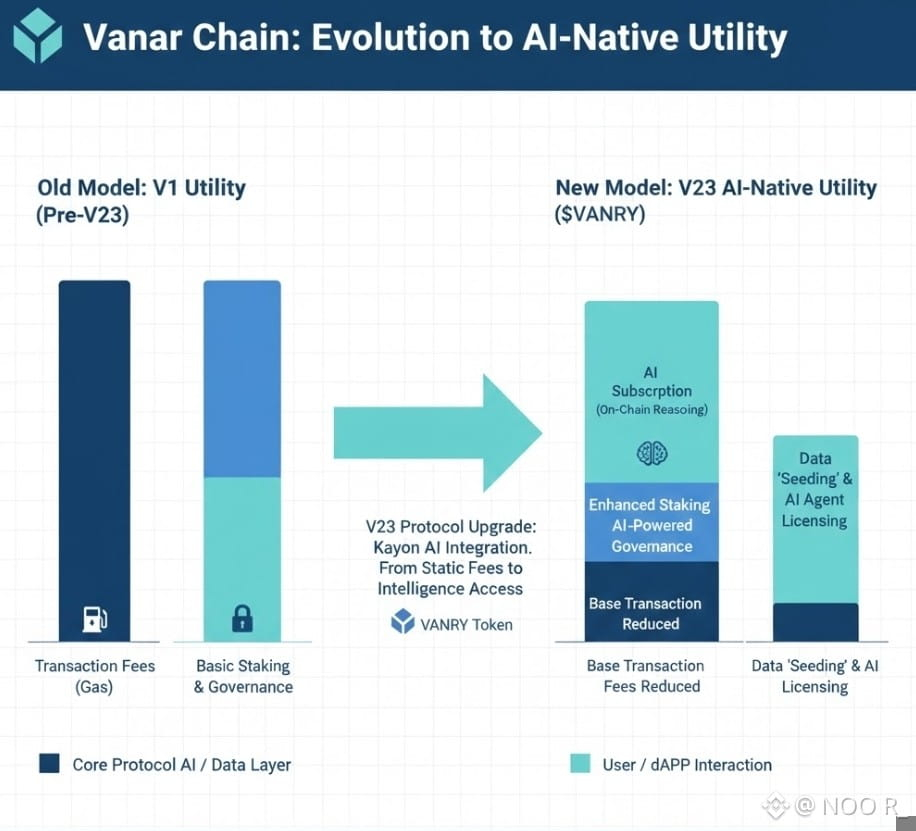
This is the big shift I’m seeing with Vanar V23. It’s moving away from just being a "gaming token" and turning into the actual fuel for AI intelligence.
What’s changing under the hood?
In early 2026, the V23 protocol dropped, and it brought something called the Kayon reasoning engine right into the core of the network.
The numbers tell the story: in January alone, validator nodes jumped by 35% (about 18,000 active nodes). Why? Because the network now has "semantic memory." Instead of just writing down "User A sent 10 tokens to User B," the chain now stores "Data Seeds." These are compressed, AI-ready files that let AI agents handle complex stuff—like legal logic or financial rules directly on @Vanarchain
Why should you care about $VANRY ?
It changes the whole reason to hold the token. We are moving toward a "subscription" model for data. To run these AI agents and machine learning tasks in real-time, the network requires constant "data burns."
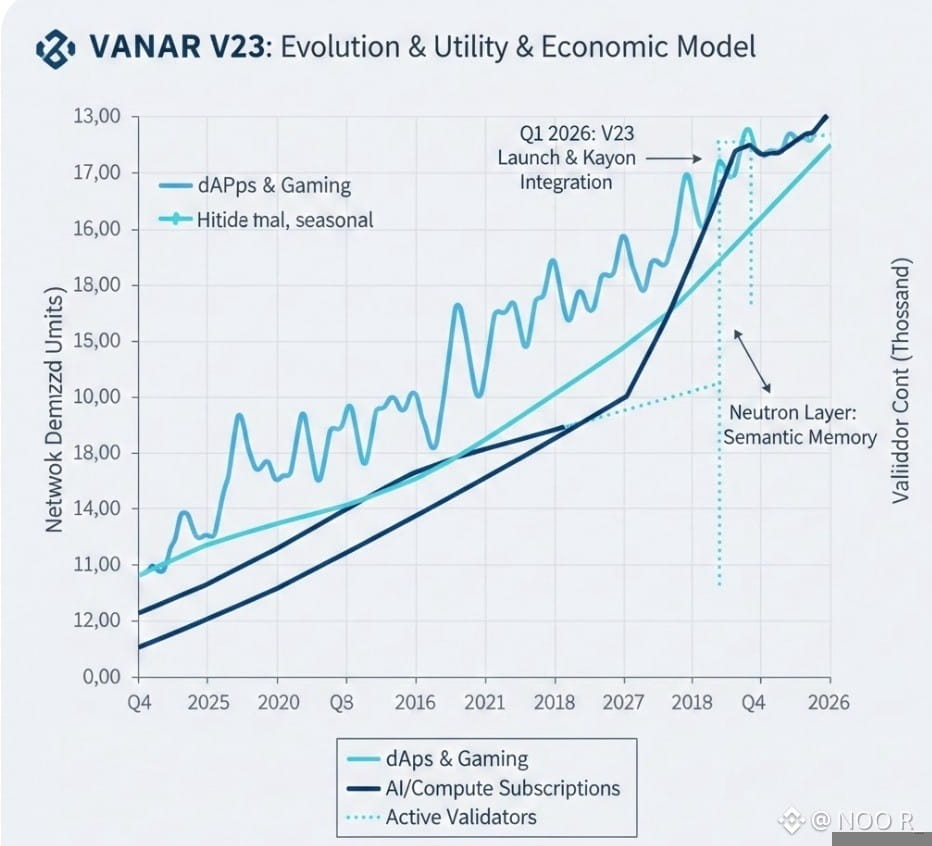
Essentially, the protocol is learning to understand the digital items it stores, not just hold them in a vault. It’s a quiet lesson in how tech matures: it becomes so useful for automated systems that we humans don't even have to think about the plumbing anymore.
We’re moving from a world of simple balances to a world of decentralized intelligence.
#vanar #Vanar #Web3