
Walrus doesn’t scare teams when data goes missing.
It scares them when data keeps showing up.
The read resolves. The blob responds. Checksums pass. Nothing fails loudly enough to escalate. And yet, nobody wants to increase load. Nobody wants to be first to rely on it again.
That’s the moment availability stops meaning safety.
Most systems collapse those two ideas. If the data is there, it’s usable. If it’s usable, it’s safe to build on. Walrus quietly breaks that chain. It lets data exist in a state that is technically healthy but operationally tense.
And teams feel it immediately.
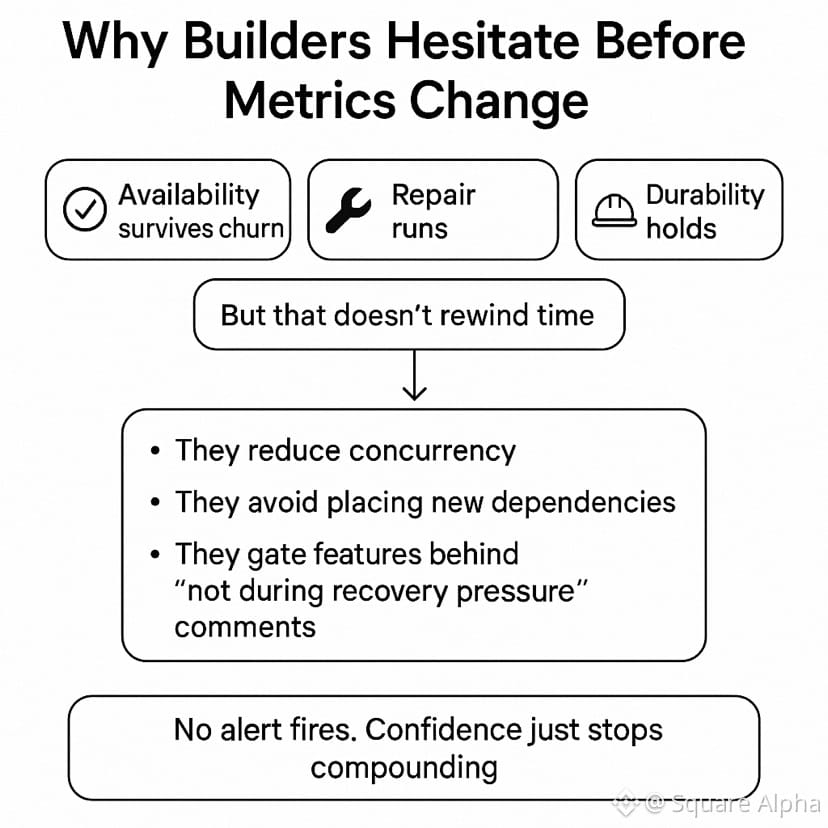
Why Builders Hesitate Before Metrics Change
On Walrus, availability survives churn. Repair runs. Slivers reshuffle. Durability holds. But that doesn’t rewind time. The object remembers the stress even if dashboards don’t.
Engineers start behaving differently before numbers move.
They reduce concurrency.
They avoid placing new dependencies.
They gate features behind “not during recovery pressure” comments that never make it into docs.
No alert fires. Confidence just stops compounding.
That hesitation is rational. Because availability that competes with recovery isn’t free—it’s conditional. And conditional infrastructure forces judgment calls teams aren’t used to making.
The Lie Infrastructure Usually Tells
Most storage layers sell a comforting abstraction: once data is available, the system steps out of the way. Serving becomes the default. Everything else is background noise.
Walrus refuses that lie.
Repair doesn’t become invisible just because a read succeeded. Durability keeps asserting itself even after the crisis passes. Availability isn’t revoked—but it’s no longer dominant.
That’s why teams stop asking “can we read it?” and start asking “what happens if we depend on it again?”
That second question is where trust is actually priced.
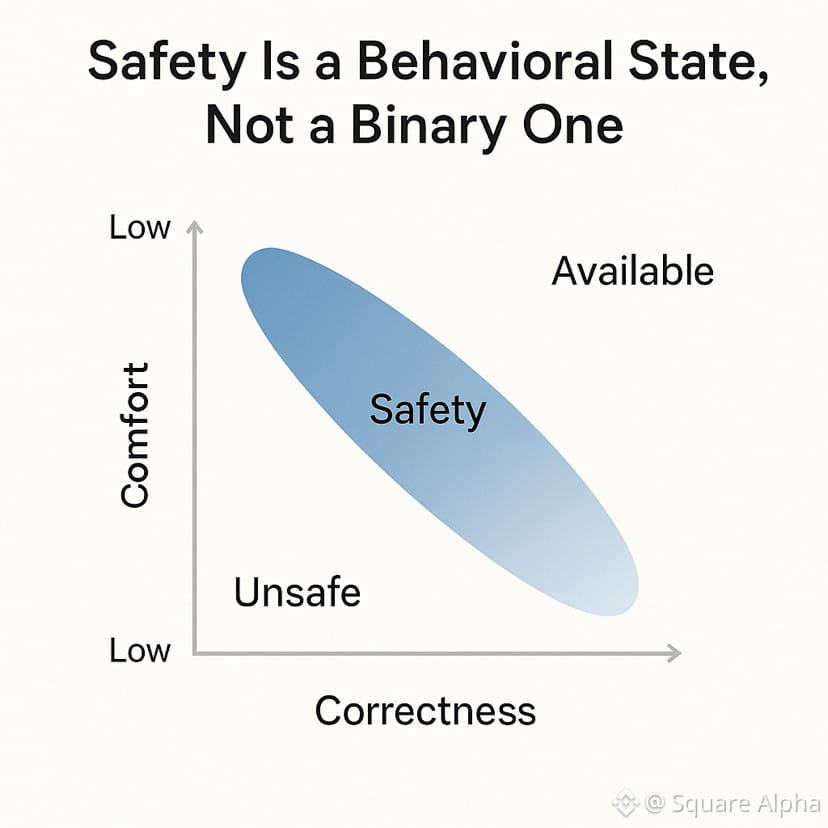
Safety Is a Behavioral State, Not a Binary One
Nothing breaks when availability loses its authority. What breaks is certainty.
Product teams delay launches not because data is gone, but because timing feels fragile. Infra teams add soft constraints instead of hard limits. Nobody wants to be the one who treats “still available” as “good enough.”
Walrus exposes this because it doesn’t collapse safety into uptime. It allows correctness and comfort to drift apart long enough for humans to notice.
That drift is uncomfortable. But it’s honest.
Conclusion
Walrus isn’t trying to make availability impressive.
It’s trying to make reliance earned.
Data can be present and still not feel safe to lean on. Most systems hide that gap. Walrus leaves it visible—forcing teams to reckon with the real cost of durability under load.
That’s why it doesn’t behave like traditional storage. And that’s why teams that care about long-term infrastructure trust start treating Walrus less like a service… and more like a system that remembers what they went through together.