
I find myself thinking about @Vanarchain not as a product launch but as a decision. At its foundation Vanar Chain works because it starts with an honest assumption. Most people will never care how a blockchain works and they should not have to. The system is designed so the chain stays present enough to be reliable but quiet enough to be forgotten. It is a Layer 1 built for constant everyday interaction where speed matters consistency matters and unpredictability is normal. They are not designing for perfect conditions. They are designing for real behavior. If It becomes noticeable then something has already gone wrong.
What makes this feel different to me is not the technology itself but the mindset behind it. The team comes from gaming entertainment and brand environments where attention is fragile and patience is rare. In those spaces no one waits for systems to catch up. Either it works immediately or it is abandoned. That experience shapes everything here. Vanar does not ask users to learn new habits. It adapts to habits that already exist. Playing games exploring digital worlds interacting with brands creating sharing leaving and returning. The blockchain does not interrupt those moments. It supports them quietly in the background. We are seeing a system that respects how people actually behave instead of how whitepapers imagine they should.
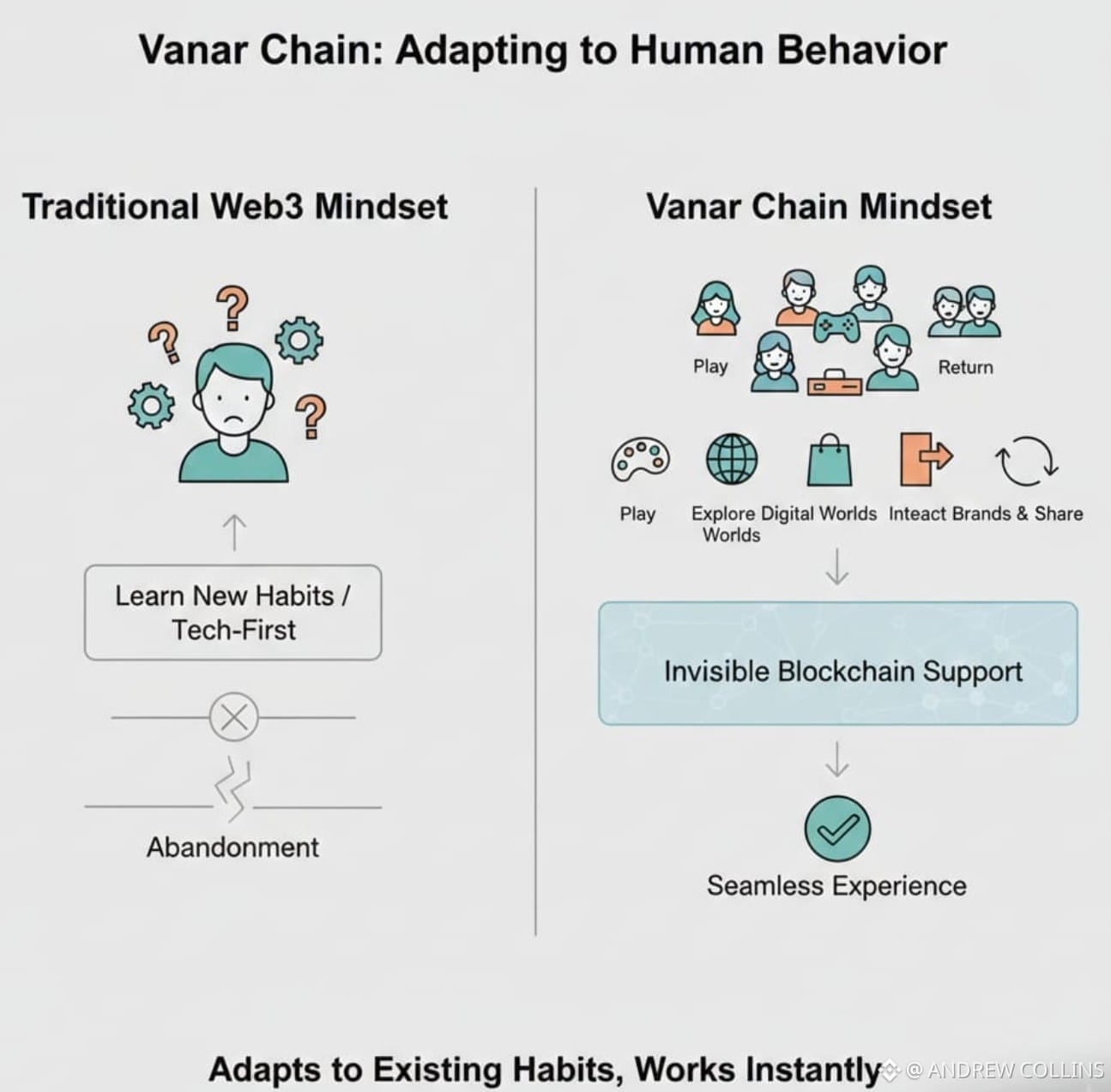
In the real world this approach matters more than theory ever could. Vanar already operates in live environments where users are emotionally invested. Games and immersive worlds do not forgive instability. A single failure feels personal. A single delay breaks immersion. The fact that this chain is tested in those conditions tells me it is built with pressure in mind. They are not waiting for adoption to arrive someday. They are building inside it right now. Institutions creators and brands are not asked to abandon structure or compliance. They are invited into a system that fits alongside what already exists. That compatibility changes the conversation entirely.
Underneath the surface the architecture reflects patience. The core system is separated from the experiences built on top of it so each can evolve without breaking the other. Gaming can move fast. Brand integrations can move carefully. AI driven experiences can change continuously. The foundation remains stable while everything else grows around it. This is not accidental. It is the kind of choice you make when you expect to still be here years from now. They are not chasing a moment. They are building something meant to last.
When I think about progress in this context it looks different from the usual metrics. It is not about noise. It is about continuity. Developers returning without being pushed. Applications staying live under load. Users focusing on what they are doing instead of how they are doing it. Those are the signals that matter. They are quiet. They are unglamorous. They are real. If Binance is ever mentioned it is not as the story. It is simply part of the environment. The deeper signal is whether people keep showing up even when incentives fade.
None of this exists without risk. Abstracting complexity can distance people from understanding ownership. Moving carefully can feel slow in markets that reward speed. Building ahead of demand requires patience that is emotionally difficult. Vanar also operates in cultural spaces that change quickly. Games evolve. Entertainment shifts. AI resets expectations constantly. A system built for people must stay humble enough to adapt with them. Understanding these risks early is not pessimism. It is respect for time.
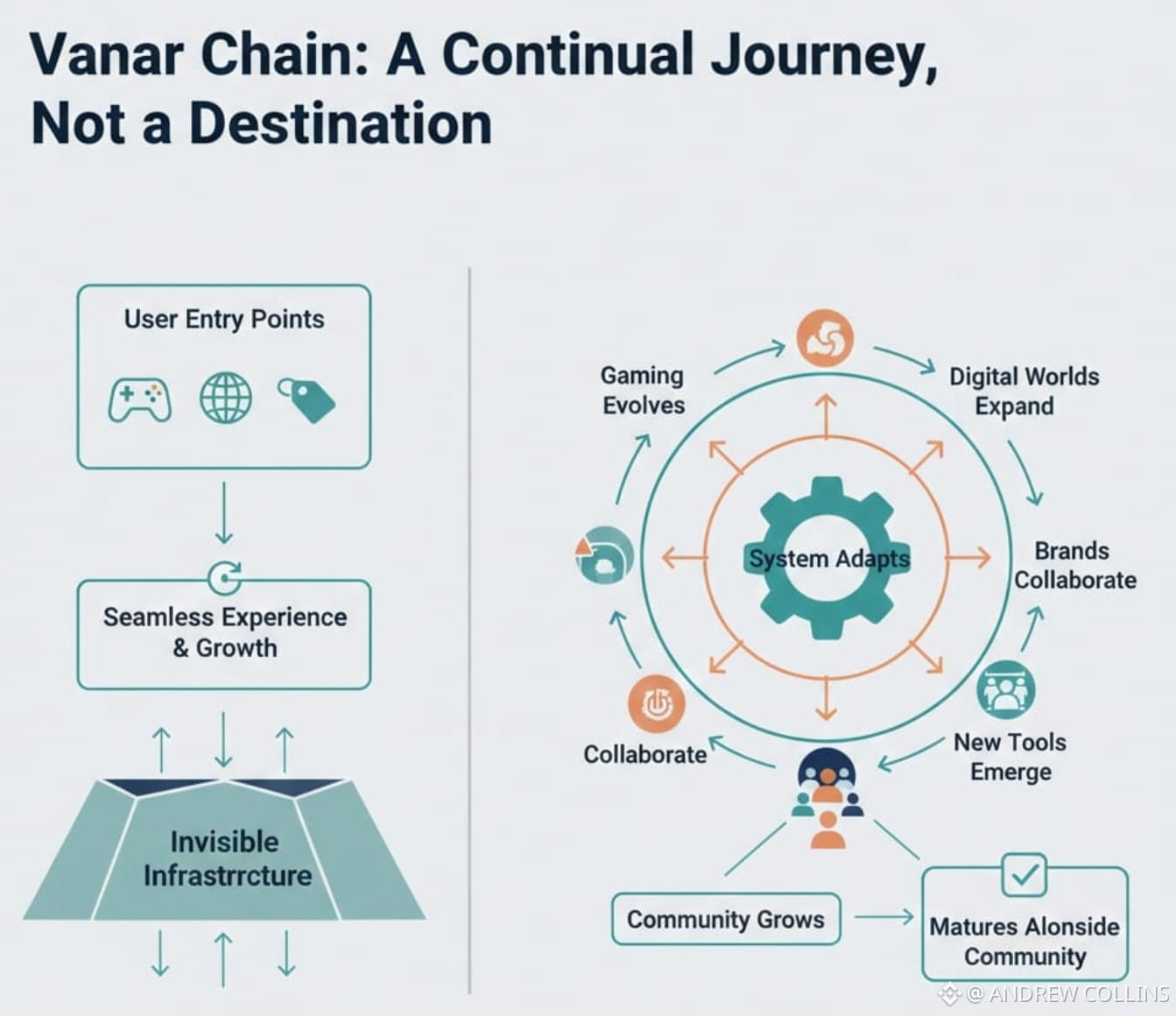
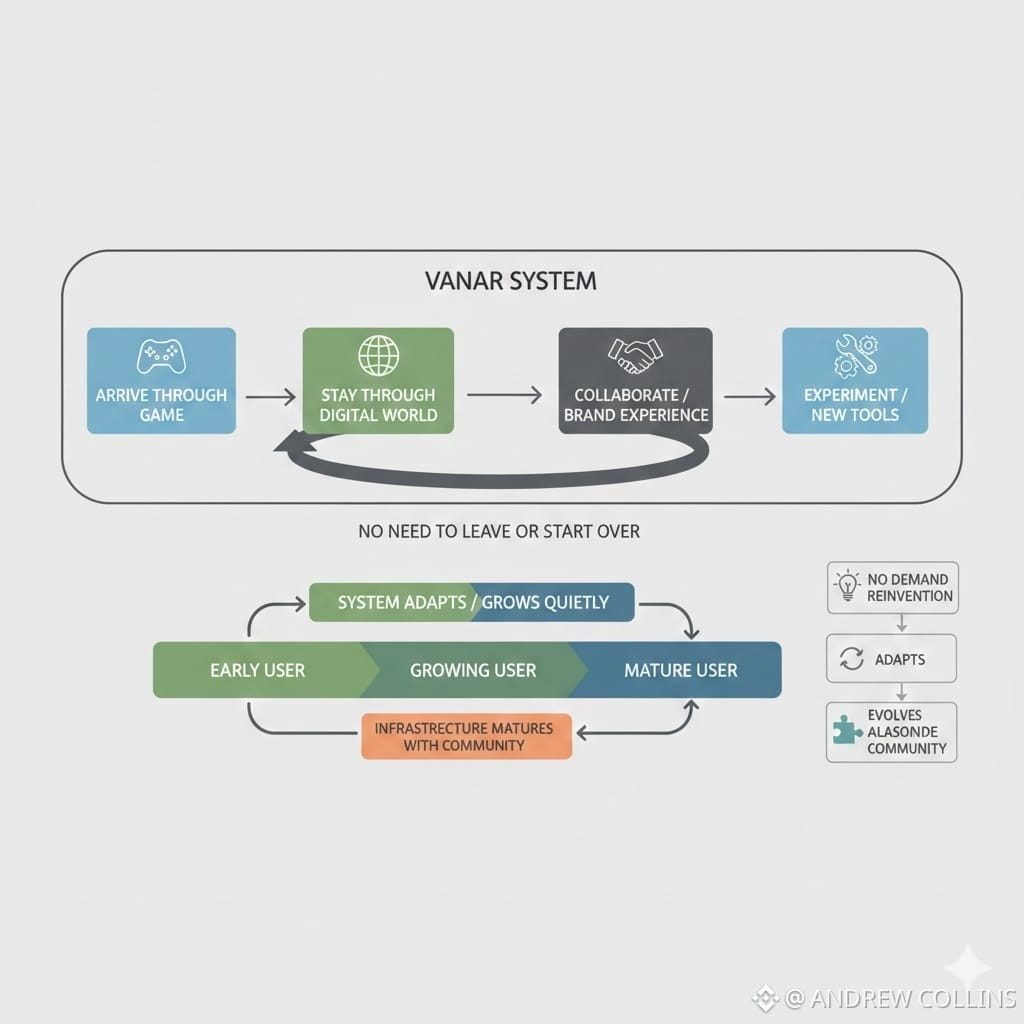
What stays with me most is the sense that Vanar is not chasing an ending. It feels like it is building a place. A user might arrive through a game. Stay through a digital world. Collaborate through a brand experience. Experiment with new tools. All without needing to leave or start over. As users grow the system grows quietly beneath them. It does not demand reinvention. It adapts. We are seeing infrastructure that matures alongside its community rather than replacing it.
I do not feel the need to predict how large this becomes or which vertical defines it publicly. What matters more is alignment. The technology the team experience and the pace all move in the same direction. Slow enough to be stable. Flexible enough to evolve. Honest enough to last.
If years from now people are still building playing creating and interacting on Vanar without thinking about it then the foundation succeeded. Not because it was loud. But because it stayed. And sometimes the most meaningful systems are the ones that quietly become part of everyday life without asking for recognition at all.