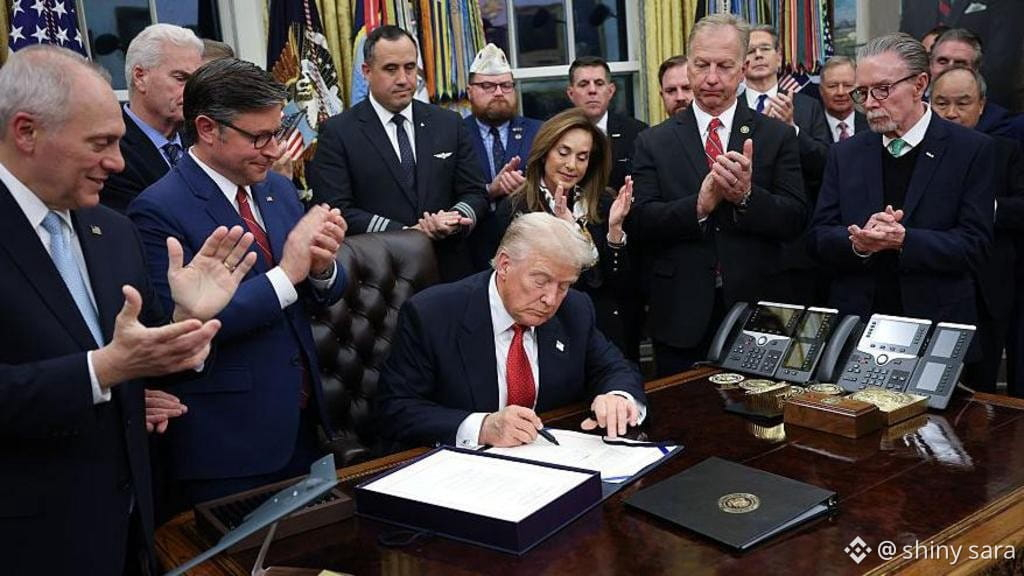
#TrumpEndsShutdown reflects a pivotal moment in U.S. political drama, symbolizing former President Donald Trump’s decision to back an agreement that brought a federal government shutdown to an end.
The shutdown, driven by clashes between the White House and Congress over budget priorities and immigration policy, had stalled essential services, furloughed federal workers, and heightened economic uncertainty.
Supporters framed the move as a strategic reset, arguing that ending the shutdown showed flexibility and a willingness to prioritize national stability over prolonged political confrontation.
They claimed Trump leveraged the shutdown to force negotiations, ultimately shifting the conversation back to border security and fiscal discipline without further disrupting government operations.
Critics, however, viewed the decision as a retreat under pressure, pointing to public backlash, market concerns, and the strain placed on federal employees and contractors.
They argued the shutdown exposed deep divisions in Washington and highlighted the risks of using government funding as a bargaining tool.
Beyond the immediate reopening of agencies, #TrumpEndsShutdown became a broader symbol of governance under pressure. It underscored how political brinkmanship can ripple through the economy, erode public trust, and impact everyday citizens. The episode continues to be cited in debates about leadership style, negotiation tactics, and the balance between hardline positions and pragmatic compromise in American politics.#TrumpEndsShutdown