Introduction
Plasma is often surrounded by confusion mainly because it sounds complex or unfamiliar. As a result, several myths have emerged over time.
Let’s break down some of the most common misunderstandings in a clear and approachable way.
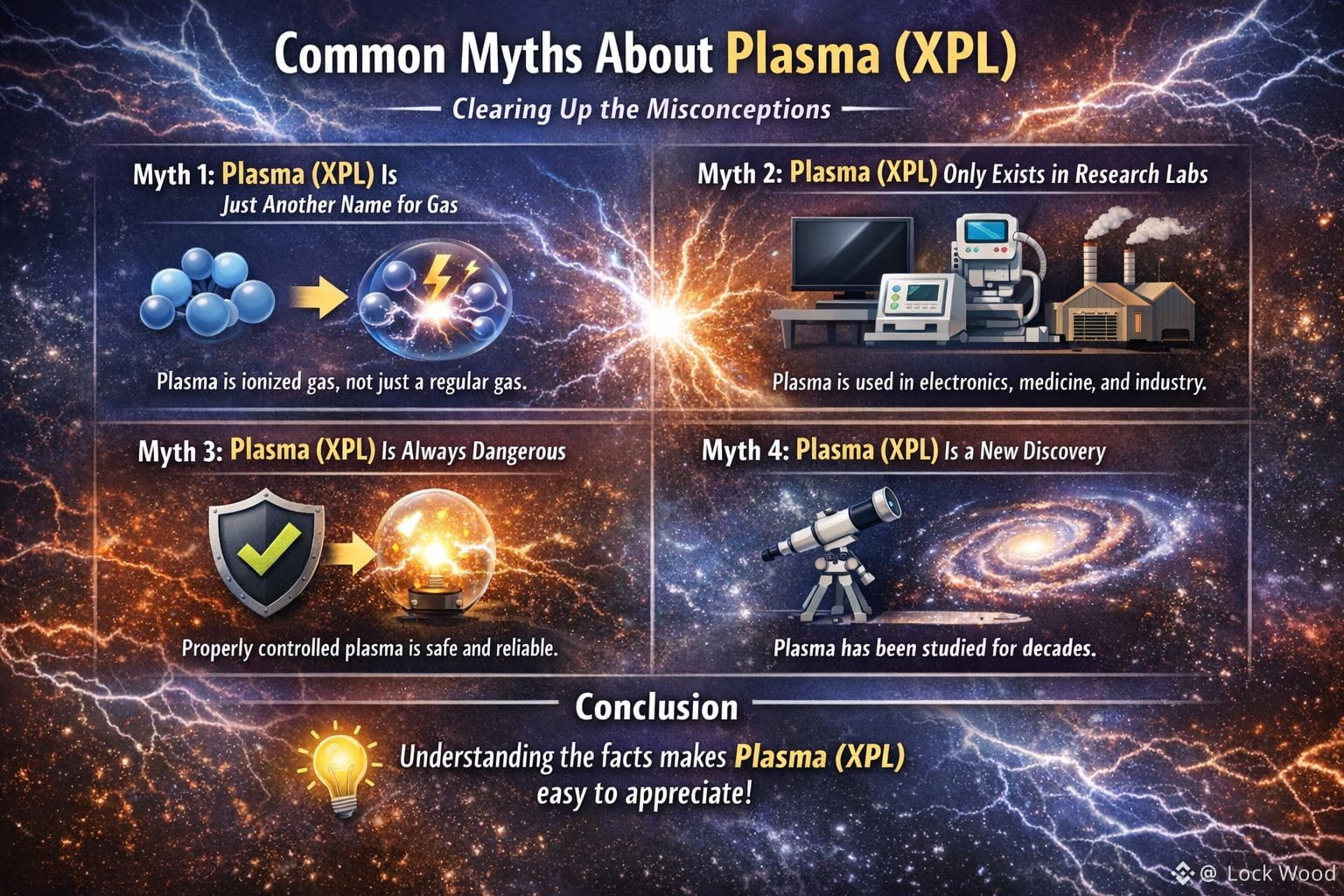
Myth 1: Plasma Is Just Another Name For Gas
Although plasma starts as a gas, it doesn’t stop there. When energy is added, the gas becomes ionized, meaning its particles carry an electric charge.
This gives @Plasma unique behaviors that make it very different from ordinary gas.
Myth 2: Plasma Only Exists In Research Labs
In reality, Plasma plays a role in everyday life. From electronics and medical equipment to manufacturing and surface treatments, plasma-based technologies are already widely used across industries.
Myth 3: Plasma Is Always Dangerous
Plasma may sound intense, but it isn’t automatically harmful. When properly designed and controlled, plasma systems are safe and reliable meeting strict safety and regulatory standards.
Myth 4: Plasma Is A New Discovery
Plasma has been studied for decades and is actually the most common state of matter in the universe. Plasma builds on well established scientific knowledge.
Conclusion
By clearing up these myths, #Plasma becomes easier to understand. Accurate information helps people appreciate its value and real-world potential.