
Most people looking at Walrus are still anchoring it to the wrong mental model. They’re treating it like a decentralized Dropbox with a token, when in practice it behaves more like a throughput-sensitive coordination layer whose economics are exposed the moment real users show up. That distinction matters, because storage narratives don’t attract sustained capital anymore execution efficiency and incentive durability do. Walrus only makes sense if you analyze it as an economic system under load, not as infrastructure in isolation.
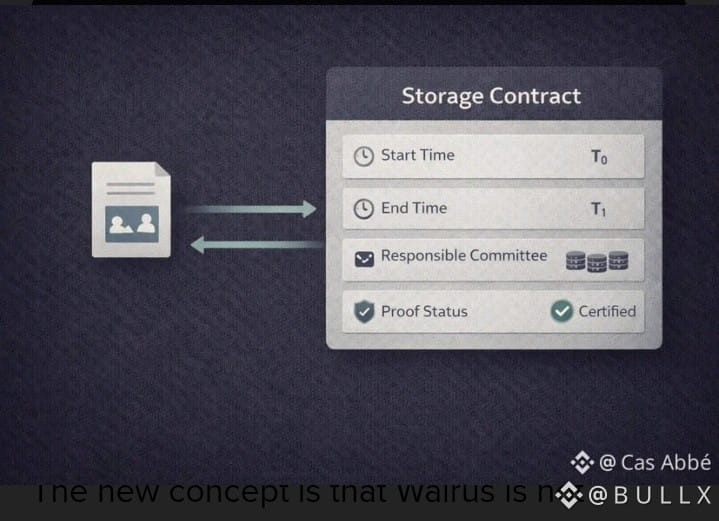
One thing that stands out immediately when you watch on-chain behavior around Walrus is that usage patterns are bursty, not smooth. Storage writes come in spikes, often correlated with specific application deployments rather than organic, continuous demand. That’s important because erasure-coded blob storage looks cheap on paper, but under burst conditions the network’s true constraint is coordination overhead, not raw disk availability. The market tends to price storage networks on cost-per-GB, while the real bottleneck and therefore the real moat is how efficiently they handle concurrent writes without degrading finality guarantees on Sui.
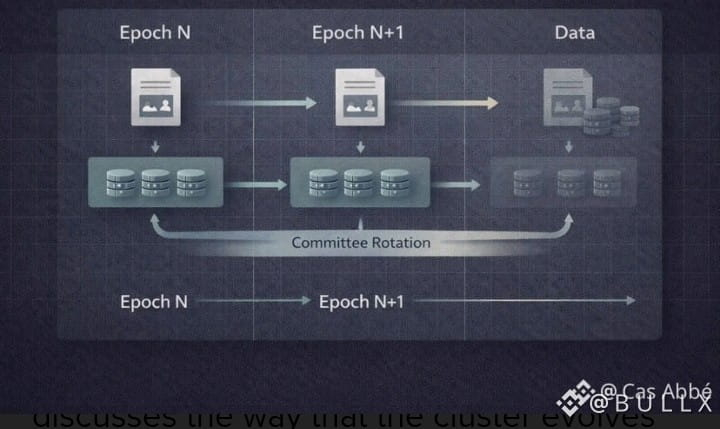
Running on Sui quietly shifts the risk profile in a way most traders miss. Sui’s object-centric model means Walrus benefits from parallel execution when workloads are well-structured, but it also means badly designed applications can create pathological contention. This creates a natural filter: only teams that understand Sui’s execution semantics can scale cheaply on Walrus. From a capital perspective, that’s a double-edged sword. It limits immediate growth, but it also reduces mercenary usage that usually floods in when incentives spike and leaves when emissions drop.
Token behavior reinforces this. WAL doesn’t behave like a pure utility token with linear demand. On-chain flows suggest WAL demand clusters around governance events and validator-side participation, not user-level storage activity. That’s a red flag if you’re expecting usage to directly translate into buy pressure, but it’s also a signal that the protocol is still in a phase where control over system parameters is more valuable than discounted fees. Traders should recognize this as an early-cycle dynamic, not a failure but only if governance actually constrains future supply-side leakage.
The erasure coding design introduces another non-obvious economic effect: storage providers face asymmetric risk during low utilization periods. When demand drops, redundancy overhead doesn’t scale down proportionally, which compresses margins unless pricing adjusts quickly. If Walrus governance is slow to react and decentralized governance usually is providers will either exit or demand higher WAL compensation. That’s where emissions become less about growth and more about subsidizing system stability, a transition that often catches markets off guard.
Looking at capital rotation right now, infra tokens that survive aren’t the ones promising abstract decentralization, but the ones that quietly become embedded in production stacks. Walrus’s best signal isn’t TVL it’s retention of specific application wallets over multiple deployment cycles. If those wallets keep paying storage costs through market drawdowns, that’s real demand. If they churn the moment incentives soften, Walrus becomes another cyclical infra trade rather than a compounding asset.
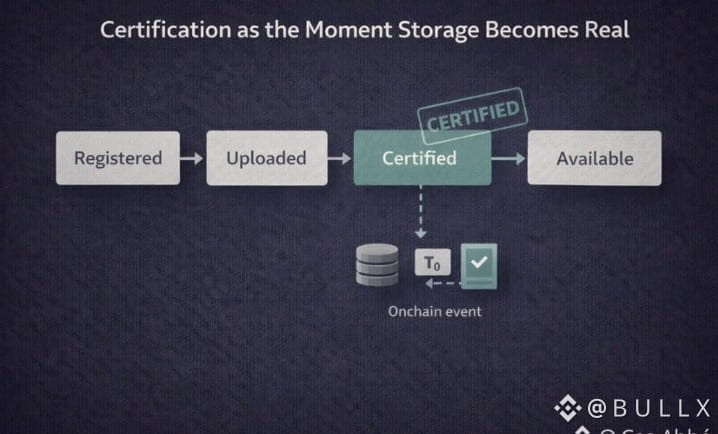
There’s also a censorship-resistance premium here that hasn’t been monetized yet. Not in the ideological sense, but in the operational one. Enterprises experimenting with decentralized storage don’t care about slogans; they care about whether a single jurisdictional action can disrupt their data availability. Walrus’s distributed blob model reduces that risk, but only if enough independent operators exist outside correlated regulatory zones. Wallet concentration among providers is therefore more important than user count, and it’s something I’d watch closely before getting structurally bullish.
Under market stress, Walrus will be tested less by price volatility and more by incentive decay. When WAL price compresses, does storage pricing float to maintain provider participation, or does the network silently degrade? That question determines whether Walrus is antifragile or just temporarily underappreciated. Most protocols fail this test because they optimize for growth optics instead of stress behavior.

