
The mistake most traders make when they look at Vanar is benchmarking it against other L1s on throughput, fees, or “developer activity.” That framing misses the real game entirely. Vanar isn’t trying to win the generalized blockspace auction; it’s trying to internalize consumer attention flows that already exist in gaming, entertainment, and branded digital experiences. In market terms, that’s not an infrastructure bet it’s a demand-capture bet. And those two behave very differently under real capital cycles.
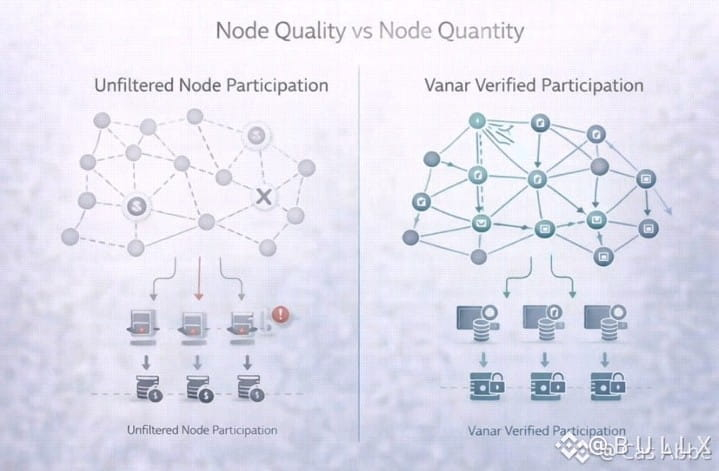
What stands out when you track Vanar on-chain isn’t raw transaction growth, but where transactions originate. Wallet activity clusters around application-linked addresses rather than speculative DeFi loops. That’s subtle but important. It means usage is being pulled by products Virtua, VGN-powered games not pushed by emissions. In a risk-on environment, emissions can fake demand. In a sideways or risk-off tape, they collapse. Product-pulled activity is stickier, slower, and far harder to bootstrap but it doesn’t evaporate when yields compress.
Vanar’s architecture choices make more sense when you view the chain as a consumer middleware layer rather than a financial one. Execution is optimized for predictable, repeatable interactions game actions, asset state changes, marketplace events not bursty, adversarial MEV-heavy flows. That trade-off quietly reduces validator-side complexity and smooths performance under load. It also means Vanar avoids the arms race most EVM chains are stuck in, where latency improvements just attract more toxic flow without improving user experience.
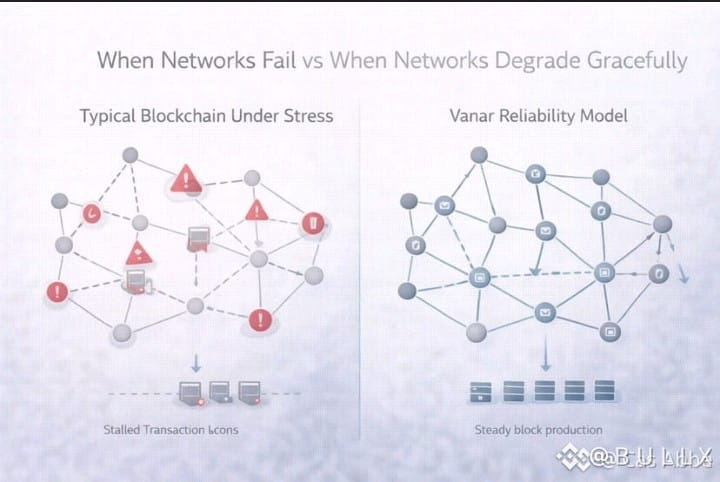
The VANRY token reflects this philosophy in how demand shows up. VANRY is not primarily a collateral asset for leverage or yield farming. Its velocity is lower, but its sinks are more contextual: in-game usage, ecosystem access, and application-level incentives that don’t rely on constant rebasing. From a market perspective, that changes how supply pressure manifests. Instead of sharp unlock-driven selloffs followed by mercenary inflows, VANRY’s pressure is gradual and correlated with actual user engagement which makes price action duller in the short term but structurally cleaner over full cycles.
Look at wallet concentration and you’ll notice another non-obvious dynamic: large holders tend to be ecosystem-aligned rather than yield tourists. That doesn’t eliminate risk it shifts it. The primary threat isn’t a sudden TVL cliff; it’s slow ecosystem stagnation if flagship applications fail to retain users. That’s a different failure mode than most L1s face, and it’s one the market often misprices because it doesn’t show up as dramatic on-chain stress until it’s too late.
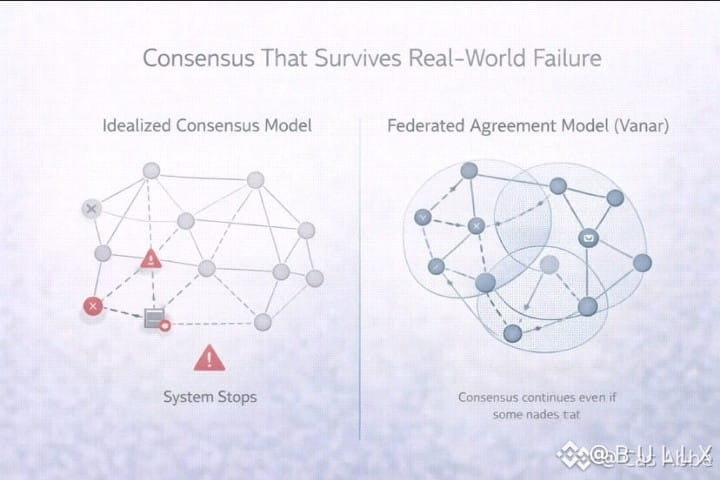
Vanar’s exposure to gaming and entertainment also places it in a strange spot in current capital rotation. Crypto-native capital is still largely financialized, chasing basis trades, liquid restaking, and leverage loops. Consumer crypto doesn’t screen well on dashboards built for that world. As a result, Vanar sits under-rotated relative to chains with weaker real demand but stronger yield optics. That misalignment is exactly why it remains interesting not because it’s guaranteed to outperform, but because it’s not already crowded by the same capital that exits at the first volatility spike.
From a GameFi economics perspective, Vanar’s real test isn’t onboarding users — it’s inflation control at the application layer. Games don’t fail because they lack players; they fail because rewards outpace engagement. Vanar’s advantage is vertical integration: the chain, tooling, and flagship products can coordinate incentives without external liquidity constraints. If retention metrics hold while rewards taper, that’s the signal that matters far more than daily active wallets or headline transaction counts.
Under market stress, this design shows its hand. When speculative volume dries up, chains built around DeFi throughput see activity collapse almost immediately. Consumer-driven chains decay more slowly, but they also recover more slowly. Vanar is positioning itself for durability over explosiveness. That’s a trade many traders claim to like but rarely allocate toward because it doesn’t generate fast PnL narratives.
The honest read is this: Vanar makes sense only if you believe the next meaningful wave of crypto adoption won’t look like crypto at all. If you think value accrues where users don’t think about wallets, gas, or yield where they just play, collect, and interact then Vanar is logically constructed for that future. If you think crypto remains primarily a financial sandbox, Vanar will always look underwhelming on a chart.
