


I got tired of gaming blockchains around 2022.
Everything felt like the same idea wearing a different skin. A token, some NFTs, a promise that gamers would magically show up once the incentives lined up perfectly. I tried using a few of them. Clicked around. Farmed a little. Then left and never came back.
Most of them felt more like financial experiments dressed up as games than actual places people wanted to hang out.
The Gaming Blockchain Conversation Changed
So when people talk about gaming blockchains now in 2026, I don’t even think about play to earn anymore. That whole phase is basically dead and buried.
What matters today is whether a chain actually feels usable, flexible, and boring enough to just work while still being capable enough for real products to build on it.
That’s the lens I’ve been using while watching Vanar.
Not with hype. Not with excitement. More like curiosity that somehow stuck around way longer than I expected it to.
Quieter Is Actually Better
One thing that shifted between 2022 and now is the ratio of noise to actual signal.
Back then everyone was screaming. Roadmaps everywhere. Partnership announcements. Influencer threads. New token launches every single week.
Now? The loud ones mostly vanished. What’s left are chains that either found real users or quietly shifted toward something more sustainable.
By 2026, I’m noticing gaming blockchains aren’t trying to convince gamers they’ll get rich anymore. They’re trying to convince developers they won’t hate the experience of building on them.
That’s a massive shift in priorities.
When I look at where Vanar sits, it’s clearly leaning into that second approach. Less look at our token price and more here’s infrastructure that doesn’t actively fight you.
That wasn’t obvious to me at first though.
I Didn’t Get It Initially
My first impression of Vanar was honestly pretty scattered.
Gaming. Metaverse. Brands. AI. Eco initiatives. That’s usually a giant red flag in crypto. It typically means we don’t actually know who our core user is yet.
But after observing for a while, I don’t think they’re trying to be everything to everyone. I think they’re trying to be a base layer that doesn’t collapse when mainstream stuff actually touches it.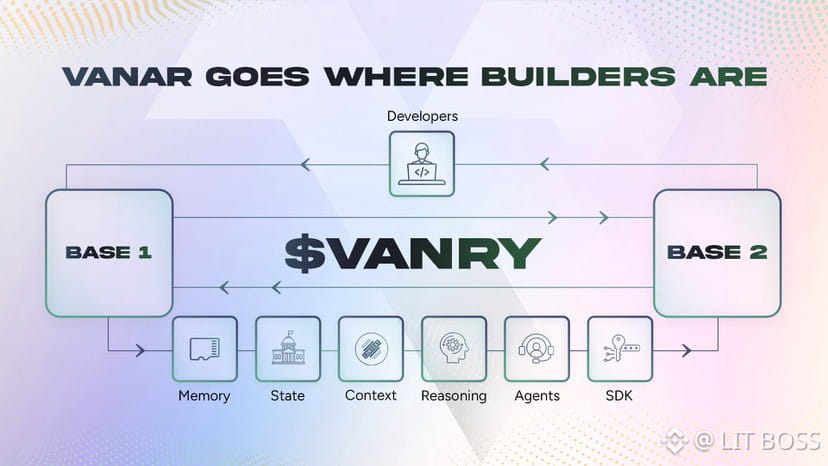
That’s subtle. But it matters.
Most gaming chains are hyper optimized for one very narrow use case. One specific type of game. One particular economic loop. Vanar feels like it was designed by people who’ve actually dealt with entertainment IP licensing issues, real fanbases, and live operations instead of just DeFi mechanics.
You can pick up on that in what they choose to prioritize.
The Adoption Talk Actually Has Substance
I normally roll my eyes hard when projects talk about the next billion users. That line has been beaten to death.
But what grabbed my attention with Vanar is who’s actually saying it and how they’re saying it.
The team’s background isn’t hardcore crypto native. They come from games, entertainment, and brand partnerships. And that fundamentally changes how they frame problems.
Instead of asking how do we tokenize this, they’re asking how do we make this usable without users even noticing there’s a blockchain underneath.
That mindset shows up clearly in their product choices.
Virtua Actually Made Sense to Me
I’ve tried a lot of metaverse projects over the years. Most felt completely empty. Beautiful screenshots. Zero gravity. No reason to return.
Virtua didn’t click for me instantly either. But it didn’t feel like some speculative sandbox where you buy virtual land and then struggle to explain why it matters.
It felt more like a licensed digital environment actually trying to behave like a real entertainment product.
Less here’s land, figure out what to do with it. More here’s a space tied to recognizable IP, existing fans, and long term content plans.
That’s a fundamental difference in approach.
Metaverses don’t fail because of technology problems. They fail because nobody cares enough to come back a second time. Virtua at least seems to understand that retention comes from fandom and actual content, not from yield percentages.
And Vanar being the chain powering that tells you a lot about their actual priorities.
VGN Is the Quiet Play People Miss
VGN Games Network doesn’t get talked about nearly as much, but I think it’s one of the more honest pieces of the ecosystem.
Instead of trying to completely reinvent gaming from scratch, it’s focused on distribution, publishing, and infrastructure for Web3 games that don’t want to feel like Web3 games to the end user.
That actually matters in practice.
Most gamers absolutely do not want wallets, bridges, or gas fee explanations. They just want games that work smoothly. VGN feels more like a practical bridge between traditional studios cautiously exploring blockchain and the underlying tech that makes it possible.
Again, not flashy at all. But genuinely practical.
Winning By Being Forgettable
This might sound weird, but I think the chains that survive gaming long term are the ones users completely forget are blockchains.
Vanar seems to be deliberately aiming for exactly that.
Fast finality. Low friction. Systems that can support games, virtual worlds, AI driven experiences, and brand activations without grinding to a halt or creating constant user friction.
I don’t see Vanar trying to become some cultural meme chain. It feels way more like infrastructure. Like plumbing. And plumbing is boring and invisible until it breaks, then suddenly it’s the only thing that matters.
That positioning puts Vanar somewhere between a dedicated gaming chain and a general consumer layer one. Not quite trying to be everything like Solana. Not super niche either.
It’s a middle ground that’s genuinely hard to execute well.
My Honest Doubt Still Lingers
Here’s where I’m still uncertain though.
Vanar’s biggest strength could easily become its biggest weakness.
Gaming, metaverse, AI, eco initiatives, brand solutions. That’s a ton of surface area to cover. At this stage, execution matters way more than vision. And spreading yourself too thin is exactly how good infrastructure becomes mediocre infrastructure.
I still genuinely wonder whether Vanar will double down hard on gaming and entertainment, or whether it’ll keep expanding sideways into new areas.
Because developers don’t just choose chains based purely on technical capability. They choose based on identity and reputation. They want to know what a chain is actually known for and trusted at.
Vanar feels really close to defining that clearly, but not quite fully there yet.
The Token Feels Secondary and I Respect That
This is another unusual thing I’ve noticed.
VANRY doesn’t feel like the main star of the show. It feels like a utility component that exists because a functioning blockchain needs one.
That’s genuinely rare in crypto, where tokens are usually the entire product and everything else is window dressing.
On one hand, that definitely limits speculative excitement and price action hype. On the other hand, it suggests the ecosystem isn’t being built purely to pump a chart and extract value.
I don’t hold any strong opinions on VANRY’s price trajectory. What I care about more is whether it ends up being used naturally across games, worlds, and platforms without forced or artificial mechanics.
That part is still actively unfolding and unclear.
The Community Vibe Is Different
When I observe Vanar’s community interactions, it doesn’t feel like a typical crypto casino crowd.
Way fewer moon and rocket posts. More substantive long term discussions. People actually talking about integrations, product releases, and partnerships that make logical sense.
That pattern usually means slower growth curves, but it also typically means healthier and more sustainable growth.
I’d much rather watch something like that develop over years than chase short term narratives that explode and burn out every single cycle.
Where I Think Vanar Stands Right Now
If I had to place Vanar on the gaming blockchain map as it exists today, here’s what I’d say.
It’s not the loudest project. It’s not the most hyped. It’s not trying to be absolutely everything to absolutely everyone.
It’s trying to be the chain that doesn’t actively get in the way when real consumer facing products need to touch Web3 infrastructure.
That’s actually way harder than launching another tokenized game loop with farming mechanics.
Will it work long term? That still completely depends on execution quality. On whether Virtua and VGN continue growing their user bases. On whether developers actively choose it over more established layer ones. On whether strategic focus sharpens instead of continuing to blur.
I’m definitely not fully convinced yet.
But I’m still watching closely. And in crypto, attention that you don’t lose over time is usually attention that was genuinely earned.
That’s exactly where Vanar sits for me right now. Earned attention without the hype machine. We’ll see if that’s enough.