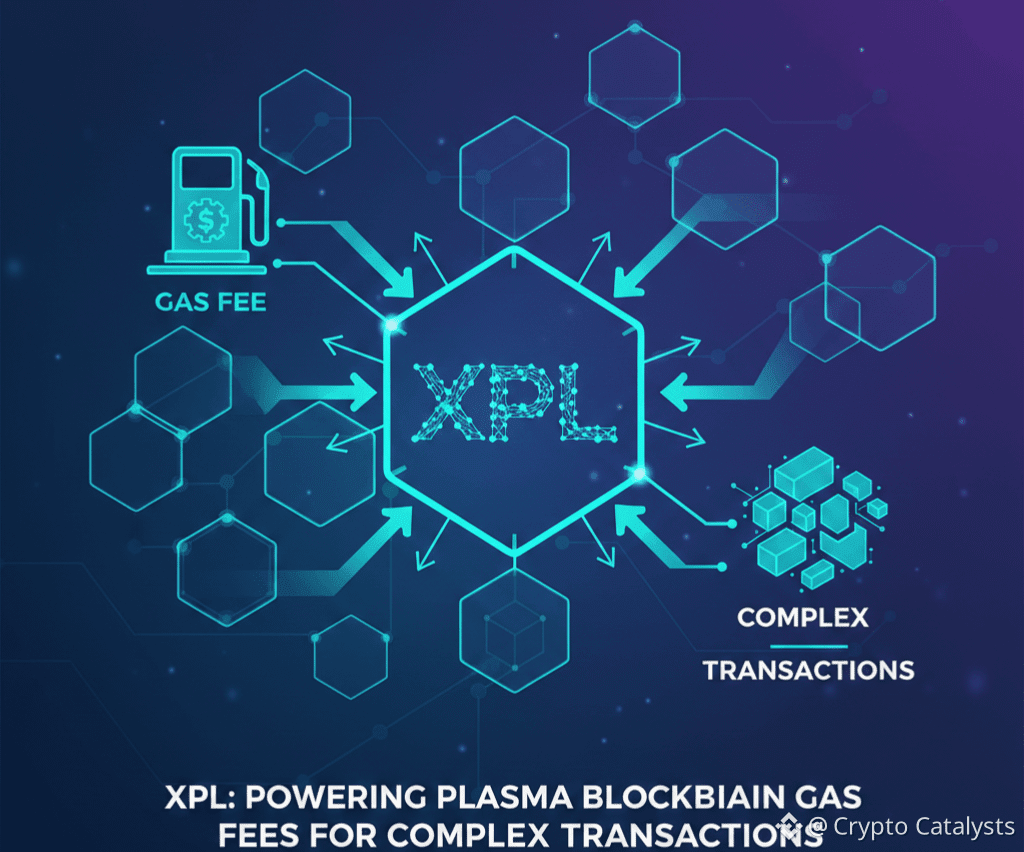
When we talk about the mechanics of modern blockchains, things usually get technical and cold very quickly. But if you look at how Plasma (XPL) handles its business, there is a surprisingly human logic behind it. At its core, any blockchain is just a shared digital space, and like any physical space, it has rules about who pays for what. In the Plasma ecosystem, the native token, XPL, serves as the essential "fuel" for the more sophisticated machinery of the network, and the way it handles gas fees for complex transactions is where the real innovation hides.
To understand why XPL is so important, you first have to realize that not all transactions are created equal. Moving a digital dollar from one person to another is a relatively simple task; it’s the equivalent of walking a letter across the street. But when you start dealing with complex transactions—things like decentralized lending, complex smart contracts, or automated trading bots—you are asking the network to do a lot of heavy lifting. This involves running complicated math, checking multiple data points, and updating the history of the entire chain in a split second. This "heavy lifting" requires computational power from the network's validators, and XPL is the currency used to compensate them for that effort.
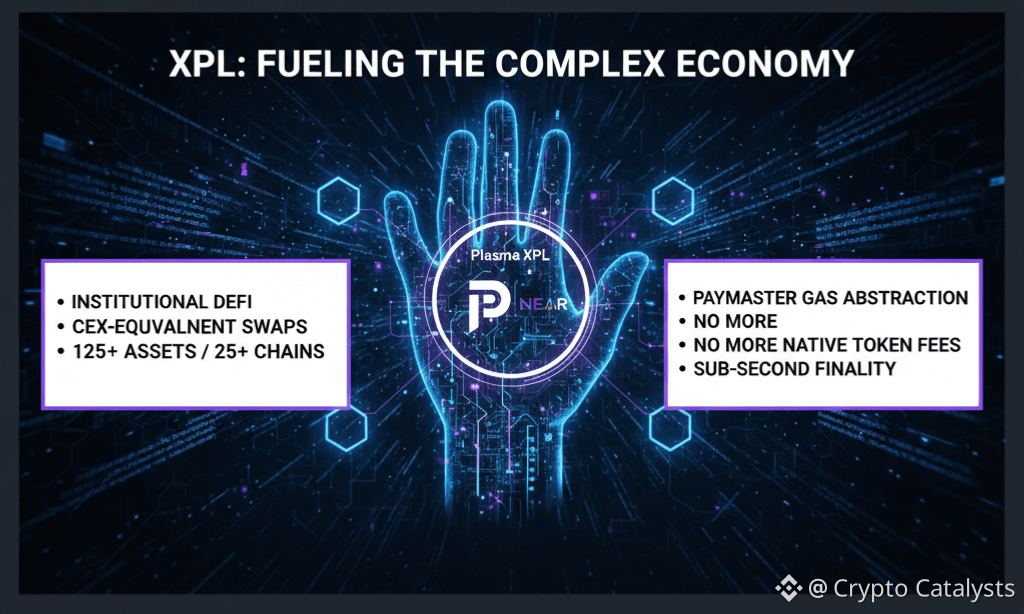
What’s fascinating about the Plasma approach is how it balances accessibility with institutional power. For basic, everyday payments, the network often feels invisible because it's optimized for speed and low friction. But the moment a developer or a power user steps into the realm of "complex" operations, XPL steps into the spotlight. In this context, gas isn't just a fee; it's a way to prioritize resources. By using XPL as the gas token for high-level computation, the network ensures that its resources aren't wasted on spam or inefficient code. It creates a "pay-to-play" environment for those who need the most power, which in turn keeps the highway clear for everyone else.
For the builders on the ground, the real "human" benefit comes from something called gas abstraction. In the old days of crypto, if you wanted to do anything, you had to own the specific native token of that chain just to pay for the "gas." It was a massive headache. Plasma changes this through its "Paymaster" system. Imagine you’re a developer building a high-volume app. You can use your own reserves of XPL to "sponsor" the transactions of your users behind the scenes. The user might think they are paying a fee in a stablecoin or even paying nothing at all, but under the hood, the network is still running on XPL. This layer of abstraction is what makes the technology feel like a modern app rather than a clunky 90s terminal.
There is also a deeper economic story happening here. Because XPL is used for gas in these complex operations, the token becomes a direct reflection of the network’s utility. As more businesses build on Plasma and more complex financial tools are deployed, the demand for XPL naturally grows. It’s a sustainable cycle: the more "work" the network does, the more valuable the fuel becomes. For the validators who keep the lights on, being paid in a token that is actually used for high-level commerce provides a level of security and incentive that many other "ghost" chains lack.
In the end, the way XPL powers the Plasma blockchain isn't just about code or math; it’s about creating a frictionless experience for the user while maintaining a robust engine for the developer. It acknowledges that while we want technology to be "free" and "easy," the resources that power our global digital economy have real value. By making XPL the cornerstone of gas for complex transactions, Plasma has built a system that is sophisticated enough for institutions but simple enough for the rest of us to actually use without thinking about it.