

Dusk (DUSK) is one of those projects that tends to resurface whenever the market starts paying attention to real utility again. In a space that often swings between hype cycles and silence, Dusk sits in a more grounded category. It isn’t trying to be loud. It’s trying to work. For traders and long-term investors alike, that distinction matters more than people like to admit.
At its core, Dusk is focused on privacy for financial applications, specifically regulated ones. Most people hear “privacy blockchain” and immediately think of anonymous transfers or dark-web associations. That’s not what Dusk is about. The project is built to support confidential transactions while still allowing compliance. In simple terms, it tries to answer a hard question: how do you protect sensitive financial data without breaking the rules institutions must follow? That problem is very real, and it isn’t going away.
From a technical perspective, Dusk uses zero-knowledge proofs to hide transaction details while still proving that everything is valid. You don’t need to understand the math to grasp the implication. Imagine being able to trade, issue securities, or settle financial contracts without exposing balances, identities, or strategies to the entire world. For traders, that’s appealing. For institutions, it’s almost necessary. Public blockchains are transparent by default, and that transparency can be a liability in serious finance.
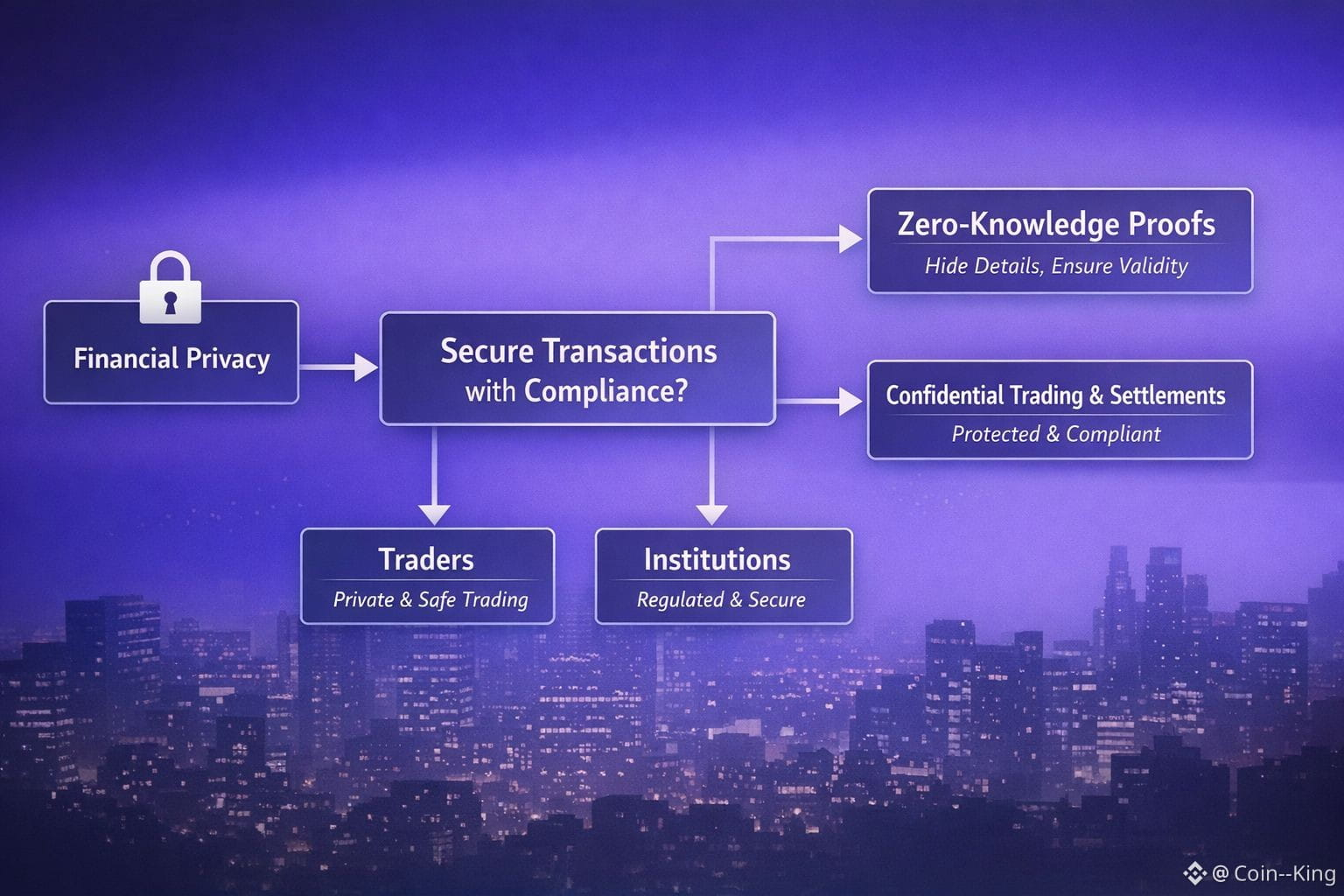
What makes Dusk interesting right now is progress rather than promises. Over time, the team has shifted from abstract ideas to concrete infrastructure. They’ve worked on a blockchain specifically designed for confidential security token issuance and settlement. This is not about competing with meme coins or general-purpose chains. It’s about carving out a niche where privacy and regulation intersect. That’s a narrow lane, but a valuable one if adoption follows.
Traders tend to notice DUSK when volume picks up or when it starts moving independently of Bitcoin. That usually happens when the market rotates into utility-driven narratives. Privacy, compliance, and real-world assets have all been themes that come back every cycle. When they do, projects with an actual product tend to outperform those living on old hype. Dusk’s price action historically reflects that pattern. It stays quiet, then wakes up fast when attention returns.
From an investor’s standpoint, demand is the key question. Who actually needs this? The answer isn’t retail users sending tokens to friends. It’s enterprises, financial platforms, and issuers who want blockchain efficiency without broadcasting their data. If tokenized stocks, bonds, or funds become more common, infrastructure like Dusk becomes more relevant. Privacy isn’t a bonus feature in those cases. It’s a requirement.
That doesn’t mean Dusk is a guaranteed success. Adoption in regulated finance is slow, political, and expensive. Anyone who has traded long enough knows that “good tech” doesn’t automatically translate to price appreciation. Timing matters. Execution matters. Partnerships matter. Still, as someone who has watched countless whitepapers fade into nothing, I pay attention when a project keeps building quietly through multiple market cycles.
For developers, Dusk offers a different playground than most chains. Building confidential applications isn’t easy, and most ecosystems don’t support it well. If privacy-preserving finance becomes a bigger trend, developer activity will follow. That’s often an early signal traders miss because it doesn’t show up on price charts right away.
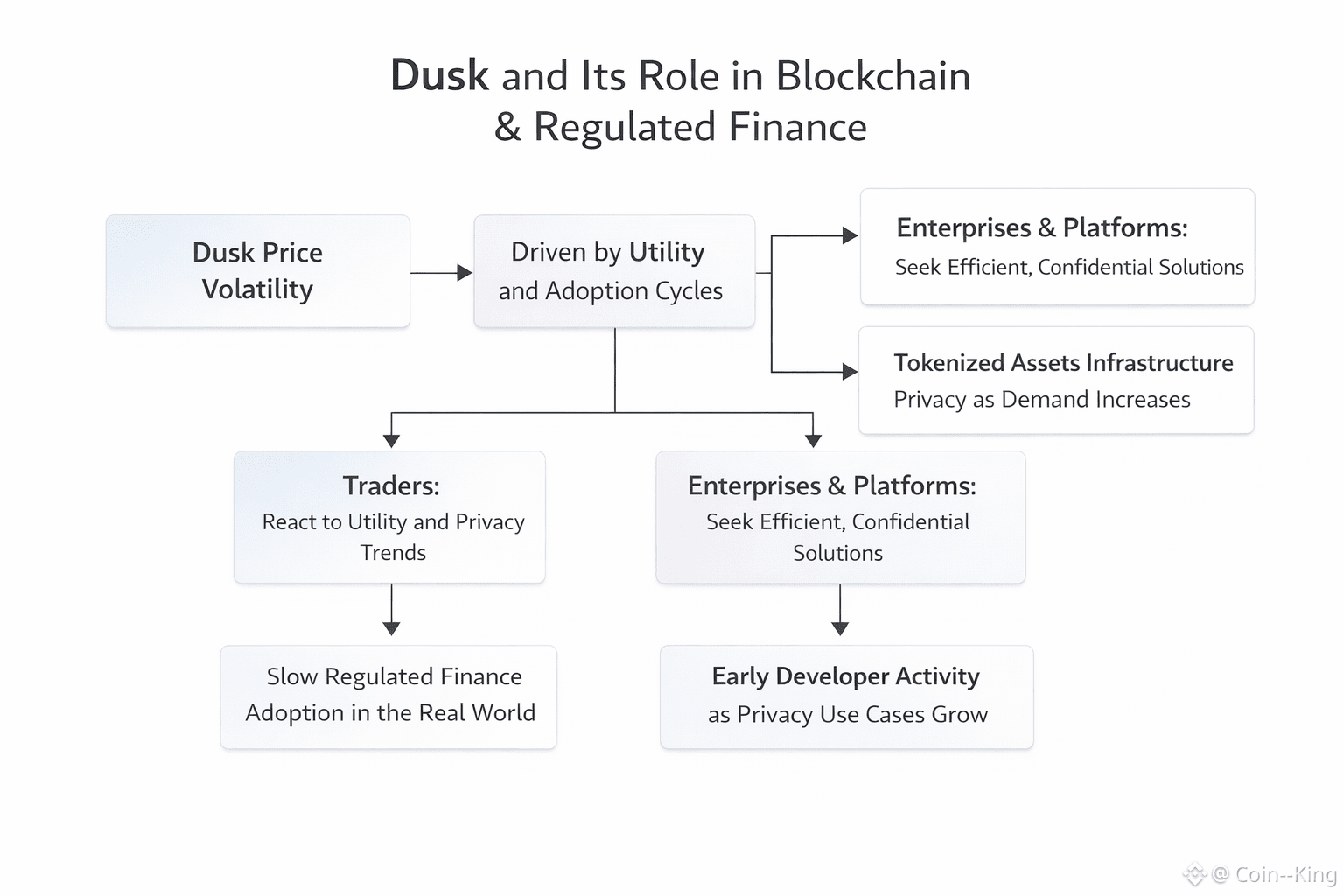
In the end, Dusk matters because it addresses a real limitation of blockchain adoption in finance. Transparency is powerful, but it isn’t always practical. DUSK sits at that uncomfortable middle ground where privacy, regulation, and decentralization try to coexist. For traders, it’s a narrative that can resurface quickly. For long-term investors, it’s a bet on whether regulated finance actually moves on chain in a meaningful way. That question is still open, but Dusk is clearly positioning itself for that future rather than chasing the last one.