
The crypto market has recently felt like an audio file with a skipping song, with the pace speeding up and slowing down, and people screaming every time there is a big drop, and then falling silent as everything moves sideways.
I have been around long enough to have learned one thing: most stories in this industry don’t die because the technology is wrong; they die because the feeling is wrong. Users don’t leave because they can’t understand ZK or EVM; they leave because every time they open a wallet, it feels like they are working for the system, rather than the other way around.
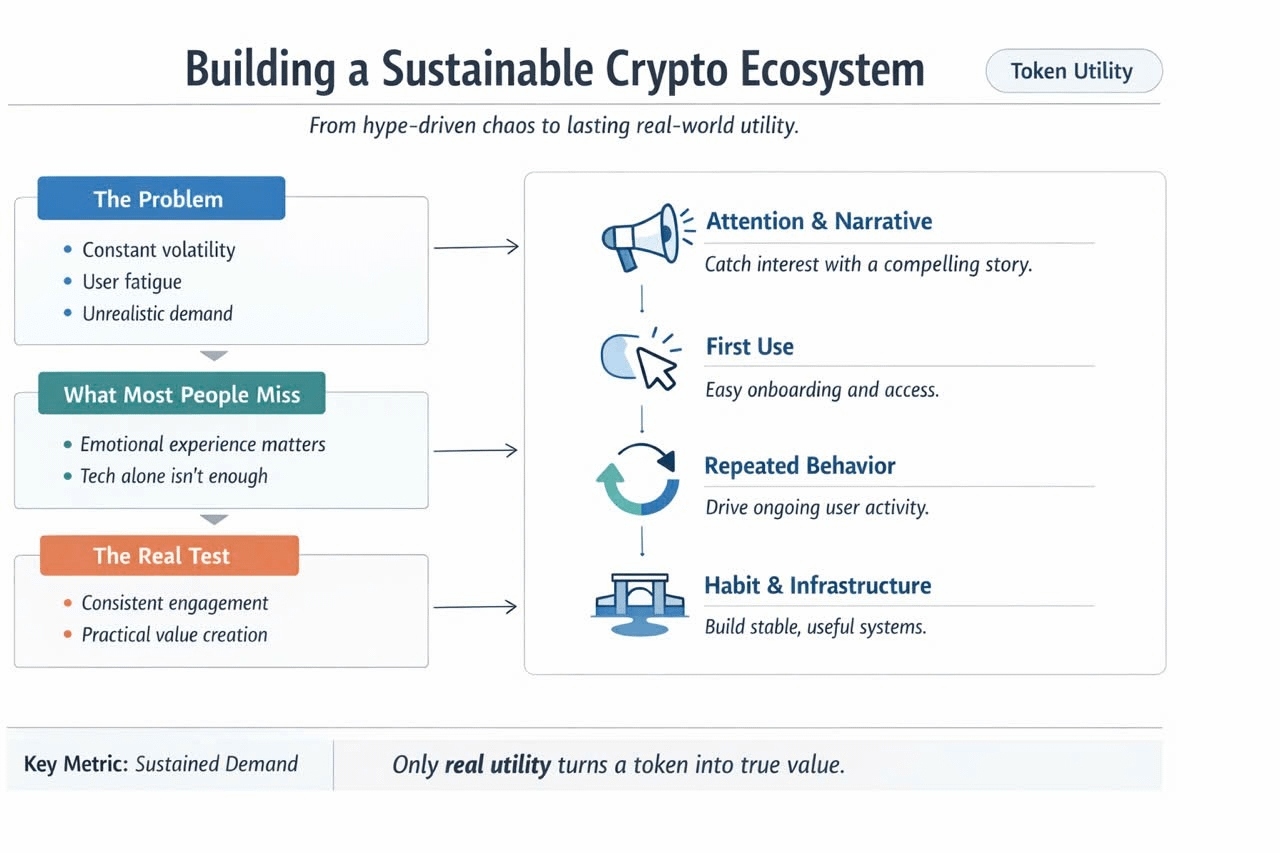
And in that context, DUSK becoming gas on DuskEVM sounds small, but it hits exactly what I call “UX fatigue.” It’s truly ironic, after all these years talking about financial freedom, the experience still feels like freedom… to handle everything yourself. One chain needs one token for fees, another chain needs a different one, and then you bridge to a third network and suddenly you need yet another coin just to be “allowed” to transact. It makes DeFi feel like a city where you have to exchange currency every time you cross a street, and users become lost tourists, always afraid that one wrong click will cost them a week to undo.
I think if an ecosystem really wants to scale, it has to do something very ordinary: reduce the number of things users need to remember. A unified gas token—DUSK on DuskEVM—if it’s executed properly, is at least one step toward making DeFi feel more “normal.” Not normal as in boring, but normal as in: you open your wallet, you use an app, you pay the fee, and you don’t have to stop mid-flow to ask, “Where am I, what am I paying with, and why do I need another token just to breathe?”
But what catches my attention isn’t only UX. It’s the economic story behind it. A token only has long-term value when it’s forced to do real work. If DUSK is gas, then if DuskEVM has real activity, token demand is no longer something fed by memes or thin belief. It becomes operational demand. And I prefer that kind of demand, because it’s cold, but honest. It’s like electricity: you don’t “believe” in electricity, you use it because you need light.
The irony is that most projects do the opposite: they try to manufacture demand by decorating token utility, while the system stays hard to use. They talk about TVL like it’s dignity, and APR like it’s the future, and in the end users are still the ones carrying cables, connecting pipes, patching leaks. I’m exhausted by DeFi that runs faster without a heartbeat. The machine keeps accelerating, liquidity keeps getting dragged between “islands,” and users become laborers for the very complexity that claims to liberate them.
Dusk makes me slow down a little, because it feels like they’re trying to reset the rhythm. DuskDS at the settlement layer feels like a reminder that the foundation has to survive rainy days. DuskVM keeps the ZK core as discipline, not decoration. And DuskEVM opens the door for developers in a practical way: Solidity, familiar tooling, and unified gas. I think that’s the kind of decision made by someone who’s been trapped in late-night debugging, someone who understands that what kills products isn’t a lack of features, it’s a lack of smoothness strong enough to keep people staying.
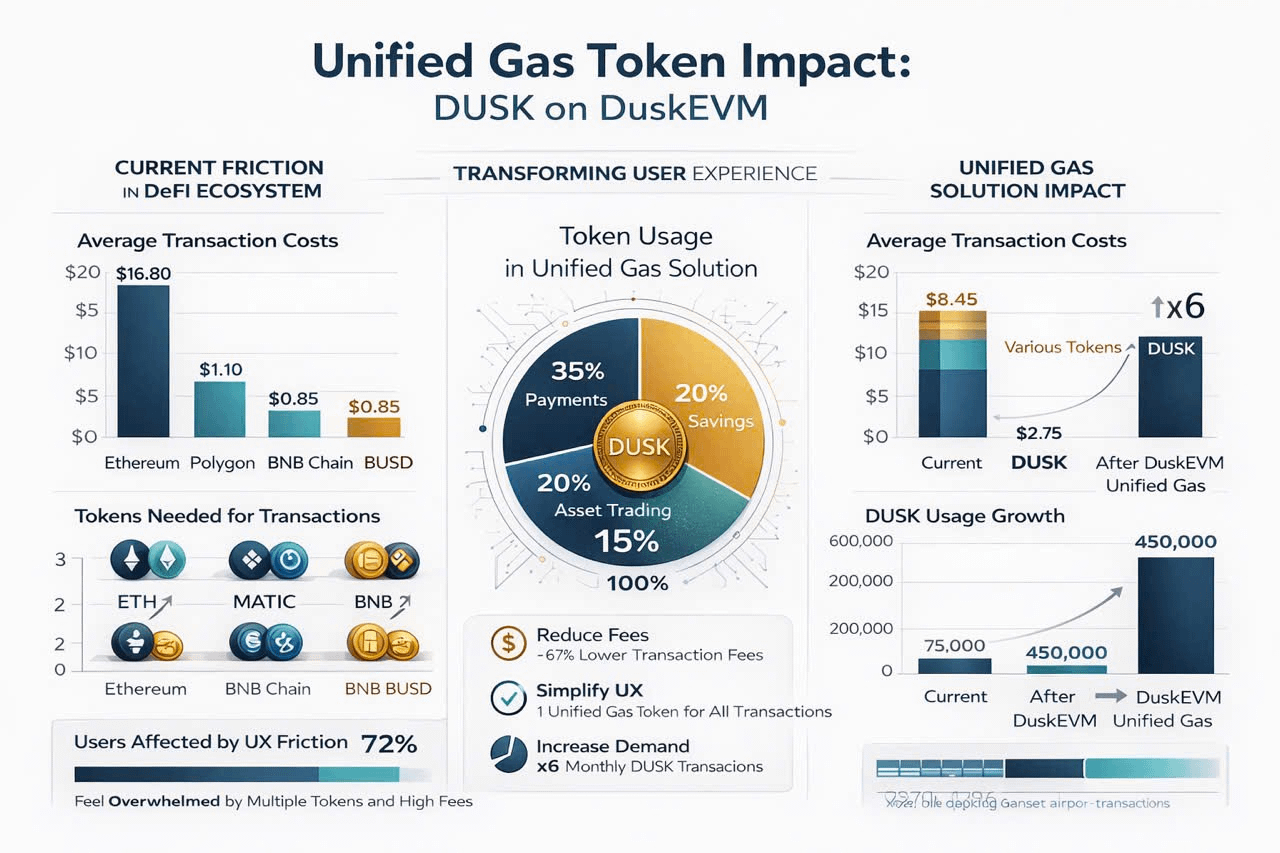
But I don’t want to fool myself either. DUSK as gas doesn’t automatically become “sustainable demand” if there aren’t applications people are genuinely willing to pay for. And “applications” here doesn’t mean another DEX, another farm, another copy-paste incentive loop. It means things that touch real financial life: payments, saving, asset trading, or use cases that don’t require users to learn a new vocabulary just to understand what they’re doing. If DuskEVM is only a billboard that says “we’re EVM-compatible too,” demand will be thin as mist. If it can pull builders in, ship real products, and keep fees stable and predictable, then demand has a chance to become a loop.
Maybe what I’m looking for isn’t an explosion. I’m looking for a system that “breathes,” that reduces friction, that respects users. A small step in UX can sometimes be a big step for a token, because it turns the token from decoration into operational infrastructure. And then I realize, after all these years hearing people talk about speed and “revolution,” the rarest thing is disciplined simplicity.
Maybe blockchain doesn’t need another promise. It needs a heartbeat. And if DUSK truly becomes the gas of a DuskEVM with real activity, then even with my skepticism, I still want to watch… not for hype, but because this is one of the few directions that starts with human experience, and only then returns to the hard question: is the token forced to do real work, and is the ecosystem alive enough to sustain that work? If it is, then maybe this time, it won’t just run… it will live. @Dusk #dusk $DUSK
